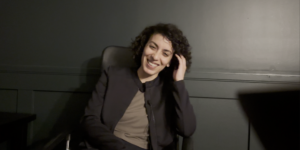

– Barbara Orlicz-Szczypuła, what is the overall theme or focus of 2019’s edition of Krakow Film Festival?
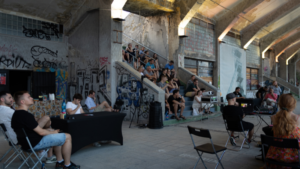
– We try to present good new cinema and we have four competitive sections. We will present new documentaries, a student program and a conference about the documentary landscape in Poland – discussing the ways to co-produce and so on. The opening film is Gods of Molenbeek directed by Reettaa Huhtanen [see page XX], and we will screen films like Eastern Memories (directed by Niklas Kulstromm and Martti Kaartinen) and Power of Yoik (directed by Paul Simma) among many others. This year the country in focus is Finland, but we don’t have an overall theme for the festival.
– Are there some particular criterion or aspect you look for in the selection process?
– We want to show new films so first and foremost we pay attention to that. We are interested in special topics and characters – therefore we try to choose films that take an individual perspective. In a nutshell, we try to screen films portraying global issues from a human, individual perspective. Generally, we don’t screen reportages – but if we see a film on a very strong and relevant topic, even if the approach is not very artistic, we might decide to screen it.
Films that take an individual perspective.
– Do you have a documentary that was seminal to your interest with the genre?
– Yes, I think the Maysles brothers’ films Salesman (1969) and Grey Gardens (1975) made an impression on me because of their way of telling the story. I watched them a long time ago. That is how I started to be interested in documentary films.
– Can you think of a film that had political or social impact in recent years?
– Our Polish foundation is now releasing Of Fathers and Sons (2017) by Talal Derki in Polish cinemas. This film and Derki’s previous Return to Homs (2013) are both about an important conflict. They made people feel and care. I remember the Q&As – people were very touched by the topic and situations shown in both films. The value of documentary in general is to open the viewer’s eye to problems and stories they never thought about.
– Where do you see the documentary landscape progressing in the next decade?
– I believe that some things won’t change: I think the filmmakers will still be looking for interesting stories and very unique characters, just like they are doing now. But perhaps the way of telling these stories will change. A few years ago it was all about hybrid formats, combining animation and documentary, fiction and documentary. I expect filmmakers to use new technology in the future, making interactive documentaries and VR.