
In Moldova, documentary cinema after 1989 has developed as a sequence of survival strategies shaped by state retreat, infrastructural collapse, and an increasingly transnational mode of production. The late Soviet period left a paradoxical inheritance: an institutional base whose original mandate centred on documentary and newsreel work, but which faced a post-1991 reorganisation coinciding with the disappearance of predictable financing and distribution. Moldova-Film itself traces its beginnings to a documentary and chronicle studio (1952), later becoming a feature-and-documentary complex under Soviet cultural administration, and then, after 1991, reorganised repeatedly into successor entities with far narrower capacity.
What followed independence was not simply «a small industry,» but a field marked by sporadic production, fragile archiving, and a shrinking public sphere for cinema. One concrete indicator of this is the lack of exhibition infrastructure—a national trajectory that fell from hundreds of cinemas in the mid-1990s to a tiny remnant within two decades. This contraction functionally severed cinema from everyday life, except in a few urban sites. In that context, documentary becomes doubly burdened as it must register social change while also inventing the conditions of its own visibility through festivals, community screenings, cross-border partnerships, and pedagogical initiatives. Yet these constraints have not precluded internationally visible documentary authorship. Olga Lucovnicova’s Nanu Tudor / My Uncle Tudor, for example, received the Berlinale Golden Bear for Best Short Film (2021).
Two structural developments in the 2010s and 2020s are particularly consequential. First, state policy returned in more formalised terms with the establishment of a National Film Centre in 2016, institutionalising competitions and a modest, legible pathway for public support. Second, production is increasingly oriented toward co-production logics, mirroring the realities of a small domestic market and limited public funding. For example, in 2025, the National Cinematography Centre reported supporting nine projects with a total budget of 13.3 million lei. Relatedly, Moldova’s 2022 cash-rebate scheme (up to 30%) further entwines national screen culture with transnational finance and mobility.
Within this evolving ecosystem, the past five years also suggest increasingly fertile ground for documentary storytelling and international validation. Aside from the success of My Uncle Tudor, Otilia Babara’s Love Is Not an Orange received the Silver Eye Award at the East Silver Market (Ji.hlava, 2022) and circulated through major documentary circuits, including Visions du Réel and Trieste (2023). Pavel Cuzuioc’s earlier feature Please Hold the Line screened at IDFA (2020).
Rather than as isolated «issue films,» the lineup coheres around three identifiable throughlines symptomatic of post-independence Moldovan documentary.
It is within this longer post-1989 rupture, post-1991 scarcity, and post-2010s institutional rebuilding arc that the 2025 #MOLDOX Festival’s launch of its first national documentary competition («Green Vine») becomes an attempt to stabilise documentary as a recognisable public form, especially for local audiences. The festival’s own origin story mirrors this: its founder recalls in Cahul, «Back then, we hardly had one documentary film we could find,» describing early MOLDOX editions as «a small dream» oriented toward reintroducing documentary as a shared civic practice.
The «Green Vine» competition was launched on 4 August 2025; the selected titles were announced on 21 October 2025; and the national-premiere screenings took place during the festival’s 10th edition (26–30 November 2025) at Cineplex Loteanu in Chișinău, with a €1,000 award supported by the Innovate Moldova project (funded by Sweden with UK support).
Each a Moldovan (co-)production of medium or feature length, the six Green Vine selections were: Consider a Tomato / Ține cont de-o pătlăgică (Marina Sulima; Netherlands; 2025), Electing Ms Santa (Raisa Răzmeriță; Moldova/Romania; 2025), Green Light / Undă verde (Pavel Cuzuioc; Austria/Romania; 2025), Last Letters from My Grandma / Ultimele scrisori ale bunicii (Olga Lucovnicova; Netherlands/Moldova/Belgium/Romania; 2025), Sailing with Babushkas / Băbuțe pe bărcuțe (Călin Laur; Moldova/USA; 2025), and Ultimate Weapon / Arma Supremă (Dragoș Turea; Moldova/Romania; 2024). Within the competitive frame, Last Letters from My Grandma won the inaugural Green Vine trophy, while Consider a Tomato received a special mention. Rather than as isolated «issue films,» the lineup coheres around three identifiable throughlines symptomatic of post-independence Moldovan documentary.
Mobility as social structure, not episode
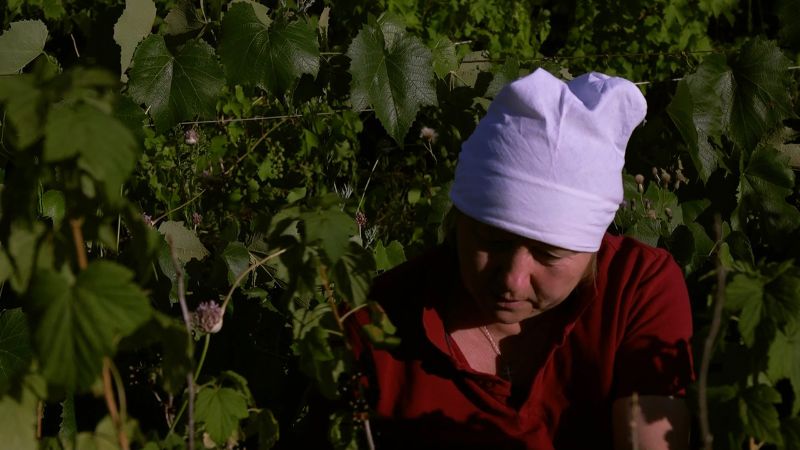
In Consider a Tomato, transnational agricultural supply chains are seen as a lived geography where food becomes a diagram of labour migration and the uneven distribution of technological modernity, with domestic knowledge (recipes, preservation practices) operating as an alternative archive of economic history. The film’s attention to everyday circulation also reads as an allegory of conflicted Moldovan identity under diaspora conditions: the «national» is increasingly constituted from elsewhere, through labour, remittances, and return visits rather than stable residence. Recent baseline data points clarify the scale of this condition: UN DESA-linked estimates place Moldova’s emigrant stock at 864,257 (2024), while a Statistics Moldova presentation (Sept 2025) notes roughly «~1 mln.» Moldovans abroad under varied statuses, against a resident population of ~2.4 million. Parallel to this, Electing Ms Santa frames mobility more implicitly through the aspiration to self-determination in a remote village, where «choice» is negotiated against the grain of family expectation and rural convention. Beyond its local setting, the film’s festival production trajectory and support network signal a documentary field that now circulates through continent-wide training (ESoDoc, Balkan Documentary Centre, Docu Rough Cut Boutique) and festival ecologies (including the major prize at Tallinn’s PÖFF).

The post-Soviet archive as a contested family form
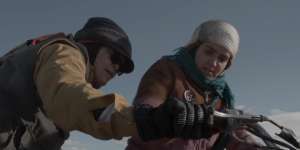
Last Letters from My Grandma literalises this by turning an intergenerational investigation into a meditation on how private documents and silences refract grand narratives of Soviet history and its afterlives. Notably, the project’s very itinerary (a return journey across the post-Soviet space) foregrounds the spatial persistence of empire in intimate life. The film world-premiered at Italy’s Festival dei Popoli (Florence) in November 2025 and subsequently received a Special Mention there. As a work, it also sustains a coherently reinforced throughline and presentation that is both personal and grand by keeping private evidence (letters, memory-work, return journeys) in constant friction with the geopolitical afterlife of empire. Sailing with Babushkas approaches the archive through embodied storytelling. «Grandmothers» function as carriers of historical memory, whose everyday speech and gestures preserve experiences that official narratives often flatten, including the violence of mid-century Soviet policies in the region. In the film, an American boat captain, newly settled with his family in Duruitoarea Veche near the Prut, attempts to teach the initially sceptical local grandmothers to sail on the village lake, producing comic cultural misreadings and hesitant first voyages. Ultimately, an unexpected collective confidence-building exercise staged through the choreography of learning, balancing, and (quite literally) taking the helm. Ultimate Weapon, meanwhile, relocates the archival impulse into the epistemic murk of late-Soviet techno-mythologies and state experimentation, a move characteristic of a broader post-1989 documentary tendency to treat the Soviet past beyond ideology, but as an apparatus that invaded bodies, belief systems, and the boundaries of the knowable in the vein of Sergei Loznitsa’s State Funeral or Chad Gracia’s The Russian Woodpecker.
Sovereignty displaced onto ethics and the body
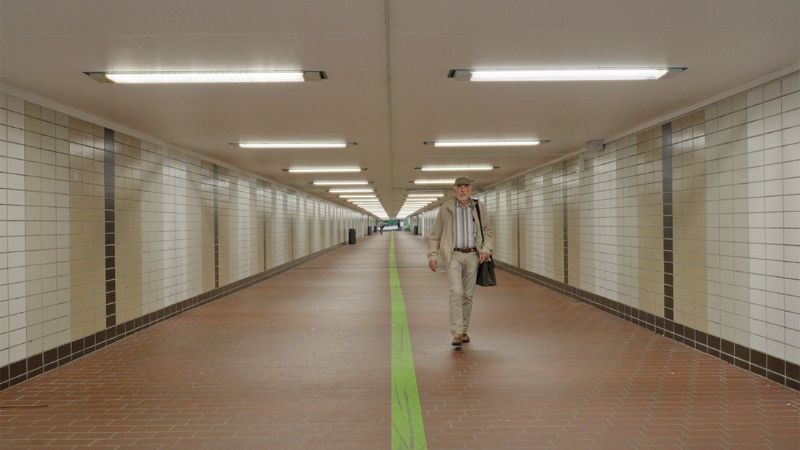
Green Light / Undă verde is set within Western European medical-legal protocols around assisted dying. Yet, its thematic stakes resonate strongly with post-independence questions of agency: who is recognised as competent to decide, by which institutional procedures, and under what moral economies of suffering? The film’s focus on assessment, controversy, and decision-making places biopolitics at the centre of documentary observation. An axis that, in Moldova’s broader context of precarious welfare and migration, reads as more than a «foreign» topic.
Taken together, the «Green Vine» roster is an institutional snapshot of where Moldovan documentary has arrived. It is formally diverse, co-production dependent, and preoccupied with the entanglement of private life and historical force.