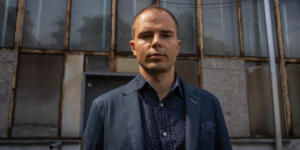
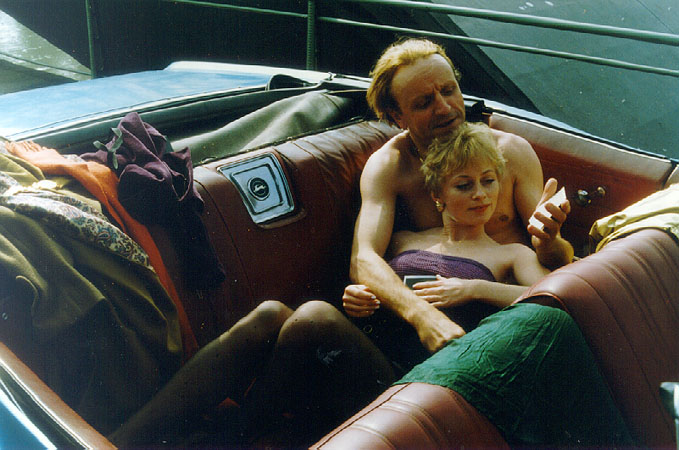

András Salamon production of documentaries includes many films on the social problems in Budapest: the homeless, Gypsies and beggars, and his latest documentary Jonuc and the Beggar Mob is no exception. Jonuc is a young Gypsy boy from Romania who lives in the streets begging. He lost one of his legs in a train accident and got an artificial one, but a mob of beggars take him to Budapest to beg for them and keep his artificial leg. He tries to get it back, but is caught by the police. On the bus back to Romania he gradually tells his story to the filmmaker, intercut with episodes from his life in the street. Salamon films among the beggars and street kids, not from a distance. He draws a three-dimensional picture of Jonuc, not as a victim, but as a person who actually seems to be enjoying his life and his freedom.
The living conditions of Gypsies and beggars constitute some of Budapest’s biggest social problems, and András Salamon says that they are the subject of many Hungarian documentaries. The big problem is that even though many documentaries are being made, most of them are never shown anywhere.
 Jonuc and the Beggar Mob is a low budget production financed by the Hungarian Motion Picture Foundation. Hungarian Television aired the film, but didn’t pay for it; they never pay for documentaries. Just getting it shown is difficult enough in itself, as Salamon explains.
AS: Hungarian television is on the brink of total collapse, aesthetically, morally and economically. This is a very, very sad story. The national television company is not in a position to support anyone since the company itself is surviving from day to day.
The main problem in Hungary is that we have plenty of money to make documentaries, but very few places to show them. Because of growing market orientation, television refuses to broadcast this kind of film. Every year we make more than two hundred documentaries in Hungary, but only ten per cent of them are broadcast.
 We have a Committee for Radio and TV, which is a very rich institution or phenomena, and sometimes they give a minor subsidy and sometimes a huge grant to documentaries, but since the films never reach their audiences, it is pointless. I think we make many more documentaries in one year than we need. It would be better if we made fewer films and found out how to broadcast or distribute them”.
Documentary filmmakers in Hungary are trying to improve the situation.
AS: We have an association in Hungary. Some documentary filmmakers have founded a documentary filmmakers club. And we are trying to set up a cinema that shows documentaries once a week and to organise director-audience meetings.