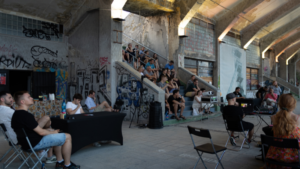
For its 18th edition, the 2020/2021 #Doclisboa meets during six unique sessions over six months. A documentary festival always questioning the presence of film and assuming cinema as a mode of freedom, this year sees Doclisboa adhere to this ideology more than anything with the #COVID-19 related volatility.
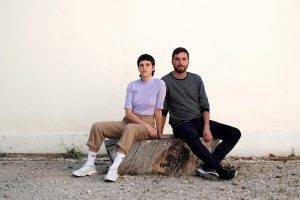
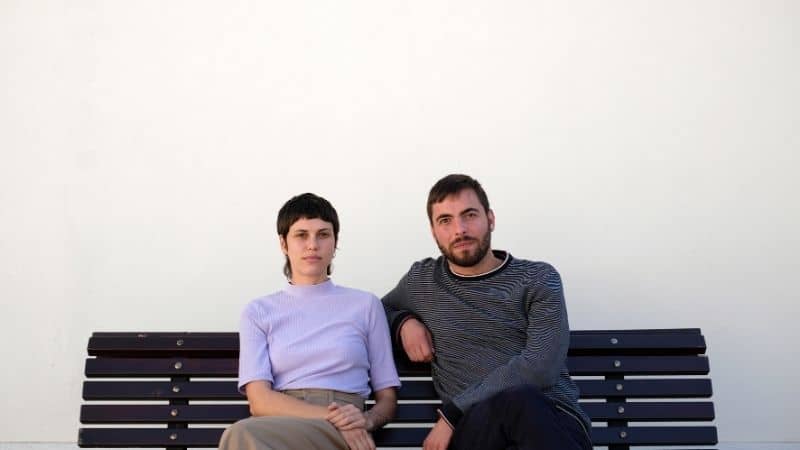
With its 18 edition’s first session kicking off, 22 October – 1 November 2020, before launching again 5 – 11 November, Modern Times Review spoke with Festival Director’s, #Joana Sousa# and #Miguel Ribeiro#.
The 2020 edition of Doclisboa is not like anything we have seen from the festival before, can you explain a bit about its presentation across multiple sessions?
In this edition, Doclisboa is organized in six different moments, each lasting around a week, taking place between October 2020 and March 2021. In October, the moment is composed of a retrospective on Georgian cinema, a focus on the representation of labour in cinema, and a selection of films that send clues to the following months of programming. Between November and March, each moment will present films that dialogue with each other in line with a direct proposal. Not strictly thematic, we will work on questions that arise from topics such as the recontextualizing of history, personal stories, contemporary political issues put into perspective, perceptions of intimacy, among others.
Why was the division of the festival necessary? Was it entirely based around the COVID-19 pandemic?
During the quarantine period, we took the time to reorganize and reflect on what our priorities are, what is important for the festival, what is its role, and how to move forward amidst this exceptional context. Even though Doclisboa takes place in the autumn we had to react quickly and set a model for this edition that made sense for us and felt that could be accomplished in line with our ideas, values, and possibilities. We believe that a festival also serves the community in which it operates – the theaters, the public, the film professionals – so, in that sense, we wanted to help rebuild with them the very act of going to the cinema. We adapted the rhythm of the festival and extended the program over six months, thus giving the public the opportunity to see all the films of the festival and opening space for more debates, parallel activities, and other collective moments of discussion and thinking. As the situation is constantly changing we also wanted to have a festival structure flexible enough to accommodate new additions or changes to the programme whenever we felt necessary.
we will work on questions that arise from topics such as the recontextualizing of history, personal stories, contemporary political issues put into perspective, perceptions of intimacy, among others.
How do you find the support given from the country & city cultural/governmental sectors? Do you find that there has been support for Doclisboa and other such cultural institutions in Portugal during these unprecedented times?
The pandemic crisis is having an extraordinary impact on the arts, culture, and creative sectors in Portugal. The economic and financial consequences are extremely serious, risking the survival of smaller structures and, above all, professionals who work on a freelance basis, by project, often in very precarious conditions. The government has implemented some measures to respond to the crisis but it is important to recognize that we cannot subordinate everything to the emergency of these times but it is essential to think and act on structural issues regarding funding, social protection, and support. These issues were already present before the pandemic and now we have the proof that this is not sustainable.
What the most difficult aspect of the 2020 Doclisboa preparation?
There’s of course a pending uncertainty in all decisions we implement. We try to minimize the risk but it’s an edition that requires a higher level of risk and possible changes. But from an early stage, we designed it as a malleable festival, as an organism that is capable of reacting to the world in which it appears in every moment of programming.
More than anything, it’s a challenging and certainly determining moment of Doclisboa’s existence – one that we also see as an edition where Doclisboa will present itself by putting forward all that it stands for. All in all, that’s what the moment requires us to.
Speaking practically, how will the festival be presented across its six sessions? How will each session be different from each other?
We have restructured the whole programme organisation, while guaranteeing the diversity that is usual at Doclisboa – both in terms of narratives, and languages. Each moment will be organized under a motto, a guiding idea which the films will complexify and amplify. Presenting the festival across a longer period of time will also permit us to embed more debates and talks, both in the present time of the programme and as a remembrance of what has come before.
it’s a challenging and certainly determining moment of Doclisboa’s existence – one that we also see as an edition where Doclisboa will present itself by putting forward all that it stands for.
How do you see the future of film festivals in the post-COVID-19 era?
The times we are living are requiring immediate responses and calling every festival to restructure itself in regards to the present times. While adapting, we are also discovering new ways of doing things. There are many digital tools that can also have very interesting applications in a post-pandemic world. We don’t want to replace the in-person encounters, but it’s unavoidable to realize how these tools enable fairer access to people with less economic means to travel to or from more distant territories. This year will be a year of experimentation and we are learning many things in the process that we don’t want to dismiss.