Astra Film Festival, the long-running #Sibiu, #Romania based documentary destination, emerges from its successful open-air session anticipating its second session online. Across its 25+ editions, #Astra Film Festival# has situated itself as a major event in the European film community and Romania’s leading documentary festival.
Astra ONLINE time akes places 16 – 25 October 2020 for audiences around Romania and will feature many of the open-air festival’s favourites, as well as two new competitions. With our week in Sibiu behind us, Modern Times Review spoke with the festival’s Head of Programming Csilla Kato about the challenges the festival faced in this most interesting of years, as well as a dive into the current landscape of Romanian documentary film.
What was the most difficult aspect of putting the 27th Astra Film Festival together in this most volatile of years?
This year for any film festival, or event expecting thousands, or tens of thousands of spectators, the major difficulty was/is the lack of any predictability and the possibility of proper planning. In this sense, we initially bet for a hybrid festival combining cinema screenings with an online version for our mid-October festival, hoping cinemas will be open in a restrictive way. The evolution of the pandemic in the country indicated that the cinema opening and attendance will not happen as we expected. And in fact, the biggest difficulty came when we made a very risky decision: to start our festival much earlier, in order to catch the weather of late summer nights for 10 days, organising a «physical» outdoor festival edition (followed by an online part), and we had only 3 weeks to prepare and promote it. I must say, it was an incredible «tour de force», as we have never had open-air festival screenings before. The first 2-3 days of the festival I was staring at the festival photos, to help me process and believe, that it is running.
it was an incredible «tour de force»
The Open-Air festival session featured some interesting new ways and locations to screen films. Can you talk a little about the thought process there and how you came to the location decisions that you did?
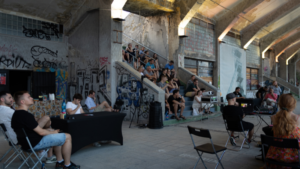
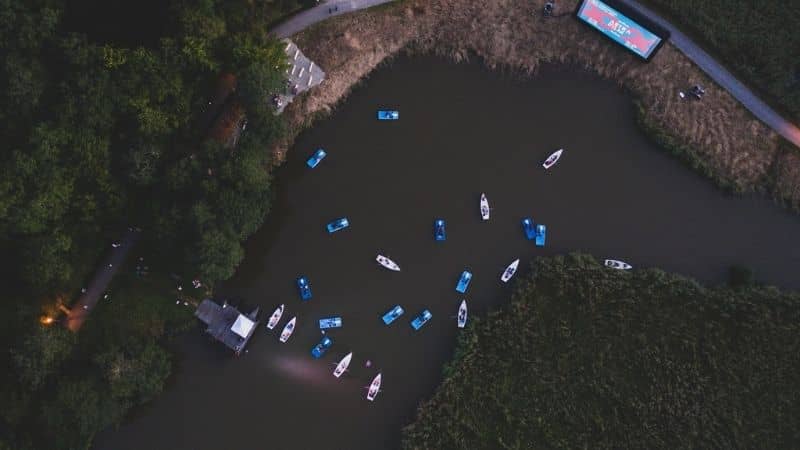
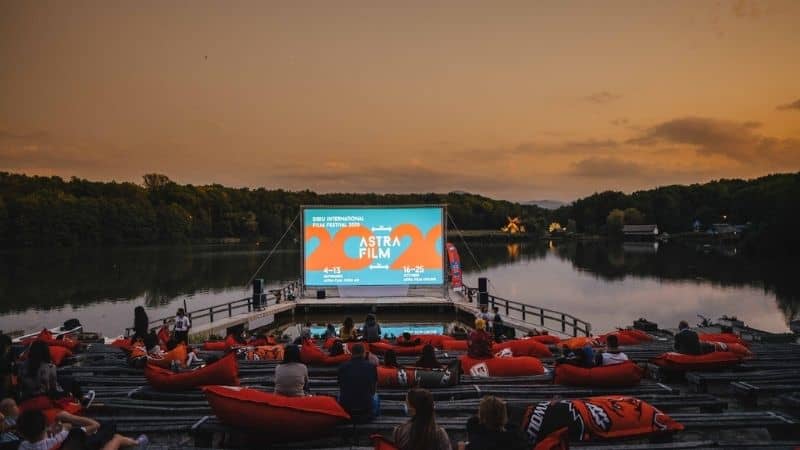
This festival has been born in Sibiu, a quarter of a century ago, and has had a major contribution to reshaping the profile of the town. From a charming medieval Transylvanian city today it has become a cool cultural city, attracting the public for its cultural events from the whole country and abroad. Usually, there are many outdoor events happening in the city center, in the three main pizzettas. For us, the major difficulty was to choose the right places, which are attractive, accessible, pleasant for the public, but at the same time, offer intimacy for the film screenings. We wanted to bring all the festival practices we had before in the screening room into the open-air version. We also needed silent, remote places where we can make Q&A-s. That is how the idea of the Open Air Ethnographic Museum locations came in, which is situated in the outskirt of the city, in a huge forest and it has a lake in the middle, a wonderful place, with many possibilities. Despite the pressure of time, we have pointed out totally unusual, unconventional screenings there: on a huge screen near the lake, and the public was watching the films from boats, recreating the instability of the times we live, in a real-time film audience experience.
Will you offer your insight into the future of film festivals in the post-COVID-19 era? How do you see film festivals resuming? What sort of presentation do you see them taking?
Now, in the midst of pandemic constraints, is the best time to reflect on the essential role of the films, cinema, film festivals, when they are being canceled, and the online or hybrid film festivals can not substitute the «real ones». Half a year after the pandemic has affected our film festival world, I can say, that I am convinced that the post-pandemic period many of the practices which film festival developed so far will be restored. Let me sum up and argue in a few points:
-
- Festivals moving online found themselves in a huge, noisy competing environment, where it is hard to define and redefine their place and role. In mids of increased online consumption of films on #VOD platforms (not to mention the aggressive spread of #Netflix with the exclusive original content they are producing and widely distributing) to all sorts of online content from social media to entertainment of all sorts.Still, I am convinced, that film festivals will regain their place after the pandemic to be the indispensable venues not just for development, exposure, and promotion of new films, but they will remain the crucial nodes for the development of film knowledge: festivals create the space for reflection, for evaluating films, shape what films the audiences will see, they are centers of creating, and cultivating cinephilia. It is a question if they will be only «physical» venues or «online». So far the online film festivals could not replicate the specific «festival space and time». Still, as we are in middle the outburst of digital and technological innovations, I do not exclude in the future the possibility of development of an adequate online infrastructure ready to serve this essential need of film festivals.
-
- Moreover, I am confident that after the pandemic, film festivals will regain the place they play in the public sphere of our societies: as essential places of reflection, places where public discourses may emerge/being created, and humanistic, aesthetic values are being reinforced.
- We tend to forget to think about international film festivals as nodes of a very dense network of a festival circuit as part of a larger organic entity. International film festivals, as part of a festival circuit, together have an essential role in accommodating culture and commerce, experimentation and entertainment, and global funding, they maintain the global film industries, businesses, institutions, and information providing places in which multiple agents negotiate local, national, and supranational relations of culture, power, dominant discourses and identity. The first signs and the beneficial effects the pandemic situation was that festival organizers have opened up for discussion and cooperation rather than following each other in a harsh competitive manner. A dynamic festival circuit has been shaped so far.
In terms of documentary film, do you have a specific film that brought your interest in the genre?
The real satisfaction in my programing work comes every year, after watching hundreds of films, I discover the ingenious way the documentary cinema language and practices are being used. This year I was particularly delighted by young authors, with a solid background in contemporary art, who have adventured making pure documentary cinema pieces in a very refined and mature way on subjects which are seemingly over reflected for centuries in many arts and many ways (adultery, patriotism), and yet they succeeded to articulate important new strands of reflection, by choosing the right angle to approach (Talking About Adultery by Bara Jichova Tyson, The Corncrake Paradox by Georg Oberlechner).
How would you describe the Romanian documentary industry? Over the past few months, a handful of Romanian films have had much success on the international circuit. How do you see this trend continuing? What is lacking in the country’s non-fiction industry?
To talk about the non-fiction industry in a country like Romania is in itself an exaggeration. There is no clear-cut policy developed on this genre of cinema: there are some totally chaotic and very scarce possibilities of funding schemes, some festival hubs. The very fact that there are so many films made in these conditions is a miracle in itself. And the fact that there are even some excellent films made, which have incredible success in the international festival circuit, is purely the merit of the work of a handful of very talented, dedicated directors, producers, and team`, who are investing their time and talent in these films.
Despite the pressure of time, we have pointed out totally unusual, unconventional screenings
Finally, can you speak about the October ONLINE session of Astra Film Festival?
The online edition of Astra Film Festival 2020, 15-26 October will showcase the films selected for two competition sections: «New voices in documentary cinema» and «Central and Eastern European» section, as well as the award-winning films from the open-air edition. As it will be for the first time we open up our program for a wider audience deblocked in Romania, we have selected 10 films Best of Astra Film shown in the earlier edition of the festival, relying on the success of these films, we hope that a newcomer public will find films on their taste. The online edition will host the industry program DocumentaryTank@AFF 2020, hosting mentorship, and pitching session for new documentary film projects in development from the region.