Is the festival an island? What films and personalities are we returning to? And which images are most etched in our memory? We talked about this year’s #Ji.hlava IDFF# programme with festival director #Marek Hovorka#, programme director #Petr Kubica# and programmer of experimental documentaries #Andrea Slováková#.
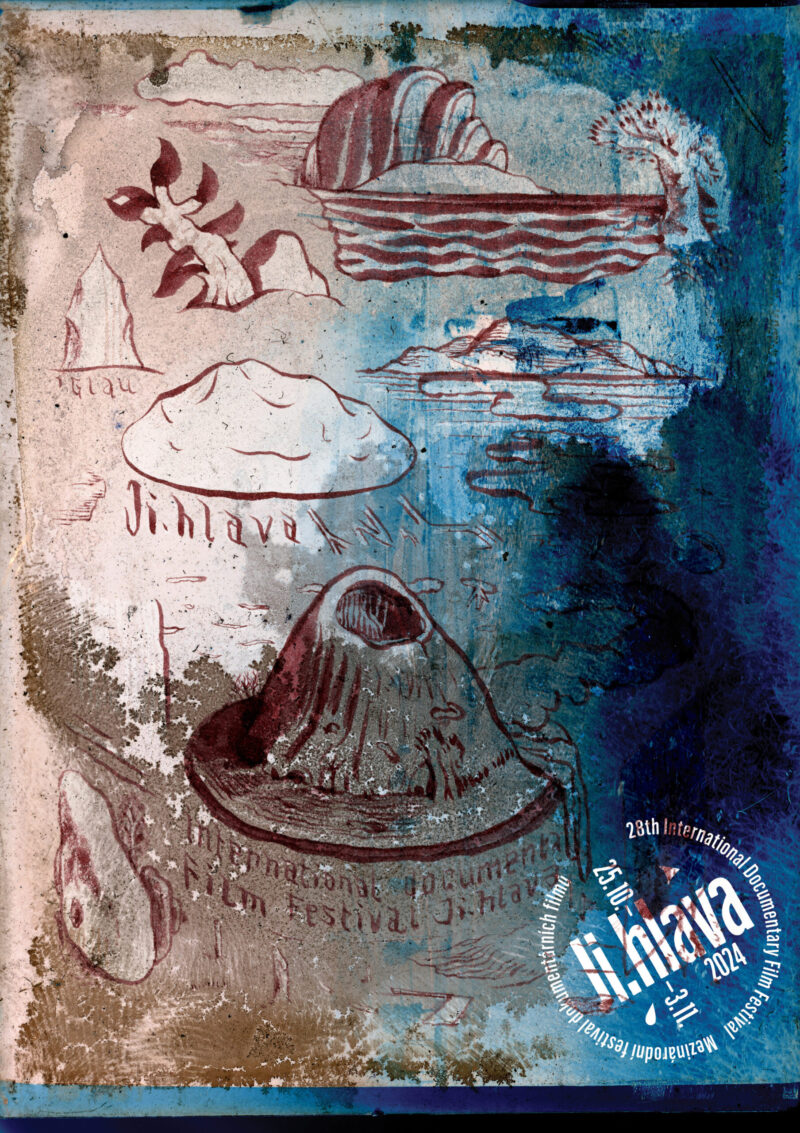
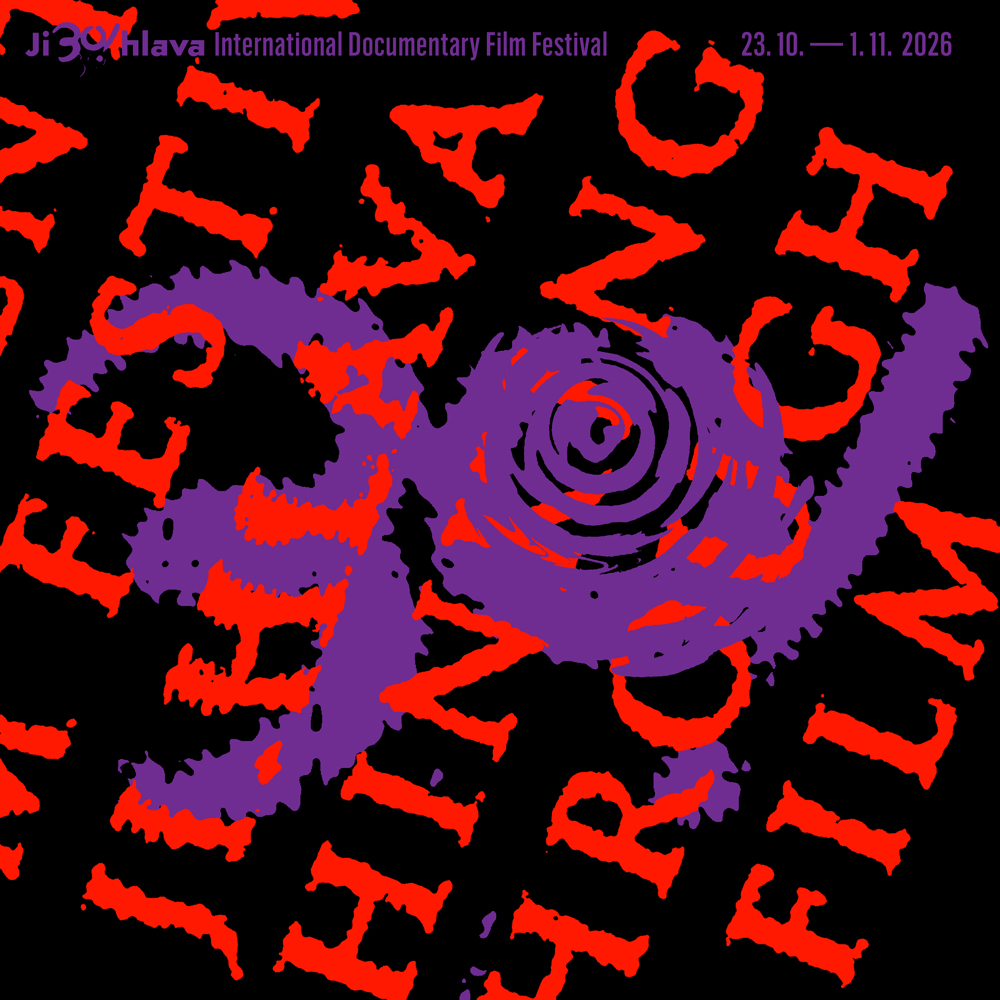
This year, the festival has islands on its poster. Is Ji.hlava itself an island?
Andrea: Yes. Because it allows for the type of focus and intellectual engagement that can take us out of our routine perspectives and encourages slower, more imaginative and analytical thinking. And no. Because it works inseparably from the contexts of the lived world, the reality of which is portrayed or sought by the films being shown. It is part of the ecosystem of the city, of Czech cultural infrastructure, of world cinema.
Petr: When I think of it as an island, it’s definitely not a deserted island with one palm tree and a parched castaway. It’s a big piece of land where you can spend a comfortable holiday on the beach or wander through the unknown jungle. Islands are unsinkable, and to me, the festival is a secure place for artistic documentary film.
Marek: The sea level decides what an island is to us. But the life of an «island» doesn’t end at the surface; it only changes. So, islands exist in our heads. From the point of view of the universe, maybe our planet is an island, but even then, it’s only until we start to study the chemical composition of planets and stars. Then it turns out that everything is connected, even though it may be «infinitely» far apart. This interconnectedness, both physical and metaphysical, is what Ji.hlava testifies to in its films.
Only thirty percent of directors go on to make films after their debut. That’s why we want to support the upcoming generation of filmmakers.
Have you spotted topics or trends across the sections that have surprised you?
Petr: Almost 3,500 films from all over the world were submitted to the festival this year. Each of them has a shred of reality that we’re seeing for the first time. That’s why every documentary is interesting. There are a huge number of themes in them, some of them important and understandable worldwide, others only in the countries where they were made. Not all Czech films are relevant to international audiences, but that in no way detracts from their importance to Czech audiences.
Marek: Thanks to the extension, we’re bringing back the competition section First Lights, which is dedicated to first and second feature films. According to statistics, only thirty percent of directors go on to make films after their debut, which is a terribly low number. That’s why we want to support the emerging generation of filmmakers and show how they approach film with diversity and how they bring documentary to life with their directness.
For example, in the Belgian film Me + You, the director follows her own sister, who has decided to convert to Islam. In Comrades, a Polish director observes several young members of the Italian Communist Party and shows us a face of activism that we have no experience with. A strong experimental mood can be found in Us and the Night or Summer Songs, which draws us into 16mm film’s unique poetics.
Andrea: In the field of experimental films, some years are more poetic, others more political, and other years are dominated by subtle, intimate, quiet films. This year, the dystopian vision is strongest – both in themes and imagery. What surprised me was not so much the trend itself, which has been observable for several years, but its intensity. It’s as if the urgency of environmental crisis, social anxiety and unending war have plagued reflections on the future so strongly that the visions are primarily bleak.
I do enjoy the fact that dystopian films are also playful, though. Chronicles of a Dark Sun, for example, culminates in a fictional moment where people, sheltered from the unbearable heat of the sun, commission artificial intelligence to simulate their life bathed in a pleasant sun. The AI then creates it from «old» advertising and pop culture images, probably because it thinks it is catering to human desires.
This year’s retrospectives take us to Slovakia, to Taiwan, to the beginnings of computer film, but also to the film essays of Anne-Marie Miéville or back to Czech Dream. How did you decide on what would be shown again at the festival?
Marek: In the past, the work of many women artists has been reflected in only a very marginal way, also because they often lived with men who were in the same artistic field. This fact was then reduced by the media and critics to the phrase that «they were the muses of their husbands». Fortunately, we now live in an age that is returning equality to women artists in the reflection on their work. Many changes have thus occurred in thinking about, for example, visual art, which in the Czech Republic has seen the work of Bela Kolářová, wife of Jiří Kolář, and in the world, for example, Lee Krasner, wife of Jackson Pollock. And fortunately, in music, Vítězslava Kaprálová is no longer just Bohuslav Martinů’s girlfriend.
In this context, we decided to focus on the film work of Anne-Marie Miéville, who collaborated and subsequently lived with Jean-Luc Godard since the 1970s. They made many films together, but many were shot separately. We’ve spent many years on the filmography of Jean-Luc Godard, who made the Ji.hlava jingle a few years ago. Now we focus on the work of Miéville, whose retrospective is revelatory and presented for the first time in a wider international context.
Andrea: Retrospectives always have an updating dimension – they relate to the issues we live with today. Last year, we presented a programme of films (co)created by artificial intelligence, and this year, we’re looking further and deeper into this phenomenon. The so-called computational film section explores the archaeology of AI and shows the practices and ways of thinking that preceded the use of AI tools. Both on a technological level and on the level of creative thinking.
Petr: As we sat in the screening room of the Slovak Film Institute, each new film from the time of the «Parish Republic», the name given to the Slovak State during WWII by writer Dominik Tatarka, surprised us in how little propaganda they contained. Instead, they create a kind of dream of the country captured on a filmstrip. A dream that lies in the beauty of ordinary life, in the strength of the traditions from which it draws. Shepherd’s axes, embroidered shirts, a library full of revival poetry, workers building a railway beneath the Tatras… An exception is the first Slovak feature film From the Tatras to the Sea of Azov, which celebrates the campaign of Slovak soldiers through Ukraine.
It is chilling to listen to some contemporary Slovak politicians and their idea of culture, which does not show reality as such and erases anything that is critical. At the same time, we shouldn’t really be surprised – it’s all happened before.
In the past, the work of many women artists has been reflected in only a very marginal way, also because they often lived with men who were in the same artistic field.
And what about the retrospective of Vít Klusák and Filip Remunda?
Petr: Even though their founding film has the word «dream» in its title, Klusák and Remunda aren’t dreaming about the world but rather depicting it in all its garish contradictions. In their work, they have always critically and often with humour and irony, mapped a number of themes of the modern Czech Republic. They are chroniclers of the last twenty years, and we are interested in how the political and social struggles they depict will be perceived by viewers who haven’t experienced them.
What image has most strongly etched itself into your mind this year? And why?
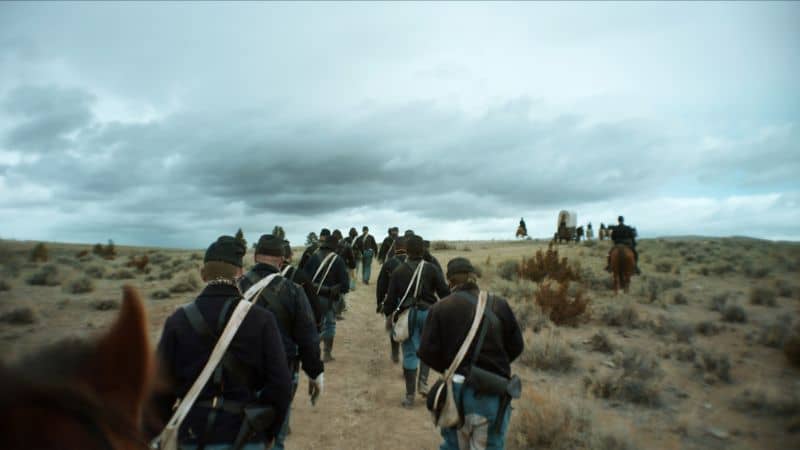
Marek: Forgotten soldiers in a snow-covered ditch in the latest film, The Damned, directed by Roberto Minervini. They’re abandoned, confused, lost. It’s not just a film about war but rather about the role of the individual in a time of historical change, reverse interpretation and simplification that often strays far from reality.
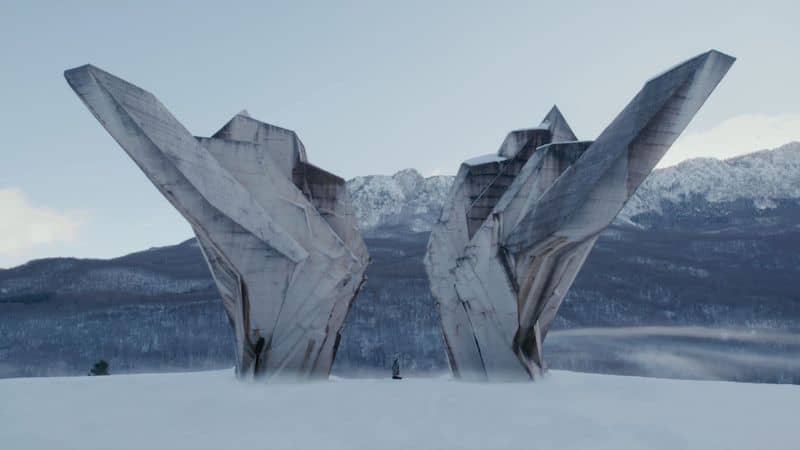
Andrea: In January, I was walking through the Museum of Modern Art in Dublin, Ireland, and in a dark room, I was struck by a scene in which the camera slowly passes the Sutjeska monument in Bosnia and Herzegovina, which is embedded in the countryside. The impressive structure looms like a solitary sculpture. We’ll be screening the film Beacons by Slovenian artist Jasmina Cibić in Fascinations.
Petr: A journalist from Respekt magazine in Vidlák the blogger’s kitchen in Miroslav, South Moravia, captured by Zora Čápová (Pit Stop Reporter). Bugs and cockroaches in the flats of a Brno house with the electricity constantly being switched off, which in Tomáš Hlaváček’s film represents all the problems of the Czech poverty trade (The Impossibility). A moss-covered real-estate agent in Nora Štrbová’s playful film once i got in, it was hard to get out. The bare walls of a prison, where perpetrators and victims meet in Jan Gebert’s film Confrontation. There is a strong image in every film, and they’re all important.