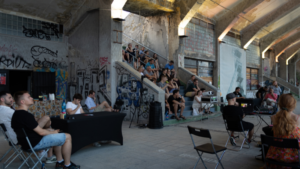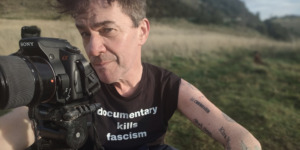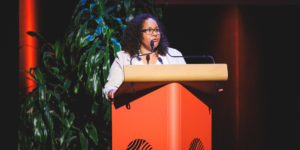
The East Doc Platform acts as the yearly link between Central and Eastern European documentary filmmaking and the international industry. The fifteenth edition takes place from 19 to 25 March 2026 in Prague. Organised by the Institute of Documentary Film, this event is the region’s most concentrated week of co-production, funding, and distribution event specifically tailored for nonfiction projects from Central and Eastern Europe, matching local voices and storytelling to the global documentary community.
A working space
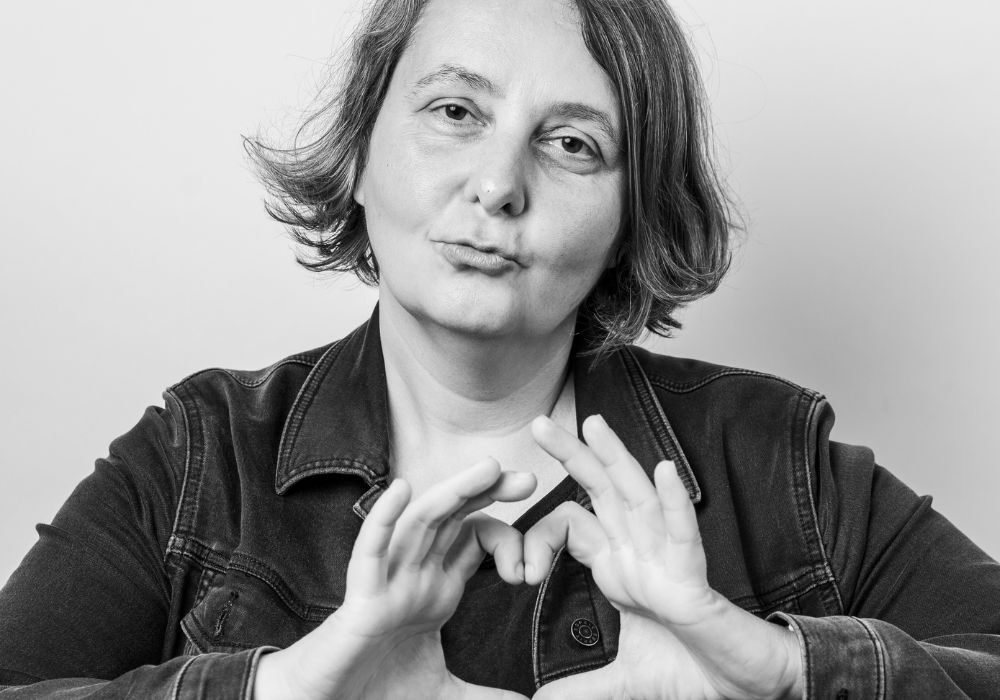
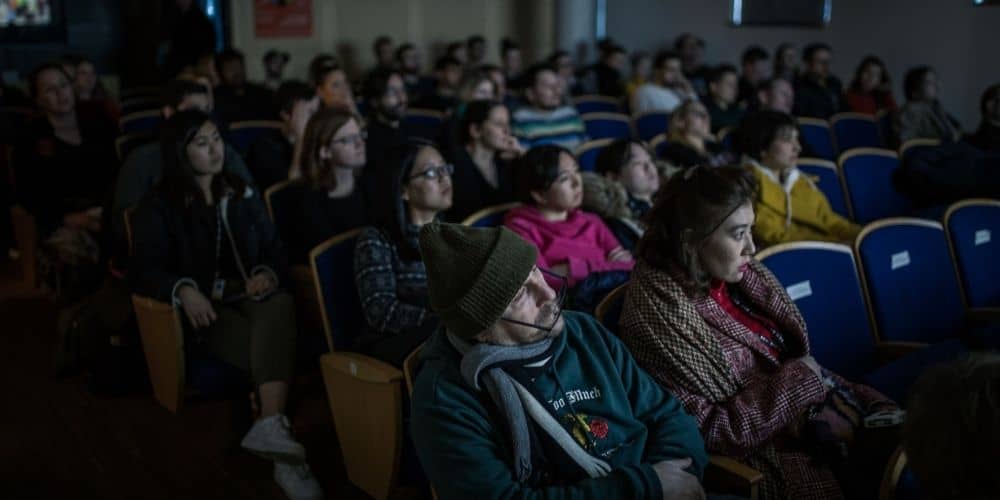
Stepping into the role of East Doc Manager, #Hana Kulhánková# is focusing on operational flow rather than the typical rhetoric of reinvention. «My imagination is very practically focused on organising the next East Doc Platform in March 2026,» she explains. She is adamant that East Doc should function as «a working space» where projects can «genuinely move forward», suggesting that the true measure of success is simply how useful the week proves to be for the participants involved.
Her professional approach is rooted in her experience with cultural institutions where event design must navigate safety and egalitarian visibility. Kulhánková views this background as the foundation of her institutional instincts. «That perspective is shaped by my years at One World Human Rights Documentary Film Festival and Prague Pride Festival, which are festivals where culture, politics, and lived experience constantly intersect,» she says. She resists valuing scale for its own sake. «I think in terms of people, how filmmakers think, how decisions are made, and how power circulates in cultural spaces,» she notes.
«Clarity doesn’t come from simplification»
Matchmaking before the meeting
This focus on precision is most evident in matchmaking, which she considers a core institutional responsibility. The East Doc Market centres on one-to-one meetings for projects at various stages, but Kulhánková refuses to see the meeting itself as the primary unit of value. «A genuinely valuable match starts long before the meeting itself,» she argues, noting that both sides must understand why they are meeting, what decisions are realistically possible, and what expectations follow. She describes preparation as a form of close reading—having direct talks with filmmakers about their constraints and honest chats with guests about what they can actually offer. She also highlights a less glamorous but vital duty: the responsibility to be honest when a match isn’t there, preventing meetings from becoming mere «polite conversations» that fail to move a project forward.
Kulhánková wants decision-makers to listen «for how filmmakers think, not just how fluently they perform.» She points to «ethical awareness, the ability to reflect on uncertainty, and responsibility toward subjects» as forms of intelligence that traditional pitching environments often underprivilege. Such performance-focused culture ultimately skews selection, pressuring filmmakers to maintain a persona that is fundamentally at odds with creative practice.
At the same time, the global film world tends to pigeonhole Central and #Eastern Europe# with a «tendency to see the region as behind or semi-periphery, defined mainly by crisis, transition, or political urgency.» She challenges this narrow view, instead highlighting the region’s capacity for «strong formal ambition, humour, intimacy, and experimentation.» In her eyes, deeply local stories are the best way to reach a global audience. She argues that these filmmakers «are not just explaining contexts» for an outside audience, but are «asking complex, universal questions through very specific lived experiences anchored in specific locality.» Ultimately, she finds that «what excites me most are projects that refuse simplification.»
This commitment to complexity is reflected in how Kulhánková defines clarity. «Clarity doesn’t come from simplification, it comes from good translation,» she says. Here, translation is both conceptual and linguistic, implying that platforms have an educational role. She frames this as a two-way street: the platform works with guests «to expand how they listen and evaluate projects» while helping filmmakers articulate their intentions without forcing their work into ill-fitting formats.
Her most direct structural perspective is rooted in feminism, which she views as a matter of institutional design rather than just symbolic visibility. «For me, feminism in cultural institutions is about structure,» she says, looking at who gets the most attention, trust, and second chances.
She points to the real driver of change: when «access to resources, time, and industry professionals is distributed more fairly.» In a market setting, time and attention are the most valuable commodities people have, determining which projects are allowed to grow and which are rushed.
Managing that time is a priority. Kulhánková knows that industry weeks are often exhausting marathons, so she supports doing more prep work online to make the in-person time count. «Intensity alone doesn’t create value,» she says. She wants the event to build «focus and confidence, not exhaustion.»

«After-Image» and the ethics of time
The 2026 theme, «After-Image», reinforces this emphasis on duration and consequence. Kulhánková describes the afterimage as the imprint that stays with a viewer after a film ends; an emotional echo that returns the audience to memory and unanswered questions. She sees this theme as a call for filmmakers to make something that lasts. It moves the focus away from quick impressions and toward a deeper connection with the audience. This shift changes the life of a documentary, influencing everything from its early development to its audience and industry reception.
Taken together, Kulhánková’s views raise the stakes for what East Doc Platform can achieve, cutting through the noise so filmmakers can find clarity through tough choices without losing their work’s heart and soul. In this light, a successful event is measured by opening up a genuine path for a project to grow. Kulhánková measures success by what people «actually leave with,» not just emotionally, but «practically and intellectually,» and whether they feel more supported when they get back to their desks.