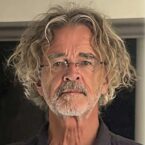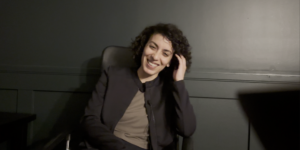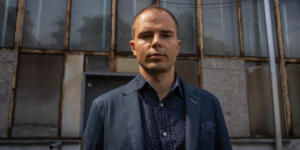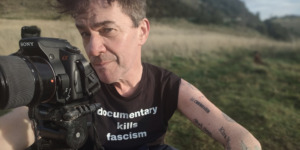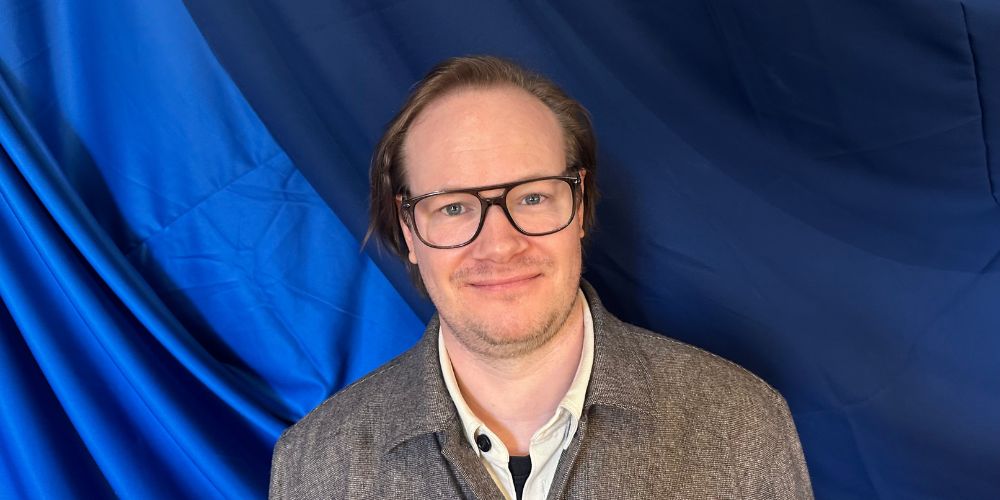
Arthur Franck is a filmmaker from Helsinki who has made documentaries for over 20 years. The Helsinki Effect is his third feature. His first, The Hypnotist, premiered here in 2019. He has previously made films primarily for a Finnish context.
In The Helsinki Effect, #Leonid Brezhnev# was in 1975 behind a huge conference in Helsinki, where he asked for a document (as the title of one of the film’s 12 chapters) to be signed by leaders from 35 countries. I wonder if such documents or treaties have the same legitimacy anymore:
«There is this sentiment that #Trump is throwing out the rules-based world order, which nullifies the importance of treaties. If you have a significant leader who doesn’t give a shit about treaties and what’s been agreed upon, then what’s the point of it? Up until this point, words have mattered. The #Soviet Union# was worried. The borders were never completely agreed upon after the Second World War – they were a matter of concern. They wanted it in writing. In that sense, agreements will continue to matter. Of course, authoritarian tendencies tend not to like something that previous leaders have signed. We must keep reminding them. The alternative, that treaties commonly agreed upon don’t matter, that world is very scary to me.»
But today, more and more, we see with the politics of the #US, #Russia or #Israel, where ‘might is right’ – whoever has the power, sets their own rules, suppressing others. It doesn’t make the future of #diplomacy bright as it was shown back in 1975:
«I think optimism is my only weapon. Otherwise, I would be having a hard time existentially. I have kids. You don’t want to look at the future of the world in a completely negative light.»
I remind Franck of Minsk I and II, as well as #Ukraine, which was signed by European leaders. It was not respected. And back in 1989, US Foreign Minister #James Baker# said to #Gorbachev that the US and #NATO would not move one millimetre east after the release of the wall. Maybe the document from the 1975 conference was the most important we had. It’s now 80 years since #Yalta and 50 years since Helsinki:
«What we’re going towards now, is where the big boys and girls, or mostly boys, try to divide up the world into spheres of interest. You take that, I take this. But we had Helsinki, and nobody knew what Helsinki would lead to. We don’t know today what a diplomatic process that seems futile and maybe nobody will care, but if we don’t try, then there won’t be a positive outcome. And Helsinki had a long tale. It wasn’t the only thing that ended the #Cold War#, but the people who were mostly affected or were part of the grassroots movement say it was really important. We didn’t know that until later. So we must empower the people who work with diplomacy and put our faith in that because the alternative is terrible. It’s all we have, and it’s the most beautiful thing we have.»
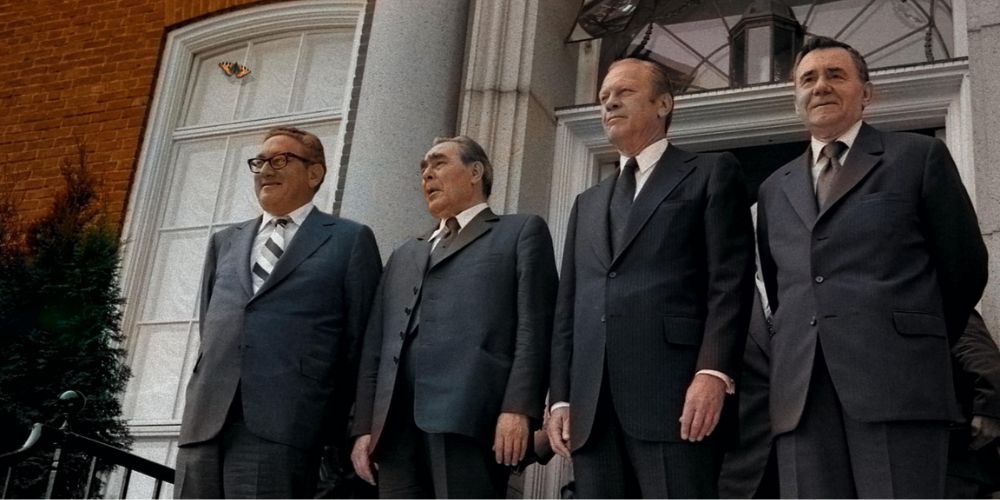
The climate of the 1970s
Talking about the Trump administration trying to make a peace deal between Ukraine and Russia – will there really be a legitimate document in the end, as the new militarisation is all we see?
«If there were to be an agreement agreed upon in the next months or maybe a year, that might not be a lasting one. The #Helsinki Agreement# was being ‘prepared’ already in 1954, with Molotov suggesting a European Security Conference. But that is not in the film; the starting point for what became Helsinki was 1969. It’s a really long process. We can’t demand that every single day of diplomacy has to have perfect outcomes. Diplomacy is about patience.»
What then about the #Oslo Accords# about Israel-Palestine? Was it worth it, back in 1993?
«I see diplomacy as a continuum that never ends, and you have to keep working at it with partial goals that might be manifested as treaties – as long as it can prevent people from being killed in the short term, they are good. Helsinki was also a good thing as it moderated Soviet aggression in Europe. They kept the process going because the agreement was important for them – it incentivised them not to be so aggressive. Sometimes you have to make deals with the devil. The longer sustainable deals actually shape a world order towards good.»
In Helsinki, besides borders and freedom of movement, the third main point concerned sharing information, #press freedom#, and s#cience. The Brezhnev administration was hesitant, as Franck tells us.
«They were discussing a lot internally what they could accept for the Bresjnev, the general secretary, could sign. Many in the Politburo hated it. And the interpretation is another thing – you can manipulate how the public sentiment is about the words in an agreement.»
In the 1970s, you also had #Watergate, you had IRA, the Red Brigade, Baader-Meinhof, and the Cold War still chilling. Was the atmosphere similar to today’s, or quite different? Aldo Moro was murdered in 78, Oluf Palme was murdered in 1986. We haven’t seen a state leader being killed for a long time, although there have been attempts at both Trump and Putin (now in May). However, until a couple of years ago, one would say that the European project post-World War II had been a success.
«Yes, and Erdogan is imprisoning his political opponents. We have dictators, there is probably new turmoil. The political landscape has changed significantly over the past decade. As a filmmaker, I am usually more comfortable looking back and seeing things that actually happened within the longer narratives. I think I’m as bad at predicting the future as anybody else. But we know that things go in cycles. At some point, it gets less worse, and then maybe it gets better again. We as citizens have to remind ourselves of this.»
U.S. Secretary of State #Henry Kissinger# was one of the main negotiators in The Helsinki Effect. Does Franck see anything like this today?
«I think the biggest difference is that Kissinger loved to make unilateral deals with other big leaders. He didn’t really like discussing smaller matters. He had to convince Malta and West Germany to be in alignment. Kissinger even joked to Gromyko that they should assassinate Dom Mintoff of Malta because he was trying to torpedo the deal at the final stages. There are many negative things one can say about Henry Kissinger, but in this instance, he was loyal to his allies. He was a war criminal. If we think that #Netanyahu is a monster, Kissinger had much more blood on his hands. But in other ways, he was not a problematic political figure. He was probably an egomaniac, like most people at that level tend to be, with a horrible track record. But he did not sell out his allies for his personal narcissistic needs.
«I see diplomacy as a continuum that never ends, and you have to keep working at it with partial goals that might be manifested as treaties»
Militarisation and Finland
What about #Finland, which has now joined NATO? With the recent militarisation, what does Franck, who lives there, think of the government’s decision?
«I think the government is following the sentiment of the people. Suddenly we felt an existential complete shift with the war in Ukraine. Is that by #propaganda, or is it a real thing? I think it’s a real thing. Politicians didn’t even have to do a campaign. And they realised they didn’t even need a referendum on it, although NATO has been a problematic issue in Finland as a potential member. Suddenly, it wasn’t at all. And I don’t know, we will be grappling in the coming generations about the discussion that we never had, because there are not many critical voices. Personally, I went from not really caring to suddenly realising, ‘Oh, we’re going all in with NATO.’ I think it was good, although I don’t know what it really means.»
«Finland has been an industrial-military-complex ever since the world war. We have a mandatory military. We have probably the best independent defence of all European countries, due to our long border with Russia. Those things are very deeply ingrained in us. We are probably one of the better-prepared NATO countries.»
Then there is the risk of escalation simply because of the production of more and more weapons and increased tensions. We cannot know exactly what it will lead to. But today’s polarising climate sounds like the opposite of the diplomacy shown in Franck’s film.
«Yeah, I know. But in the current paradigm, as our civilisation is, the military as a deterrent is still there. I cannot talk about a world that doesn’t exist. For my country’s existential perspective, it needs to be seen as really uncomfortable to invade Finland. That’s how our generation’s psyches are built up. I end up believing in that, although I hate war. I also hated being in the army. I hope we don’t have to go to war.»
«But, I am completely torn on a philosophical level. I know exactly about the escalation you’re talking about. But with the realism of what might happen in the short term, I find myself being at odds with myself.»
I wonder why Putin and his administration would want to invade Finland, as they already have a huge territory of maybe 12 time zones. What can be gained? And why should they want the whole Ukraine, as the West is so different from the more Russian-friendly east that is already occupied? Although there are always natural resources to be stolen.
«There’s usually a person who makes the decision, who is not rational. It can be his own ego or some tendencies. I don’t think we can always rationalise decisions through a cost-benefit thing. As #Robert McNamara# said, rationality will not save us. People can be crazy and do stupid things just because they want to. And Putin seems to be such a person.»
Artificial Intelligence
The last question is about your filmmaking. You pick everything from archives, but you did use #artificial intelligence# to simulate voices. Yes. Also, with humour. Why did you use artificial intelligence?
«I found these archives so that I could make this film. But then I found some books, as the conference was not been really well explained in Finnish education. Reading the books, I found a profound message – a universal story that we could learn from, something beautiful, even. I also found word-for-word quotations of Kissinger and Brezhnev behind closed doors. I found footnotes, found references to transcripts. These are incredible. I used voice actors first, but then AI tools started popping up, and I started to experiment with them. I gave them some Kissinger samples, and then I heard Kissinger speaking back to me, cost-effective as well. Although his voice is not very easy to replicate. I saw this as a new way to bring hidden things in the papers to life, because I couldn’t make people read the documents. That material also had much humour in itself. The weird theatre of diplomacy is funny, and also the suits, hairstyles and thick glasses. To not make it a bit boring, I built a Trojan horse as it became a method.»
Voice-over is hated by many, but in the more essayistic films it is used:
«The final step was to let go of an old bugbear of mine – not to use my own voice in a documentary. By using humour, some satirical commentary in the tone, and the ‘phone calls’,’, it was like conducting an experiment. Filmmaking, being playful, is very important for me.»