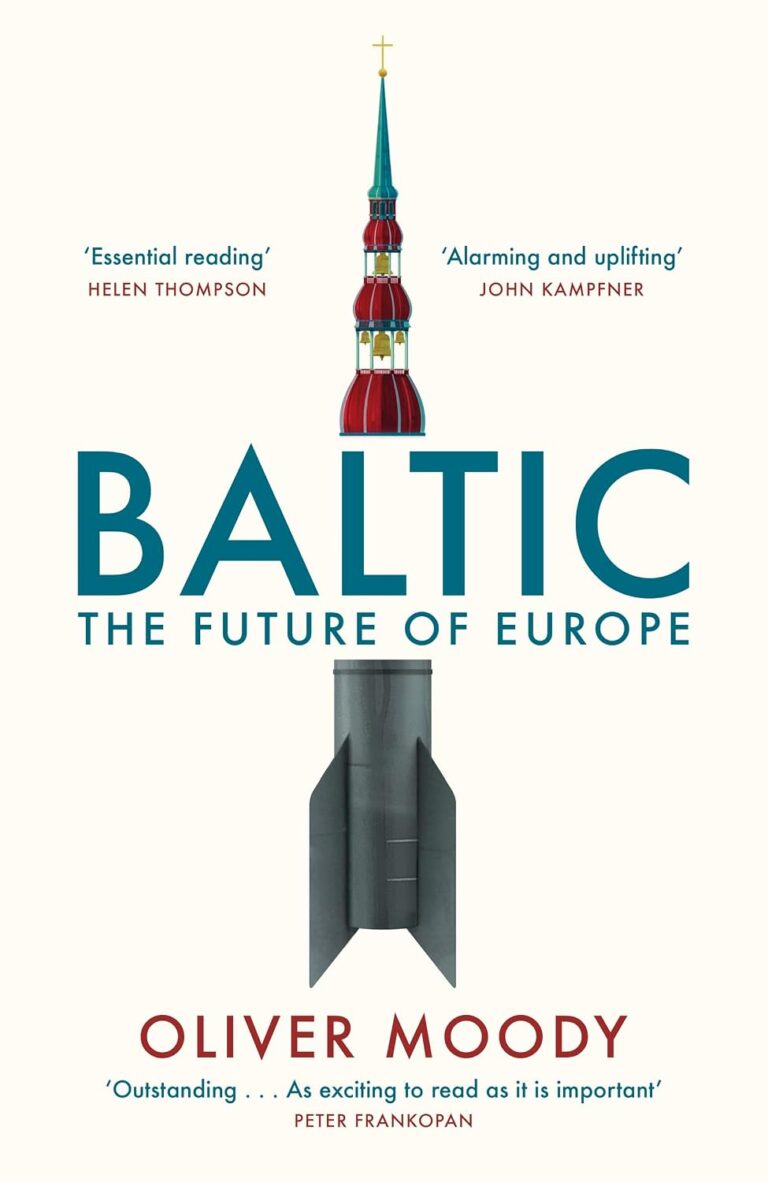
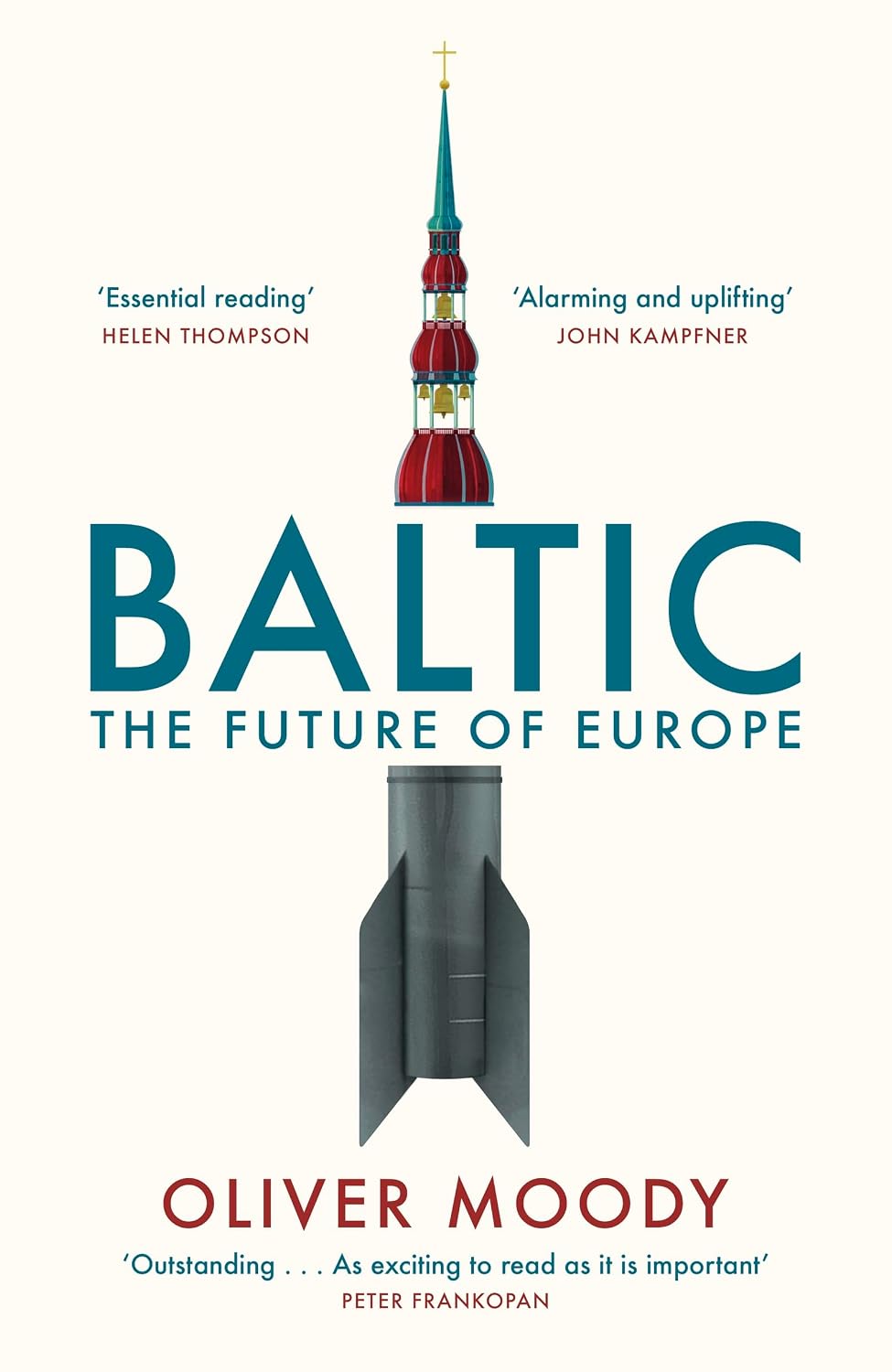
There are surprisingly few books on the Baltic region, both as historical accounts and cultural portraits. Several nations mingle around the Baltic Sea, but the region was long regarded, maybe unjustly, as the periphery of Europe. Epochal events happened, and big decisions were taken elsewhere. Oliver Moody’s book Baltic: The Future of Europe seeks to correct this and is ambitious from the very title. Moody is the Berlin correspondent of the British newspaper The Times; however, as the author writes: «I had spent three years covering Germany for The Times and had not given the Baltic a great deal of thought».
His book tries at once to present to the general public a complex picture of the Baltic as a historical and geostrategic space and to promote a «Baltic model» for other European countries to follow. While the book is more concerned with countries like Finland, Germany, Poland, and the three Baltic states, the spectre of Russia looms large throughout, as a constant threatening presence.

A war beyond Ukraine
This is clear from the book’s very introduction. The sense of security and timelessness of primordial places like Fårö and Gotland is an illusion, writes the author, making his point impossible to miss: «Fårö and Gotland are caught up in a war that stretches around the globe from California to Kamchatka, with the Baltic Sea as its geographical and geopolitical midpoint». The war at the moment may look like a confrontation between Russia and Ukraine, but «many of us are still oblivious about the gravity of the situation», warns the author. Moody, unlike other Western writers, recognises that the Ukraine War is not just between Russia and Ukraine, but instead a proxy war, a «generational contest between Russia and the West», «at almost every conceivable level below direct military confrontation». The Baltic region is, along with Ukraine, one of the two fulcrums of this context.
The story the author wants to tell is «about the return of the ancient struggle with Russia for the mastery of the Baltic, how the West can win it and how its outcome will be decisive for the future of Europe and the wider West». For good measure, Moody adds: «The struggle has been going on for more than 800 years». Russia may indeed not be the easiest of neighbours and small countries are right to be nervous.
The struggle has been going on for more than 800 years.
Ties older than the war
The author notes, however, that «the countries around [the Baltic Sea], apart from Russia, are also more intensely connected than almost any other region on the planet», «on an organisational level the region is the most extensively networked in the world», «from jazz to high politics». The ancient ties go back to the Bronze Age, which in Northern Europe ended around 500 BC. Today, however, the biggest factor unifying the Baltic region is Putin and Russia’s war in Ukraine. The Russians would dismiss all these worries as typical symptoms of paranoid Russophobia, but Russia has demonstrated that it does not shy away from waging war, so clearly a certain measure of caution is more than justified, although it has until recently shown little interest in confronting NATO directly.
Some have called the Baltic states «the most dangerous place in the world», but Moody refuses this assessment and proposes the countries of the Baltic region as a model of confident self-reliance and resilience in the face of adversity: «For a Europe that often seems tired and conscious of its own relative decline, plagued by low growth and identity crises, the Baltic is also a source of ideas and optimism». Was it Nietzsche who suggested building cities around the Vesuve, in a variation of his «what does not kill me makes me stronger»? «Most of all, I am interested in what the countries of the Baltic can teach the rest of the West about how to muster collective willpower and hold societies together in the face of danger and uncertainty», writes Moody. Maybe a great danger can be a strong antidote against the ill of complacency and stimulate people to be confident and brave, but confidence and resilience alone won’t keep the volcano quiet forever. Living next to a volcano also necessitates understanding how volcanoes work if one wants to survive.
Living next to a volcano also necessitates understanding how volcanoes work if one wants to survive.
What outsiders rarely learn
Fortunately, this book is not only about the proxy war between Russia and the West or an imminent attack by Russia on a NATO country, trying to guess the always malign intentions of the threatening neighbour from the East. There is no shortage of books of that kind, so yet another attempt to read what’s on Putin’s mind would offer nothing new. Baltic instead displays intimate knowledge of the realities of countries like Estonia, Latvia and Lithuania, about which, in general, so little is known. We learn for example that Estonia, since its independence in 1991, has raised its GDP by more than 2,500 percent. But we also read about the Latvian national epic poem, Lāčplēsis, The Bear-Slayer, published in 1888, during the Latvian National Awakening. At the time, having a national epos was regarded as one of the prerogatives of true historical nations. The Finns and the Estonians already had their own epos, so why shouldn’t the Latvians have one too?
And how much does the average English or French citizen know about Finland or even Denmark, beyond the usual stereotypes and the trendy words sisu and hygge? Baltic is not a perfect book, but it is certainly very informative and pleasantly fascinating. This is even though the picture of Russia it paints is extremely bleak: «Empire of hopelessness», writes Moody, borrowing a phrase by the exiled Russian writer Viktor Erofeyev, who, like Moody, lives in Berlin, and whom Moody interviewed for his book. Sometimes, going through the pages of Baltic, it may look as if outright war between Russia and the West is simply inevitable. In the end, however, this book may throw a bit of sunlight to melt the often foggy skies of the Baltic and help other Europeans see it as a living and vibrant region, not a frozen space permanently trapped in ice and darkness, but one of the most dynamic parts of contemporary Europe.