The last is Iran. Which side should we be on?
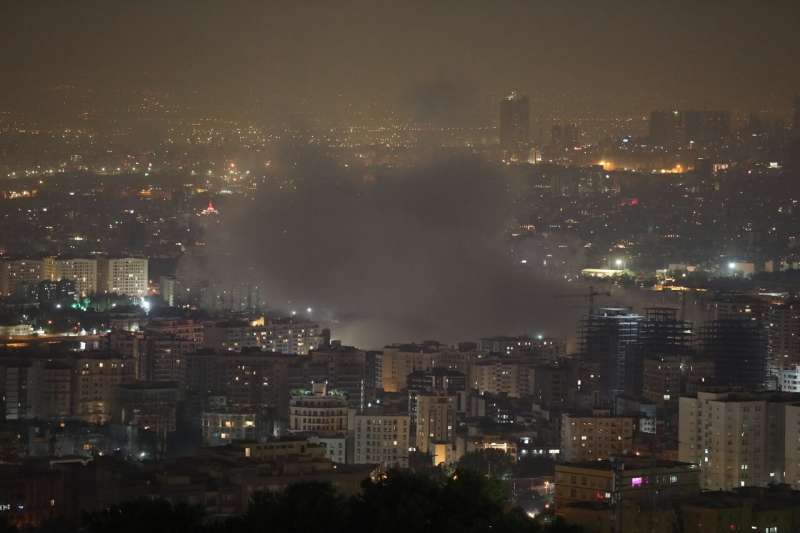
Most of the left, in most of the world, is taking to the streets to defend it. Because the Israeli-American attack of 28 February breaks every rule of international law, but ultimately, because with its Islam of the oppressed, which draws on the Quran as much as Marx and Frantz Fanon, Iran since 1979 has been a sort of icon of defiance against the United States and Western imperialism. And yet, now it is also Iran that Iranians criticise. The Iran that opens fire on protesters. The Iran that locks up dissidents in Evin prison. The Iran that is in Dubai, which it bombs and whose moral rot it contests, has offshore companies to bypass sanctions. Mojtaba Khamenei, the new Supreme Leader, has in London assets worth some $285 million. And so, how should we classify it?
Iran is certainly different from the West. But is it better?
From Cuba to Gaza
And the same for Maduro’s Venezuela. Failed heir to Chávez. With his socialism, everyone went hungry. But what about the opposition? ¿About María Corina Machado? Who gifted Trump her Nobel Prize? Which is the left, and which is the right? And Ukraine? With Zelensky, but also all its oligarchs? Who views even war as a business? Or Cuba. From which now all want to leave. Or even the Palestinians. Indeed. Perhaps, the Palestinians, more than anyone, are heroic and extraordinary, and yet also caught between Fatah, which steals everything, and Hamas, which guns down alleged spies in the squares. They last voted in 2006. Twenty years ago. And China? Our most feared rival? Its economy will soon be the world’s largest. But what kind of economy is it? What kind of model is it? It is not communism: it is state capitalism. Jack Ma, the founder of Alibaba, proudly champions the 996 model, which means working from 9 in the morning to 9 in the evening. Six days a week.
Is this the Global South from which the alternative would have come?
Our salvation?
Which side should we be on?
post-colonialism was just a restructuring of Western dominance.
The Global South does not exist
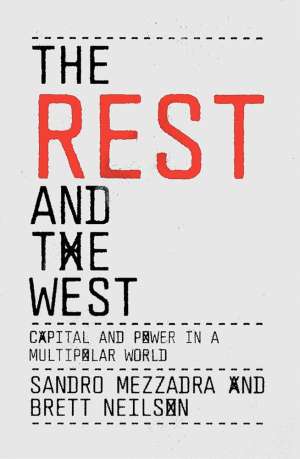
At first glance, this book, by Sandro Mezzadra, professor of Political Theory at the University of Bologna, and Brett Neilson, professor of Culture and Society at Western University of Sydney, seems to be nothing new. It addresses issues already addressed by others—namely, the decline of American hegemony, and what’s to come. But instead, it goes a step further. Because after Gaza, we can no longer stand what had already become undeniable with the war in Ukraine, and that actually, had become apparent even earlier, with Covid-19: when the West, remember?, decided not to share its vaccines with the Rest of the world, despite having far more vaccines than needed. The disparity between the West and the Rest has never been more shameless. After all, colonialism never ended: post-colonialism was just a restructuring of Western dominance. But now, and this is the next step in this book, what is clear is that this is not a conflict between the West and the Rest: the Rest is not a compact and virtuous Other opposed to a guilty West.
The famous global South does not exist.
Because the elites of the global South are integrated into the circuits of power and capital.
They are bits of the West within the Rest.
What has happened is not the decline of the West, but its dislocation.
And building an alternative is much more complex.
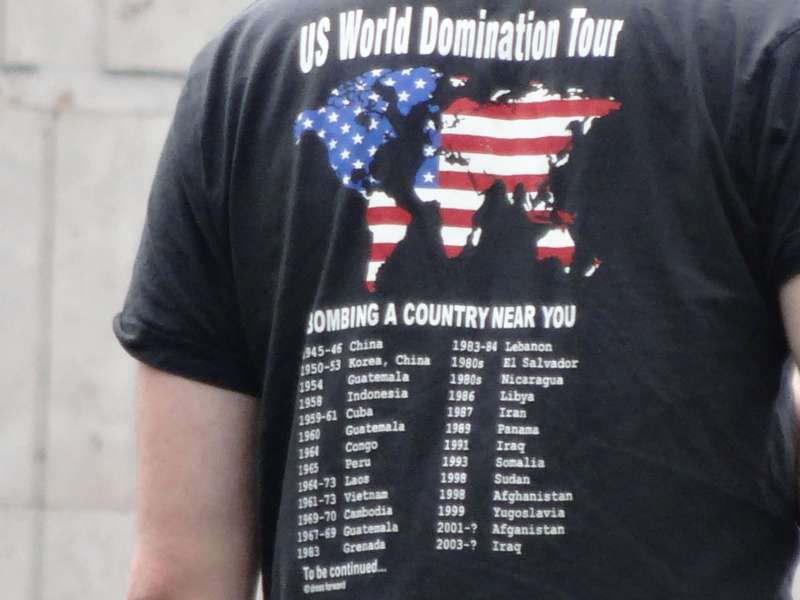
US unilateralism
The most agreed-upon analysis is that after 1989, after the fall of the Berlin Wall and the end of the Cold War, there was a brief phase of multilateralism, with a forefront role for the UN, and that after 9/11, with Afghanistan and Iraq, this multilateralism has been replaced by a US unilateralism which now, with Trump, is not only out of any law, but out of any control: and that meanwhile, as a reaction, other countries have been increasingly coming to the fore. China, Russia, India, Brazil. Europe. The Gulf. The prospect, in other words, is multipolarism. But is that really the case? No one, true, can now, alone, guide and influence the distribution of power and the accumulation of capital at the global level. The world no longer has a centre and a periphery: rather, it is a playfield of constantly shifting forces, because the nexus between capital and territory has been broken. Forever. And so the poles not only do not correspond to states, but they are not even geographical entities. Spatial units. They have no defined borders. They are not delimited and self-sufficient. Today, the most diverse actors exercise the most diverse powers. States, yes; multinationals; a wide array of international organisations; but also militias, special economic zones, infrastructure corridors, information networks, energy flows, regulatory agencies.
Or even individuals.
Elon Musk’s wealth exceeds the GDP of 171 of the world’s 205 states.
And there is no possible protectionism anymore.
And in this context, the Rest is actually neither compact nor virtuous. The lines of cooperation and conflict are no longer linear. Look, for example, at China’s data policy. In China, the web is strictly monitored. There is the so-called Great Firewall: a technical and legislative barrier that shields the Chinese from interactions with foreigners, creating a national database that is unparalleled and invaluable for AI development. But at the same time, China is the driving force behind the Digital Silk Road. This aims to improve transnational connectivity by investing heavily in undersea cables, satellite systems, software, and servers. It is a blend of geopolitical ambition and technological innovation.
Again: how to classify it?
Should we support it or oppose it?
The point is not to focus anymore on the balance of power between states, but on the balance of power between classes within states, and even more so, across states.
It is not the South versus the North, the West versus the Rest: it is us versus them.
Values mark borders.
And everything is plain now, and yet much more challenging.