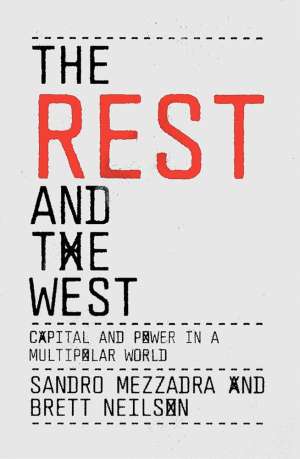
In Europe, the Palestinian flag is everywhere. Many Europeans wear keffiyehs, even Gucci sells them; they wear pins shaped like watermelons, or keys, or Handala, a Banksy T-shirt, and there are events all the time: film retrospectives, books, concerts, strikes, and even those who set sail to break the siege of Gaza. And yet, Palestine has never been so alone now that that’s what the entire world is talking about.
The NGOs left on 7 October. And they never came back.
The activists are here and there, lost. And so are the journalists.
No parliament has suspended relations with Israel.
Nor with the Palestinian Authority, to force it to reform and hold new elections.
No judge has applied universal jurisdiction.
No entrepreneur has exported weapons.
And we are stuck between missiles and settlers.
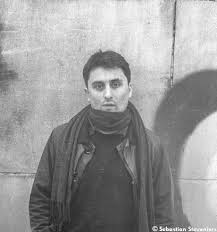
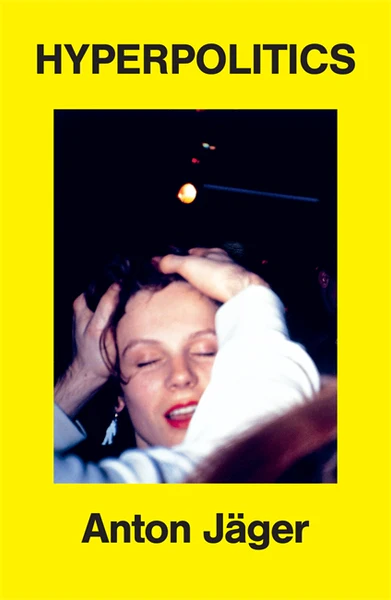
The case of Palestine is precisely what Anton Jäger, historian of political thought at Oxford University, calls «Hyperpolitics». An extreme, pervasive, and sometimes even invasive politicisation that affects everything and everyone, yet has no effect. A politicisation without politics. After the mass politics that characterised the XX century, from 1914 to 1989, with parties, unions, strong affiliations, and the brief post-political era of the post-1989 years, when, with the fall of the Berlin Wall, we were told of the end of History, the end of ideologies and conflicts, came Anti-Politics, of which Hyper-Politics is somehow a radicalisation: lots of participation, lots of movement, lots of color, but no results. Participation. And nothing more. Just for the sake of participating.
For yourself, more than for the others.
Participation started again after the 2008 financial crisis. According to Anton Jäger, who studies specifically the influence of capitalism on democracy and political agency, the turning point was the subprime mortgage crisis. This finally made us realise that individuals are not to blame. Those problems are structural. And therefore, the only way forward is to unite. And face them together. In the 1980s, Margaret Thatcher and then Ronald Reagan erased the state’s role in the economy, privatising and deregulating all they could, and arguing that the market fixes everything on its own: that the market is always right. And replacing social benefits with easy credit. Until many ended up in the streets. Literally. Homeless. And governments, remember?, rushed to save not the citizens, but the banks. The robbers rather than the robbed.
The crisis spread everywhere from the United States. With the soaring prices of wheat and bread, on December 17, 2010, Tunisian Mohammed Bouazizi, desperate, set himself on fire, igniting the Arab Spring and a global domino effect. Spain. Greece. Chile. Turkey. Little by little, all the world rose. All the way to New York. With Occupy Wall Street. The revolt of the 99%. The revolt of the majority: against a system built for a minority. Many heeded the appeal of French partisan Stéphane Hessel: «Be outraged!», and for a moment, everything truly seemed to change. But it was a mobilisation without organisation. Without leadership, without strategy. Without goals. And all died down.
The demonstrations petered out. And the Arab Spring plunged into the Islamic winter, and hell. But even those movements that seized power fared no better. The most emblematic experience was Greece’s.
Where many ended up in the streets, as in the United States, the left-wing Syriza won the elections, and Yanis Varoufakis was appointed Minister of Finance. However, Greece ultimately still complied with the austerity measures demanded by the European Union. And Syriza lasted only a term.
Being outraged is not enough.
Because activism is now often a search for meaning and identity rather than justice.
The movements have not disappeared. On the contrary, after Occupy Wall Street, it was the turn of Greta Thunberg’s Fridays for Future and the environmental wave. Then, Black Lives Matter and racial discrimination. Me Too and feminism. And now, indeed, peace. With the anti-war demonstrations. Apparently, nothing is missing except change.
Beyond the front pages, what has the Flotilla achieved?
There is so much attention for Gaza, true. But with what results?
And does anyone really care about the results?
Because activism is now often a search for meaning and identity rather than justice.
The rallies are a selfie—a TikTok video.

The point is that, with the internet, says Anton Jäger, the cost of participation and expression is minimal. And leaders, more than leaders, are influencers. No one knows exactly who they are or what they represent. But above all, he says, work is no longer what it used to be. The factory no longer exists. The office no longer exists. And there are no unions anymore because there are no contracts. The worker is now his own boss, self-employed, with only online relationships.
And so, mobilisation waves up and down: without ever truly touching power. Citizen control over governments has not increased—quite the opposite. More and more areas of power are beyond not only the citizens’ ability to control, but the government’s ability to decide. There is a large public sphere, says Anton Jäger, but little civic engagement, and zero institutional action.
There is no organisation. There is no coordination. There is no strategy.
Anton Jäger stops at the analysis. He makes no proposals. But his book is the first to state all this clearly. How can we move from the centrality of events, of means, to the centrality of the objective? The centrality of impact?
How can we return to a politics that changes the world, instead of simply criticising it?