
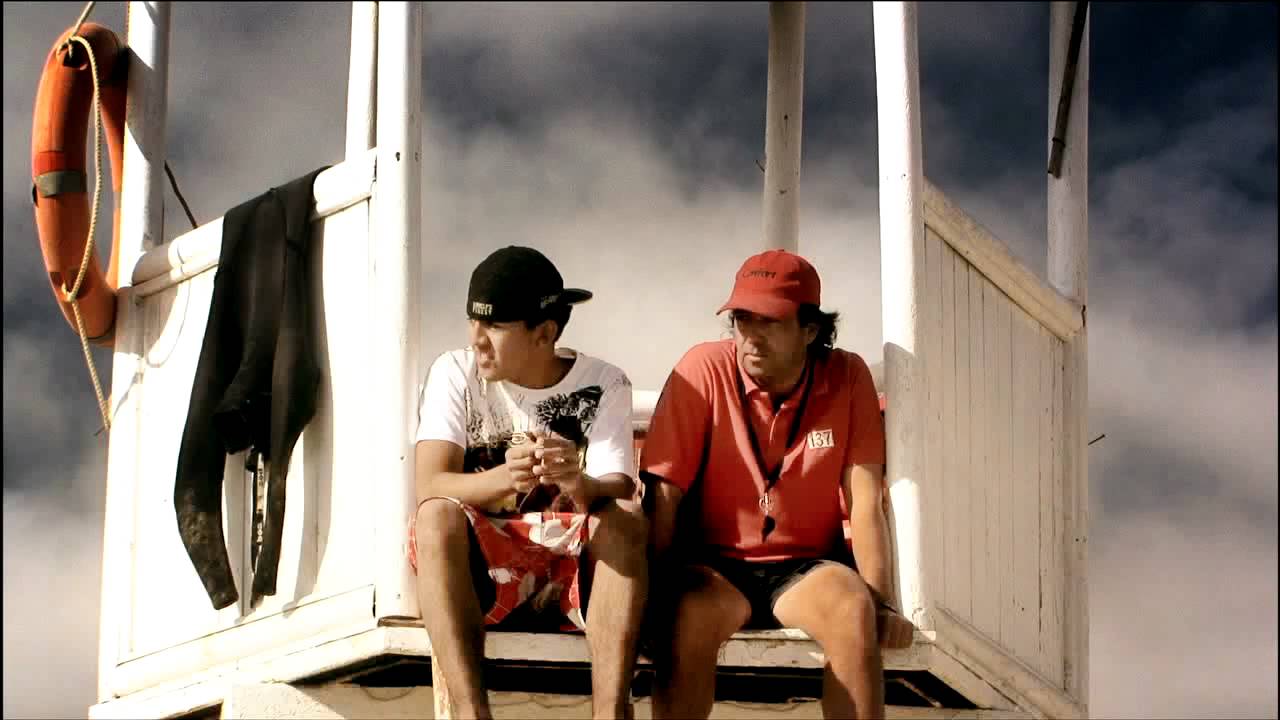
The film observes the routine of a man who is anxious for the moment to arrive when everything will become worthwhile. While he waits for this to happen, he creates duties for himself and finds amusement listening to the living-room conversations taking place on the sand. The lifeguard becomes a silent witness to everyday life in Chile.
Focusing on a narrow part of society can be very beneficial for a documentary. It probably allows the director to become more acquainted with the environment and the people in that specific place. But it also demands something extra of the film which can be difficult to pinpoint in words. That perhaps has to do with a stronger demand for interesting characters, a special kind of narrative development and/or a stylistic approach driven mainly by originality and fascination. Being a somewhat narrow film portraying the working life of a lifeguard on a beach in Chile, The Lifeguard has some difficulties in meeting these criteria.

The lifeguard gets up early. He is preparing his tower: untying the rope, setting up the signs, pulling out the ladder. Small numbers of people gather on the beach but as the day progresses more and more people appear. Beach activities commence. A group of men play a game, others go for a swim, some elderly women sit on the beach and talk about all the other people on the beach, a couple of young boys drink beer and try to hide it from the lifeguard. No one drowns. At least not for the time being. So the lifeguard takes on other duties. He helps a man to track down his lost company, and he assists a couple in finding their lost daughter. He discusses with a persistent couple whether or not it is allowed to barbecue on the beach. All the time we get a feeling that he is waiting for something to happen. As he constantly observes the beach, and we observe him observing the beach, we get a notion that something might happen in just a few seconds. But not much happens. So narrative development of the sort I mentioned in the beginning of this review is not around in The Lifeguard. But something else is going on. While waiting for something to happen, for the film to really begin, we sense a tension that is probably not unlike the tension the lifeguard must feel all the time he is working. To always be alert. To always have a feeling that something dramatic is about to happen. And when it finally does happen, we – and the lifeguard too for that matter – are caught off guard.
There is an extra dimension to the main character that should help the film but in many ways does not. He is said to be afraid of the water. The other lifeguards talk about this. How can you hire a lifeguard who is afraid of the water from which he is supposed to rescue people? The rumour goes around and creates some kind of conflict among the group of lifeguards – but the problem here is that the conflict and the rumour do not really manifest themselves in real life. They seem more or less created by the film itself. It seems artificial and constructed and in a way it feels like an annoying and inappropriate appendix created by the filmmaker.