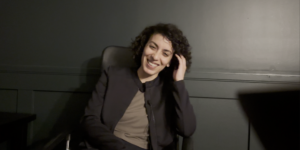
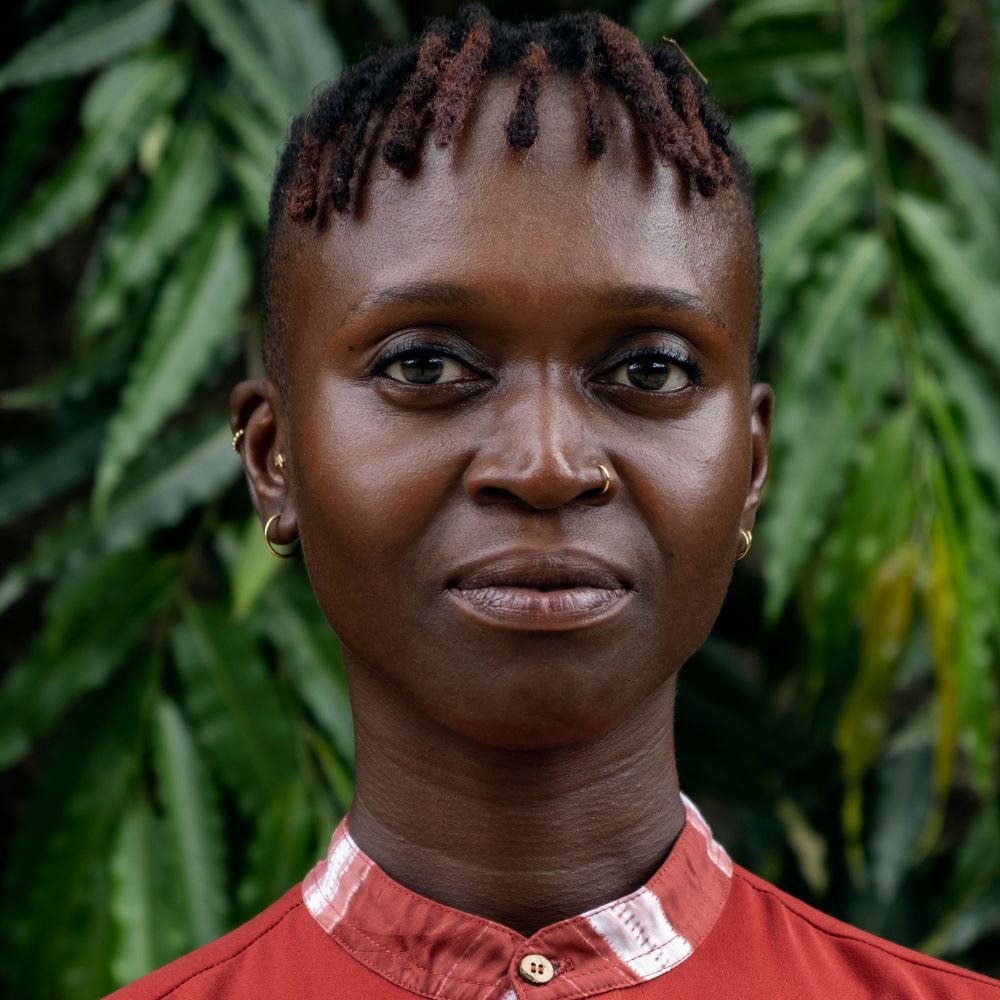
At the 19th edition of #ethnocineca – International Documentary Film Festival Vienna (8–14 May 2025), cultural anthropologist and seasoned curator Jacqueline Nsiah presents Hauntings, a transnational film program that confronts the afterlives of #colonialism and the unfinished work of restitution. From #Ghana to #Haiti, from #Guinea to #Germany, these films unravel histories that linger in archives, bodies, and landscapes, asking what it means to live with ghosts that never asked to be buried. Rooted in Nsiah’s deep engagement with African cinema and the politics of memory, the program challenges notions of visibility, authorship, and historical closure.
In our interview, Nsiah speaks candidly about cinema’s power to hold contradiction, the emotional labour of curating haunted narratives, and the radical act of asking unanswerable questions.
What drew you to the concept of «Hauntings» as the central frame for this year’s program? How do you see this theme resonating with current global conversations around decolonisation, restitution, and historical justice?
Firstly, I was stunned and very happy when the directors of Ethnocineca approached me to curate a programme around the theme of Hauntings and give a keynote speech. I was drawn to the theme because I associate Hauntings with things that are unseen, things one cannot put their finger on, yet they occupy space. There’s so much room for interpretation and feelings, which I find very endearing, especially in a world where everything is based on facts and this saying, ‘seeing is believing.’ Hauntings contests that, and it resonates with me.
Hauntings in the context of decolonisation, restitution, and historical justice, to me, have everything to do with it. As someone of African descent, I ponder a lot around these topics; there’s no way to escape it; it is part of my history. Our history has been tampered with so much, stories altered, and artefacts stolen, and restitution is still a far-fetched dream. I often think about, if the African continent hadn’t been enslaved, colonised and stripped of our deities and artefacts, how our renaissance would have looked like? Where would we be now? I don’t have the answers, just more questions…
Do you see film as uniquely equipped to deal with the intangible—memory, trauma, longing, spiritual presence—in a way other media forms might not? What do the films in Hauntings reveal about cinema’s capacity to hold contradiction or ambiguity?
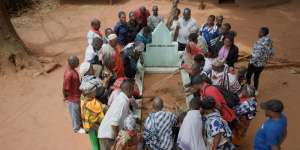
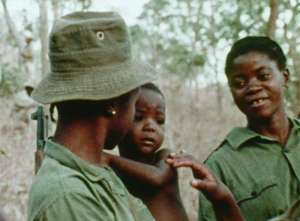
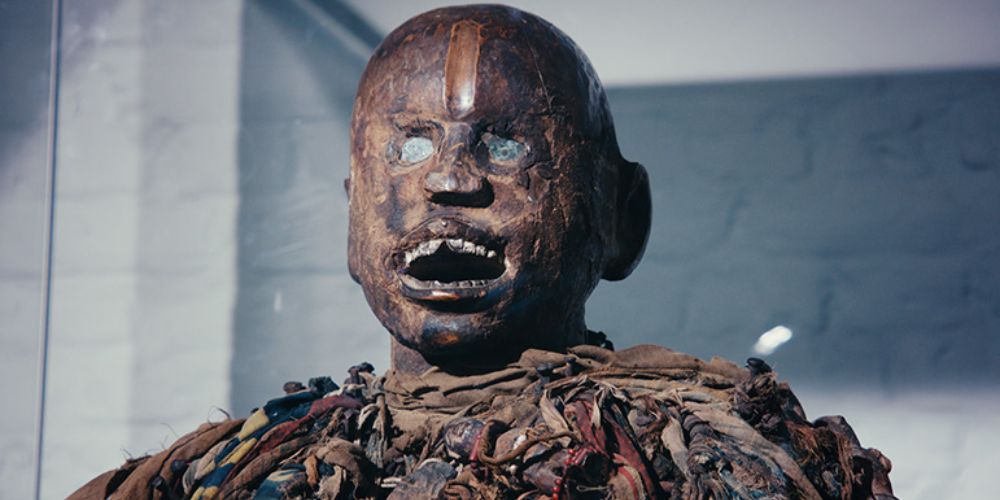
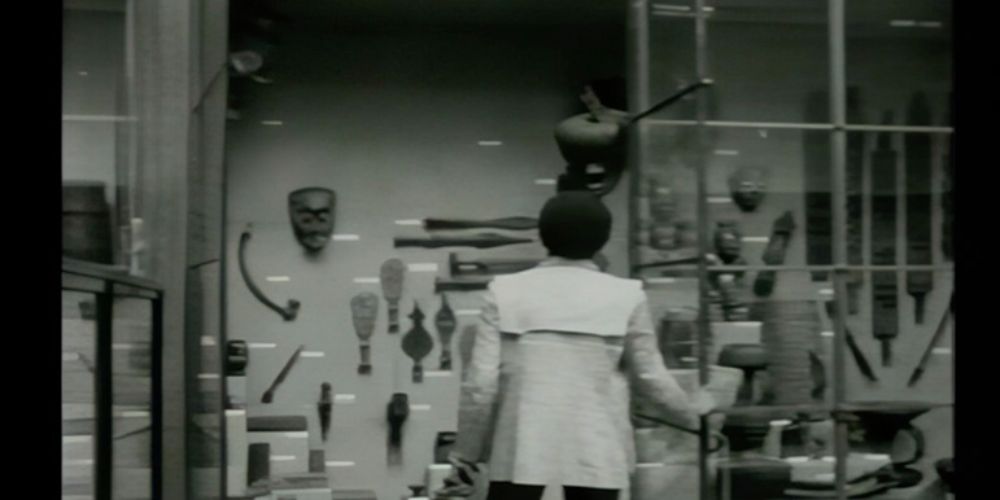
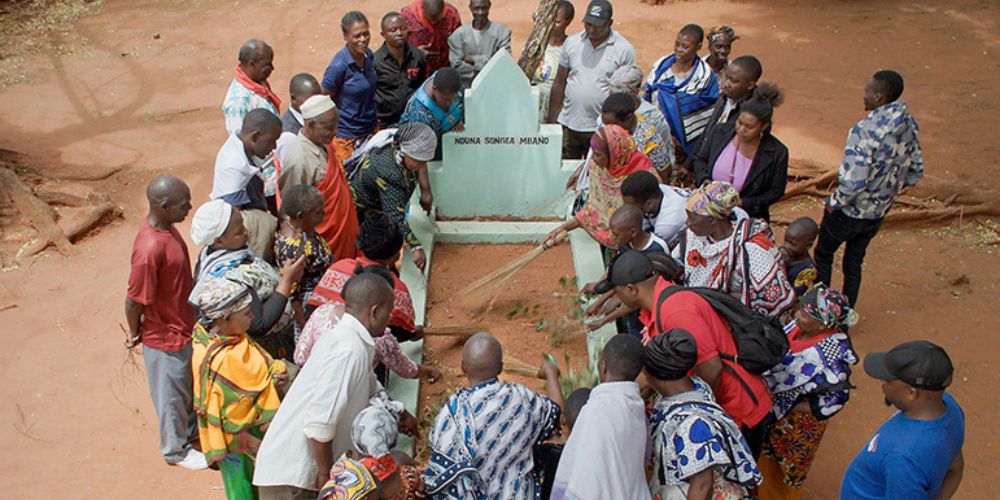
To me, film is a medium that can reach the widest audience and doesn’t require pre-knowledge like knowing how to read or a degree in art history to interpret paintings or art installations; one can just consume and have their own POV or even get involved and shoot without necessarily having to study filmmaking. Therefore, I think it is the unique and best-equipped form of medium. I really like how film can convey so much, even with absence, through different imagery, or sound and reenactments. The films that I curated for Hauntings unearth different findings through in-depth research like in The Empty Grave, uncover hidden truth through using the camera as a tool in You Hide Me or push the margins of what documentary is, defined in #Eurocentrism and reappropriated on their terms in Dreams Like Paper Boats, to name just a few examples.
…film can convey so much, even with absence, through different imagery, or sound and reenactments.
On the other hand, much of the Hauntings program rejects the binary between visibility and invisibility, presence and absence. In your view, what are the limits of cinematic representation regarding haunted subjects?
Interesting question! In my opinion, there are no limits; it all comes down to interpretation and how the film is viewed, which is very subjective to each individual. Although many of the films in Hauntings deal with the tangible, they also deal with a lot of #trauma and passed-on #grief that is intangible.
In your work as a curator and anthropologist, how has your understanding of the relationship between storytelling and resistance evolved?
My work as a curator is deeply rooted in African cinema and cinema of the #African Diaspora#, first and foremost. African cinema in the post-independence era in the 1960s and onwards was, for the longest time, referred to as #Third Cinema#. Third Cinema was considered for the masses and, from the beginning, intertwined storytelling and post-colonial movements, questioning the status quo and highlighting certain aspects of time and space. This has evolved over time for me; I see #resistance within storytelling from a POV of someone of African or Afro-Diasporic descent, regardless of the topic, as a wider form of resistance. What I mean is that the industry is already very difficult, especially for someone from the African continent; there’s hardly any distribution, no funding bodies, and generally so many obstacles that if someone decides to go that route, it is already a form of resistance in itself.
What responsibilities do curators have when working with films that engage with histories of violence, displacement, and erasure—especially when those histories remain politically unresolved?
I can only speak for myself, and when it comes to curation, I curate films that deeply move me and that I deem important in that context to show. I see my responsibility to highlight the films, filmmakers, and engage in conversations with the audiences about these topics. Always providing a safe space for all opinions to be heard. The best-case scenario is when someone from the audience approaches me and tells me they’ve learnt something. For me, it’s about constant dialogue and exchange.