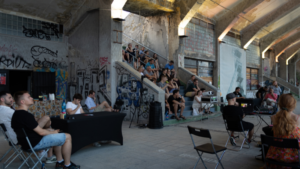
MajorDocs is the first international documentary film festival in #Mallorca (5 – 9 October, 2021) – a space to discover other realities and other perspectives through carefully selected creative documentaries.
In a time defined by the sheer excess of content, MajorDocs proposes a slow experience: a journey through eight films, each with a deep author’s gaze, that encourage us to stop, step away from our daily lives and connect with not just the other, but also with our own sensibility.
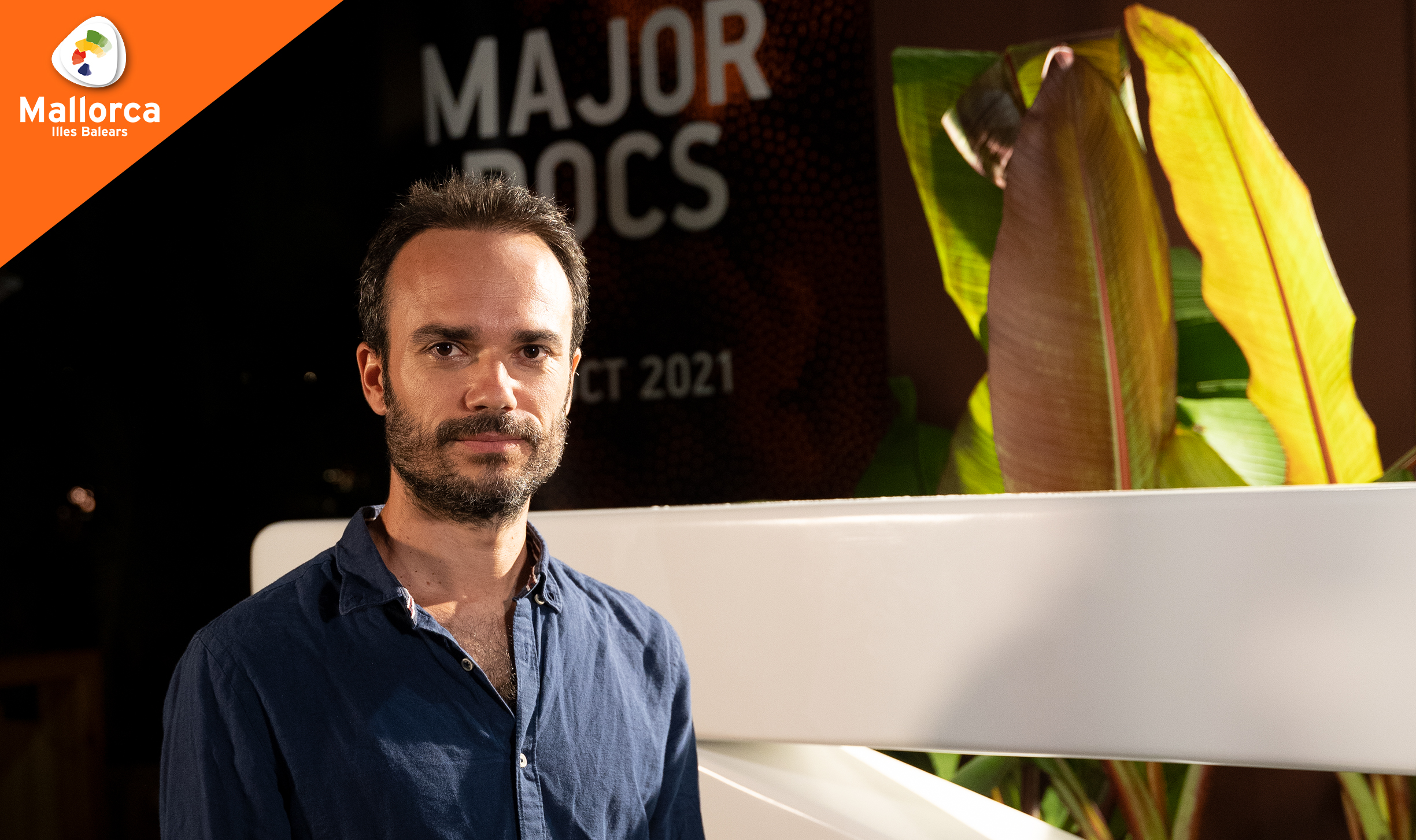
Festival Director #Miguel Eek# speaks with Modern Times Review on the challenges, programme and approach of the 2021 MajorDocs experience.
How was the festival affected last year due to the pandemic, and how has its presentation evolved into 2021? Are you more of a 2019 presentation or more of a 2020 presentation?
The 2020 edition was a challenge due to its constant reorganisation right up to the last minute. For months we lived with the variability of health measures, such as travel restrictions. This affected us a lot and meant a drop in international participation and especially the impossibility to bring most of the filmmakers. This year, flexibility is already a key element of our programme. We are committed to being present in person because this year we will have all the filmmakers and we have tripled the number of guests, but we are maintaining streaming broadcasts for those who cannot travel to the industry sessions.
How did you find the cultural support from government and other relevant organizations through the pandemic? Did you feel as though MajorDocs was supported?
Our funding is essentially regional, where support from public institutions has been unbalanced. Some have changed their support formulas and for different reasons our public funding has fallen compared to the previous year. The big problem is to accommodate the public funding calendar to the needs of the festival. Calls are published and resolved late and this forces us to work in great uncertainty when the festival has already taken place. Luckily, we feel that MajorDocs is a trusted brand as a solid project, but the risk is really enormous. This year our funding has been more diversified between public and private, which is a good sign for the sustainability of the festival.
Discuss MajorDocs place amongst the cinema and documentary landscape of Mallorca? Being an island and a small market, maybe people are not too familiar with its history in film. Can you expand a little on the cinematic legacy of the island? What does MajorDocs add to that legacy?
MajorDocs is the only film festival devoted exclusively to documentary film in Mallorca. The island is prolific in the existence of diverse festivals and there is a very good relationship between us. MajorDocs is the main event on the island dedicated to placing non-fiction film at the centre. Our proposal is radical in the kind of experience of slowness, a historical attribute of the island.
The island is prolific in the existence of diverse festivals and there is a very good relationship between us.
For visitors to the island, aside from cinema what would you recommend someone visit while on a trip to MajorDocs?
Mallorca offers all kinds of experiences depending on the interests of each person. Getting lost in the old centre of Palma, having a swim early in the morning in the Tramuntana coves, discovering the inland villages or tasting the most surprising dishes of the local gastronomy would be some of my recommendations. Others I keep it for MajorDocs visitors 😉
Discuss this idea of a “slow” festival. We hear about slow cooking and slow cinema a lot, but not so much a slow festival. What was the seed idea here? How did your original idea present itself? How has/had that idea evolved?
The idea of a slow festival was born years ago as a consequence of the current moment: noise, distraction and superficiality. In the face of this, we propose slowing down.
Creative documentary is a language of depth that requires the active participation of the spectator. Our proposal is to desaturate the gaze through a journey of only 8 films, 2 a day, no more. At an industry level, we promote outdoor encounters between filmmakers, programmers and producers without a utilitarian objective. We understand that the most lasting encounters are not born out of utility but out of spontaneity and authenticity.
The idea of a slow festival has been developed, also slowly, by participating in festivals all over the world and learning from their experience. Mallorca, known as “the island of calm”, is the ideal place for such a project.
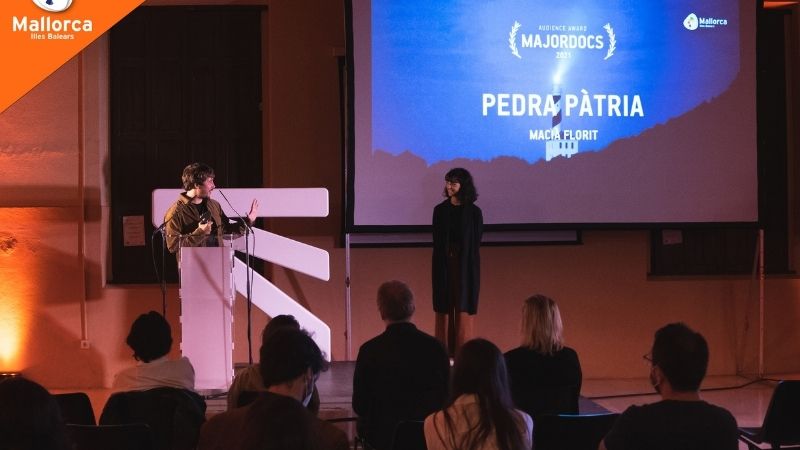
Can you talk a little about the curatorial approach to MajorDocs as a “slow” festival? You choose eight films, so what makes up those selections? What is the balance between local/regional and international?
MajorDocs has only one official international section. We do not want to work with national or regional quotas. Films from the Balearic Islands or Spain compete on equal terms with other films. This year I am especially happy about the programming team we have put together. The selection has been natural and easily agreed upon by the four members and myself, and is governed by the festival’s Manifesto, which prioritises the author’s gaze, the risk of the proposal, depth and timelessness.
The selection has been natural and easily agreed upon by the four members and myself, and is governed by the festival’s Manifesto, which prioritises the author’s gaze, the risk of the proposal, depth and timelessness.
Can you speak a bit about the side programme and special events for MajorDocs?
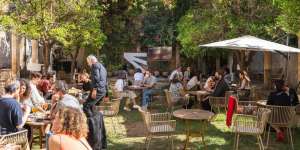
This year we are happy because we have strengthened strategic collaborations for the future. In addition to EURODOC, DAE, Proa or DOCMA, we cooperate with Walden Residencies in the creation of Walden Residencies Mallorca, a documentary film writing workshop in Mallorca, just before the festival. For a week, a group of filmmakers work with Marta Andreu on their projects, which are presented in a pitch during MajorDocs in front of professionals such as Cintia Gil, Audrius Stonys, Maria Campaña or Petra Seliškar, among others. Making MajorDocs the place where ambitious projects mature is essential to our mission. One-to-one meetings, under an orange tree garden, with a vermouth and aiming at a democratic knowledge among professionals, is another essential activity. This year, we have also been the promoters of a transmedia project: ” Anthology of chance”, a film and a book about five local documentary filmmakers that helps to bring these authors closer to the public.
What do you hope to see in terms of growth for the festival in the years to come?
Days before the festival, the health situation and measures offered us an optimistic outlook for this year’s MajorDocs. This has allowed us to triple the number of physical guests compared to last year. We have also doubled the number of screenings per film because we are confident of a significant increase in the audience. Nevertheless, we are cautious, many people are still wary of being in a cinema and together we must continue to show that cinema is a safe place if we behave correctly. Looking to the future, I believe that thinking in the short term is the surest way to avoid stumbling. If, as a society, we can manage to calm down the deadly effects of the pandemic, I believe we can talk about a new normality. MajorDocs is one of the smallest festivals in the world in size. There are experiences that we don’t want to grow because in doing so they become distorted and we lose the slow and proximity essence that is part of our DNA. We are confident, however, that we will continue to build audience loyalty as an exciting and essential event for all lovers of this brave cinema.