The #goEast Film Festival celebrates its 24th edition in Wiesbaden, Germany from 24 to 30 April, 2024. The 2024 festival is particularly notable for its focus on the film cultures of #Kosovo and #Albania, examining societal taboos and highlighting cinematic achievements from these regions. Beyond film screenings, goEast enriches its offerings through a series of panels, workshops, and discussions designed to foster dialogue between Eastern and Western Europe.
This year’s festival includes a thematic emphasis on #queer cinema#, with a special symposium entitled «The ‘Other’ Queers – Cinematic Images from the Periphery of Europe,» which aims to bring attention to overlooked voices from Central and Eastern Europe. Additionally, the festival actively supports emerging filmmakers through its East-West Talent Lab, which provides networking and professional development opportunities.
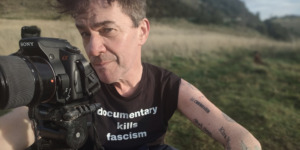
With the 24th edition of goEast currently underway, Modern Times Review spoke with its Director #Heleen Gerritsen# on her role, inspirations, the festival’s place within a broader continental sphere, and more.
«Overall, I think I have a very eclectic taste in cinema, which is also reflected in the goEast program.»
How would you describe your role and responsibilities within the wider festival team?
As head of the festival, I am in charge of the festival programming and a member of the selection committee. I am also responsible for budgets, staff, funding, partners, PR, and cooperations.
Where do you see the place of goEAST FF within the broader documentary festival landscape in Europe?
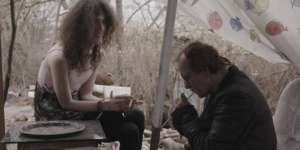
goEast – Festival of Central and Eastern European Film is not a documentary film festival per se – we screen all genres, from fiction features to TikTok videos. But documentaries compete alongside fiction films in our main competition, which means we select visually powerful documentaries that function well on the big screen. Our East-West Talent Lab, a workshop program for up-and-coming filmmakers from Central and Eastern Europe, including the post-soviet space coordinated by Andrea Wink, focuses on documentary formats only, and the films, once finished, do come back to us. This year, three (Smiling Georgia, A Picture to Remember and Kix) are part of the goEast competition. In the past, we have also hosted #B2B Doc# workshops in Wiesbaden – they were originally planned to take place in Kyiv, but because of the full-scale Russian invasion in Ukraine, B2B Doc needed a different place. The presence of these workshops and their participants also helped cement our festival’s reputation as a home for (creative) documentaries from Central and Eastern Europe.
What aspects of the festival in 2024 are you particularly looking forward to as a fan of non-fiction cinema?
We have 16 strong new documentary projects in an early stage of development in the East-West Talent Lab, which will be pitched on Monday, 29 April. The seven documentaries in the competition are all amazing. On Sunday, 28 April, we will host the German premiere of Jessica Gorter’s The Dmitriev Affair – a harrowing tale about Russian historian #Yuri Dmitriev#, who discovered mass graves from the #Stalin era and worked for the #human rights# organisation Memorial. The Russian government discredited him in several show trials and sentenced him to 15 years of hard labour.
What were the decision-making prices behind this year’s Kosovo/Albania country in focus programme?
I met with Blerta Zeqiri, the new director of the Kosova Cinematography Center, in July last year, and she introduced me to her colleagues from Tirana. The idea then came up to do an Albanian-language special in Wiesbaden. Germany actually has large communities from both Kosovo and Albania, and I would love to see them here at the cinema. Plus, the situation in Kosovo is very special: the state is still not recognised by some countries, and this makes coproductions, travel and film financing complicated. Plus, a part of their historical film heritage is still in Belgrade. These are issues we will talk about on a panel. We will also host a large delegation of filmmakers, among them Antoneta Kastrati and Eneo Çarka.
What were some seminal films, filmmakers, or filmographies that kickstarted your personal interest in documentary films?
I was born and raised in the Netherlands and studied in Amsterdam, where I volunteered at #IDFA in the 1990s. A few influential filmmakers from the start were #Heddy Hongimann#, #Joris Ivens# and #Bert Haanstra# – their films were shown on TV in the Netherlands when I grew up. Because of my studies of Eastern European history and Slavic languages, I became more interested in Eastern Europe, and then, through IDFA, I had the chance to meet someone like Viktor Kossakovski, for example. Artavazd Pelechan’s work blew my mind. And the weird TV documentaries of Pavel Pawlikowski. But I also remember watching Volker Koepp documentaries on TV with my dad.
Overall, I think I have a very eclectic taste in cinema, which is also reflected in the goEast program.