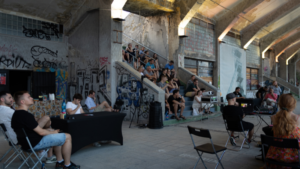
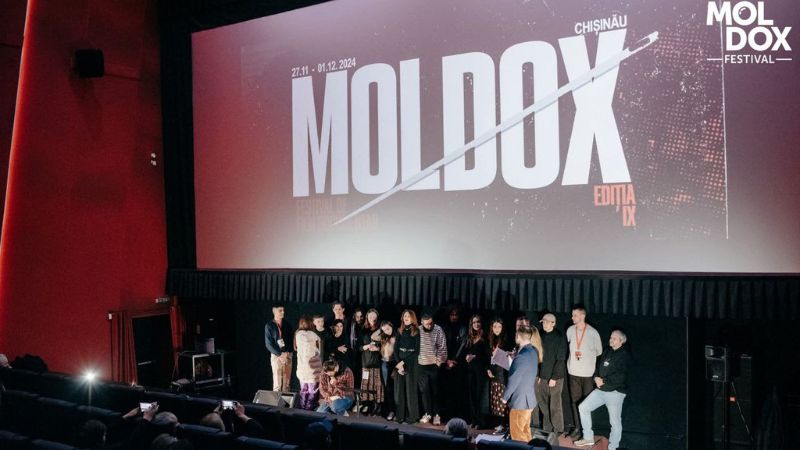
As the country edges toward the European Union while living in the shadow of Russia’s war on Ukraine, pulled between Soviet nostalgia and Western promises, Moldova may be changing faster than its citizenry can fully absorb. At the centre of this tension sits #MOLDOX, an international documentary film festival turning ten in 2025 and insisting on being a «documentary film festival for social change.» The 2025 edition takes place from 26 to 30 November at Cineplex Loteanu in Chișinău, under the theme «Chaos. Reinventing Reality,» which feels like a diagnosis of the national mood.
Origins in a borderland
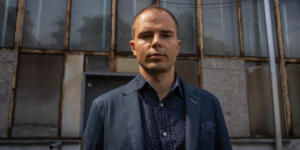
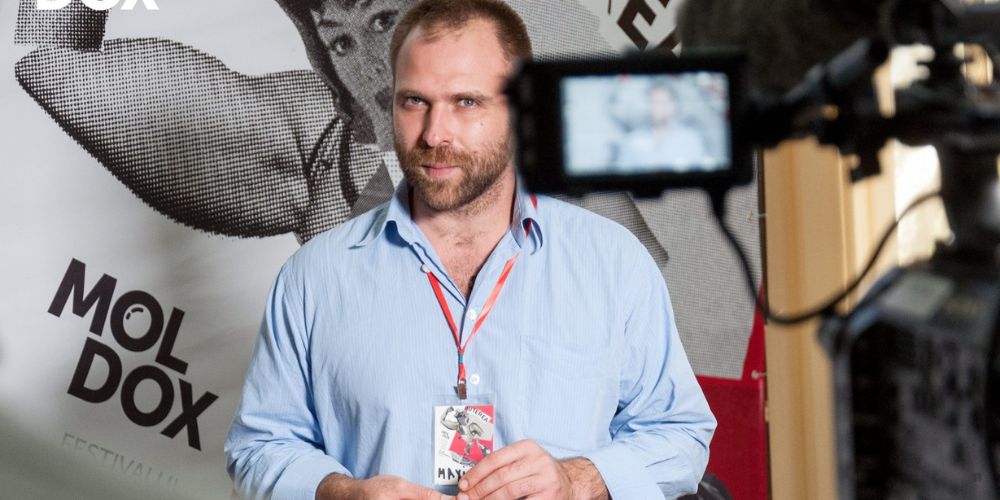
MOLDOX was born in 2016 in Cahul, a small southern Moldovan town with almost no access to contemporary documentary cinema. «Back then, we hardly had one documentary film we could find,» recalls founder and director #Maxim Cîrlan# to Modern Times Review. The festival began as what he calls «a small dream,» built around free screenings for those who had not bought a cinema ticket since the Soviet days and workshops for new filmmakers. It tried to build a documentary culture from almost nothing, in a region where cinemas had vanished, young people were leaving, and public discussion of real social issues was rare.
Ten years later, that experiment has produced a genuine ecosystem. In 2025, MOLDOX launches its first National Documentary Competition. «We have a competition,» Cîrlan says, still slightly surprised. He describes it as «a Moldovan national competition with six very presentable documentaries.» For him, the leap is existential and logistical. Moldovan documentary is no longer a rarity in the broader industry. It is becoming a field with its own voices and trajectories. «Some years back, we would see some of our talent or some of our alumni from the lab, with shorts, or the short they pitched turned into a feature,» he recalls. «And now we have six features.»
The subjects of those films sketch a map of Moldova’s anxieties. Certain themes recur obsessively in Cîrlan’s description. «Poverty is there. Tradition is there, tradition versus change,» he says. On screen, these abstractions turn into concrete conflicts. Women push into leadership roles and collide with old hierarchies. Rural families debate European integration while tending tomatoes grown «in the earth.» Grandmothers and grandchildren argue over what must be preserved and what can be let go. One film about agriculture, he explains, is really about «the fear of what is waiting for us in the #EU, in what is going on in the rest of the world.» Even when stories move into philosophical territory, such as a project on euthanasia, «they always have a strong social topic.»
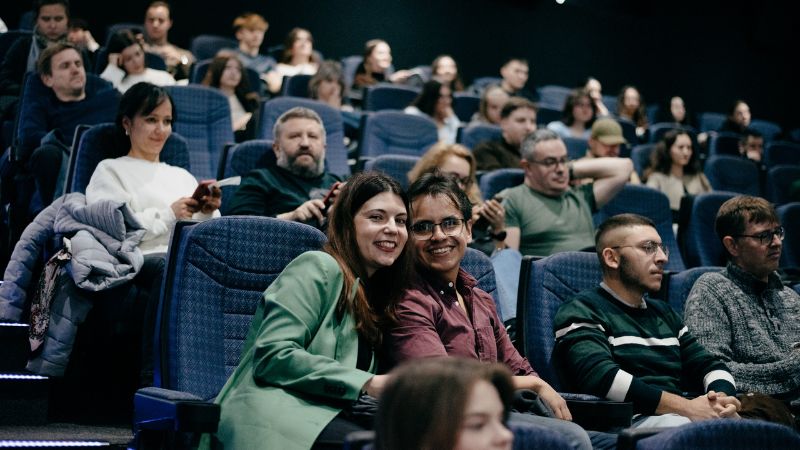
In Cahul, this kind of programming met a cautious, sometimes hostile, conservatism. «For eight years we were in Cahul, we would feel it at every festival,» Cîrlan remembers. Some viewers simply walked out. «There were people who would stand up and leave,» he says, and many came expecting the didactic style of Soviet and post-Soviet state television. «We would still get comments, ‘this looks like a normal film,’» he laughs. «People had expectations that this is the History Channel.»
The move to Chișinău in 2024 changed the backdrop but not the social stakes. In the capital, MOLDOX now operates inside what Cîrlan calls «a little bubble. We are in the centre of Chișinău and everything is super, and you wonder, am I in Paris or Chișinău or London?» Step beyond the polished core, and another reality appears. «Go a bit outside,» he says. There, visitors see «the most expensive cars, more expensive than in Romania, by the way,» parked on potholed streets—visible wealth sitting uneasily beside widespread poverty in a state often described as one of Europe’s poorest.
«It is a very different feeling to be on the border with a country at war with Ukraine, not to be in NATO. Not to be under another big umbrella, but quite exposed»
Capital bubble, country fault lines
The #war next door has intensified everything. «I will never forget the day when #Russia invaded #Ukraine,» Cîrlan says. «I was in the shower and thinking, OK, I should be doing something.» That morning, he called his father to ask whether he had packed the van in case the family needed to flee. «We were really saying, hey, in a few days they are going to be here,» he remembers. «This is when the chaos started.»
For Moldova, that chaos is not abstract. «It is a very different feeling to be on the border with a country at war with Ukraine, not to be in #NATO. Not to be under another big umbrella, but quite exposed,» he says. The unease is sharpened by internal division, «also having half of your population being actually eager to see those guys coming.»
The 2025 theme «Chaos. Reinventing Reality» grows from this atmosphere, but also from Cîrlan’s long-standing fascination with #media theory#. A devoted reader of #Vilém Flusser#, he sees today’s informational and technological upheaval as a historical turning point. He now talks about #artificial intelligence# almost in the same breath as artillery. «Also, the chaos is #AI. We are going through a revolution at the moment,» he argues. For him, that does not imply pure catastrophe. «I do not see it as pessimistic. The reinventing reality comes with something new,» he insists. «I think we are going through a revolution that is similar to when they first gave papyrus to be sold in the central market.»
If chaos is the condition, then MOLDOX is trying to show Moldovans how to navigate it critically rather than drown in it. Alongside its screenings, the festival runs #MOLDOX Lab#, a development program for local directors and, in some editions, critics. The lab connects them with international mentors and sends them onward to other festivals, markets and pitching forums. «For now, we focus on local talent, because we need to grow the capacity and the quality of our local talent,» Cîrlan explains. «We need our talent. We need them to learn new things.»
MOLDOX has become a crash course in cultural work more broadly, training organisers and filmmakers alike. «On a Moldovan level, I think we are trailblazers,» he says. «We are creating new jobs, or new for Moldova, like communicator for festivals.» People who come through the workshop or staff structure often move quickly into their own projects. «Somebody who is joining our workshop might end up the following year in our team,» he notes. His own role has expanded along with the scene. «My role is to attract money, to be in the artistic part, to network and to build the team.»
That money is never guaranteed. Moldova’s path toward the European Union brings the promise of #Creative Europe# support, but also a maze of regulations and uncertainties. «We are going to have funds, we are going to be back into creative media,» Cîrlan says. At the same time, he notes that his recent research shows «it is not very clear what is going on with audiovisual. I am afraid that the festival and the exhibition will go under that media umbrella again,» he says.
MOLDOX turns ten inside this ambiguity. «We are ten years old, but we are still young,» as Cîrlan puts it. The festival is young enough to be improvising structures, old enough to have altered how a generation thinks about documentary and public conversation. «It is not a festival that can pay twelve months a year,» he admits, yet it has become a platform where precarious cultural labour coheres into a tangible scene. As Moldova shuttles between Brussels and Moscow, between Paris-like boulevards and villages where people still dig in the soil, that fragile scene matters more than ever.
Chaos and reinvention
This November, when the first images of «Chaos. Reinventing Reality» project onto the screen, the question is whether a small, resolute festival in a vulnerable country can help its audiences survive and reshape the chaos they already inhabit. Across Eastern Europe’s smaller capitals, documentary festivals pursue unstable funding, import pedagogies from older scenes, and work with audiences shaped by television habits, conflict memories, and outward migration; MOLDOX sits inside that ecology and tries to bend it toward civic literacy and cultural stamina. Cîrlan’s answer remains both anxious and insistent. «We are going through a big chaos and a complete reinvention.» MOLDOX 2025 is betting that Moldova’s reinvention can still be a democratic one.