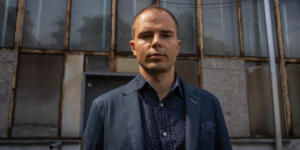
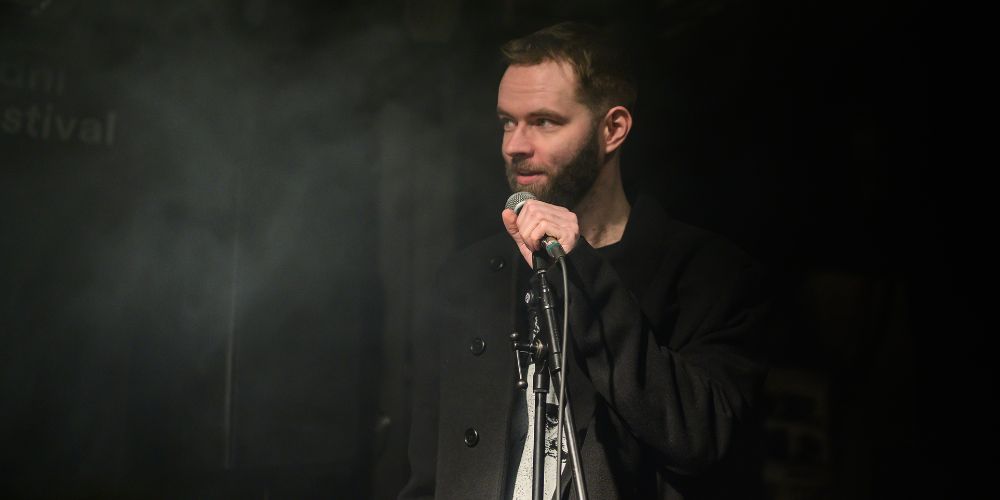
The One World International Human Rights Documentary Film Festival, organized by the Czech NGO People in Need, is the world’s largest event of its kind, attracting over 100,000 viewers annually across more than 50 cities and towns in the Czech Republic. The 27th edition of the festival is taking place from 12 to 20 March 2025 in Prague and various other locations. The festival presents over 100 films from around the globe, focusing on social, political, environmental, media, and human rights issues. At the helm is #Ondřej Kamenický#, who oversees the festival’s strategy, vision, and programming. In our interview, Kamenický discusses his role, the festival’s programming approach, the challenges of addressing human rights topics in today’s complex societal landscape, and more.
How do you define your role within the broader team of a film festival?
Essentially, my role is to create the festival’s strategy and vision. I oversee the program and take responsibility for it as a whole.
I’m also on the executive board of People in Need since our festival operates under this large organisation. In fact, it’s the biggest NGO in Central Europe.
My involvement with People in Need’s executive board gives me insight into our broader initiatives, such as which countries we’re working in through humanitarian aid and human rights projects.
How are tasks divided within the programming department? How do you balance responsibilities? What are those discussions like between you and, for example, the Director of Programming?
We receive over 1,000 submissions. A programming committee of about 15 people handles the initial selection. Then, we have three programmers—one of whom is the Head of Programming. These three meet regularly, and I participate in those discussions. I mostly listen and provide feedback and my perspective when the final selection comes together.
When structuring the festival, we don’t start by defining categories and filling them with films. Instead, we identify films that should be part of the program and only shape the structure afterwards. Of course, we have competition and non-competition sections, but each year, we look at our selection of more than 100 films and consider how to curate a meaningful program.
I also contribute to discussions about framing. Sometimes, it’s sensitive to label films in ways that might reinforce a centralising or Western perspective—for example, simply categorising something as a «feminist film» or made in the «periphery”. Instead, we aim to give each film a fresh context and avoid reductive classifications.
we aim to give each film a fresh context and avoid reductive classifications.
Was your background originally in film? How did you find yourself at this intersection of film and human rights?
I studied philosophy, art history, and curatorial studies. When I was younger, I thought I would run my own gallery or work in a museum. Later, I also studied cinema—partly at Charles University in Prague and partly at FAMU, the film school in Prague.
One World felt like the perfect combination of everything I was interested in—film, discussions, and political and social issues.
Film offers a powerful space for engagement. Unlike contemporary art, which often caters to a smaller, more specialised audience, cinema is an open medium. It can even operate within the mainstream.
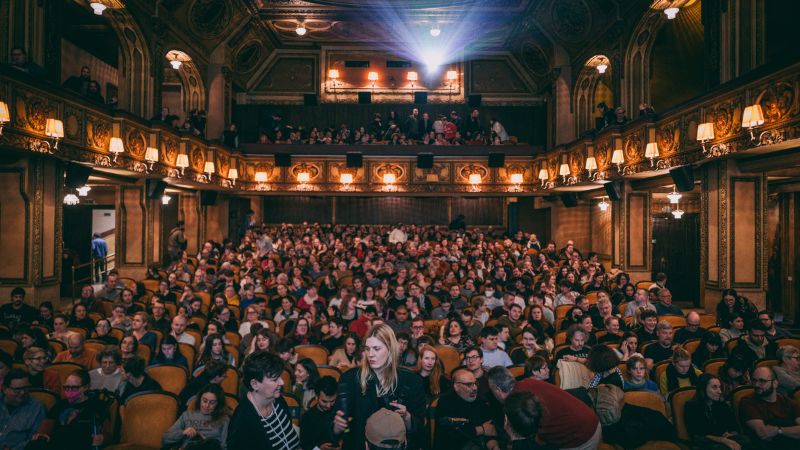
That’s also one of our goals—to bring human rights issues into the mainstream as much as possible. That’s why we hold screenings in so many cities across the Czech Republic—currently, in 57 towns and cities.
In Prague, we screen over 100 films, but we license around 30 films for regional editions and distribute them across all locations. Each city has its own independent coordination team and financial support, operating almost like a franchise. But the core of the festival—the films and the conversations they spark—remains the same everywhere.
While there’s the UN Charter, there are also a variety of definitions and perspectives on human rights. It’s a relatively broad field, especially when looking at current events. There are always multiple pressing issues, ranging from highly local to international, from controversial to non-controversial, and so on.
How do you approach balancing and focusing the program for a human rights-focused festival like One World? How do you ensure the festival maintains a strong thematic core while reflecting a plurality of voices and perspectives?
I see the festival as a kind of public forum; that perspective shapes how we think about programming. We consider our audience carefully—we conduct surveys and know, to some extent, who they are. But beyond that, we also consider the broader context: the Czech Republic, Europe, and the world.
We try to balance giving people something they already want to watch—because, of course, we want as many attendees as possible—with introducing topics and films that aren’t widely discussed in the Czech media. Sometimes, this means programming unpopular opinions or difficult subjects—issues that might be seen as too progressive for certain parts of Czech society. But we think it’s crucial to start these conversations.
That’s also why we launched accessibility initiatives, like One World for All, which expands programming for people with disabilities, including those who are hard of hearing or visually impaired. We’ve adapted films both technically and linguistically to be more inclusive.
However, inclusivity itself can sometimes be controversial. When you aim to be as inclusive as possible and use language that’s respectful to marginalised groups, you risk alienating other segments of the audience who aren’t accustomed to that way of communicating. This is particularly complex in Czech, which has a difficult morphology and many expressions that don’t easily translate into English or other languages. Some words were coined centuries ago, and when we introduce new terminology—especially neologisms—some people react negatively, feeling that it’s not real Czech. They see it as a form of progressive imposition, forcing us to engage with language in ways we weren’t used to before.
Does the Czech Republic experience the same ideological polarisation between urban and rural areas as other Western countries?
Yes, definitely.
I come from the north of the Czech Republic, a small city with about 10,000 inhabitants. It was part of the former Sudetenland, so part of my family was German. Later, I moved to a larger city and eventually came to Prague about 10 or 15 years ago.
There’s a prevailing sentiment in smaller towns that people in Prague are out of touch—that everything is decided here, that the Parliament is based here, and that Prague pulls in resources and talent like a black hole. Young people who want opportunities and money inevitably move to Prague, which only reinforces the divide.
When you aim to be as inclusive as possible and use language that’s respectful to marginalised groups, you risk alienating other segments of the audience who aren’t accustomed to that way of communicating.
So, the ideological perspectives between urban and rural areas end up being polar opposites…
Of course. In an era of culture wars, building a strong national network is even more crucial, and that’s what we’re trying to do.
The Czech Republic isn’t very large, and our 50+ festival locations are really the minimum we should have. We could expand even more. Beyond the main festival, we also have a year-round distribution initiative called Get Your Audience, which is completely free. It operates in about 100 additional locations—cafés, libraries, schools—where our films are screened throughout the year. Some of these locations later developed into full-fledged regional One World festival sites.
In Prague, we know our audience. We have a good attendance estimate for this year and probably the next five to ten years. But I see huge potential outside Prague—both in terms of audience growth and in empowering local cultural initiatives.
Looking at this year’s submissions, what specific themes and issues were Czech filmmakers focusing on? What topics seemed particularly relevant in the national conversation?
One of the most important themes this year is urban inaccessibility—specifically, housing. Czech documentary Urban Disobedience Toolkit highlights how difficult it has become to buy or build a home or even afford an apartment in Prague—or anywhere in the Czech Republic. For my generation, for young people, it’s completely out of reach.
Because of the cost, purely?
Yes, absolutely. This is a universal issue across Europe, not just in Central Europe but also in the West.
What my parents had access to when they were 20 or 25—being able to buy land or build a house—is completely unattainable for young people today. Housing has become a commodity for the wealthy, and I find it astonishing that no political party in the Czech Republic has seriously addressed this issue.
Another important film this year is about disinformation. It’s called Pit Stop Reporter, and it follows a journalist from a local Prague-based liberal magazine as she attempts to engage with the country’s disinformation networks and conspiracy circles.
For me, the film is really about how meaningful dialogue is impossible in some cases. There are moments when people in the film simply cannot understand each other as if they speak entirely different languages. It highlights the widening divide between Prague and the rest of the country.
I see huge potential outside Prague—both in terms of audience growth and in empowering local cultural initiatives.
How does the festival foster openness so filmmakers, participants, and audience members feel comfortable speaking freely? Given the current climate, where contentious topics are prevalent worldwide, and conversations often seem to take place on entirely different planes of reality, how do you ensure meaningful dialogue and debate remain at the heart of a human rights film festival? ¨
One of our main goals is to create that kind of safe space. We want to show people that everyone is welcome, regardless of education, privilege, or background. You can come as you are, speak as you want, and discuss whatever is on your mind.
Of course, some topics create tension—Israel and Palestine, Ukraine, migration. LGBT+ issues can also be sensitive for certain audiences. But that’s why we prioritise discussion.
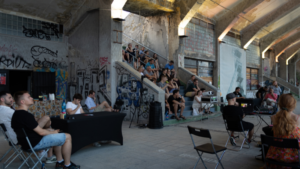
For example, we hold Q&As in Prague after about 70–80% of our screenings. Out of nearly 200 screenings, about 150 will include some form of discussion. There are around 500 screenings in the regions, and I’d estimate that at least 400 will have accompanying discussions.
And that’s just for public screenings. We also have school screenings—both in Prague and in the regions. Altogether, we host between 900 and 1,000 screenings across all locations. So, discussion is truly at the heart of what we do.
A few years ago, we also started organising more intimate discussions where the moderator acts more as a facilitator. These are typically held in small cinemas for around 50–60 people rather than large auditoriums. We’ve used this format for topics like #MeToo, sexual harassment, and LGBT+ issues, the goal of which is to create a space where people feel comfortable discussing personal and sensitive subjects.
Then, for larger panels and discussions, we strive for objectivity. But sometimes, pure objectivity just isn’t possible. We’re not a public service broadcaster, and we don’t have to give equal time to every perspective just for the sake of balance. Instead, we focus on interdisciplinary panels that foster meaningful discussions.
Of course, there are always challenges. Sometimes, people start shouting. Sometimes, someone refuses to give up the mic and talks about something completely off-topic.
We strongly believe that coming to a cinema, sitting in a room with others, and talking is far more productive than writing something hateful on Facebook. It’s easy to post angry comments online. People have free time, and from behind a screen, it feels safe to express frustration through hate speech.
But coming to a cinema and actually engaging in discussion takes courage. When you do, you might realise that your opinion is just one among many—that it’s not the only valid perspective. That’s why we encourage people to show up, speak up, and listen.
What is your role within the Human Rights Network of Film Festivals? And how do these festivals support one another in furthering their shared mission?
One World is actually one of the co-founders of the Human Rights Film Network. It was established over twenty years ago.
The network currently includes over 60 human rights film festivals worldwide.
Each year, we organise one big meeting for everyone. But it’s difficult to gather all 60 members at once because there is almost never a week in the year when no human rights festival is taking place. So, coordination is challenging.
Beyond the main annual meeting, we also form smaller working groups, usually based on grant collaborations or specific partnerships. Recently, One World has been working more closely with Watch Docs in Poland, Verzió in Hungary, One World Slovakia, and the Human Rights Festival in Nuremberg, Germany.
Another initiative we run is Festivals for Festivals. Unlike some festivals with extensive industry programs, we don’t focus much on industry networking because we collaborate with the Institute of Documentary Film and East Doc Platform, which is already based in Prague, during our festival dates.
Instead, Festivals for Festivals is our main industry initiative. This year, we’ll have around 30 participating festivals—not just human rights festivals but others as well. Each year, we focus on a different theme.
We also use the network to share strategies for surviving difficult political climates. For example, festivals in Hungary and Slovakia have struggled with public funding. Until recently, Poland was in a tough situation, though it is improving. We’re still relatively stable in the Czech Republic, but that could change with our upcoming elections in October. Beyond that, the network occasionally issues joint petitions and statements, amplifying our collective voice.
For me, the most valuable part of the network is the exchange of experiences. I’ve found surprising connections between festivals in very different cultural contexts. For example, the Karama Festival in Jordan faces many of the same challenges as One World despite being in a different region. It’s incredible how many festivals worldwide deal with very similar issues—whether in South America, Asia, or Europe.
We are the largest human rights film festival, so sometimes smaller festivals approach us for advice. When we can, we help them. A few years ago, we even created a handbook on organising and establishing a new human rights film festival through useful principles, case studies, and basic guidelines. The handbook is now available on the Human Rights Film Network website.
In the current state of the world, what do you see as the role of a human rights film festival? Is it purely a venue for awareness and dialogue, or is it something more? Does a human rights festival strive to find tangible answers to questions rather than raise them?
Talking about human rights is more important now than ever.
Listening to the ultra-conservative, almost fascist rhetoric coming out of places like the White House recently—I mean, this is something we cannot accept.
As Europeans, we have to take responsibility for discussing human rights and defining how we want to live in a free and independent society. We can’t just cry about how America—once perceived as our «big brother»—has changed.
Human rights are at the core of Europe and are fundamental to the Czech Republic. We have a strong tradition in this area, thanks in part to #Václav Havel#, our former president and one of the key figures of the #Velvet Revolution# in 1989.
We should be afraid of the new narratives that push back against human rights, gender diversity, and inclusion. The whole «death to woke people» rhetoric and this romanticised idea of returning to the so-called «good old days» is dangerous. It’s based on a false simplicity.
Our role—our responsibility—is to make human rights understandable to everyone without distinction. People need to understand that human rights are not abstract ideas discussed by politicians in Brussels. They are part of everyone’s everyday life; when we lose them, we lose everything.