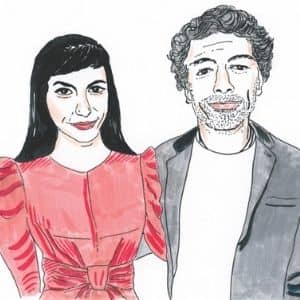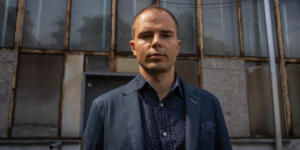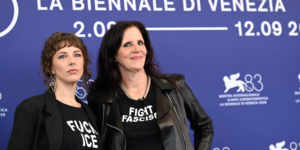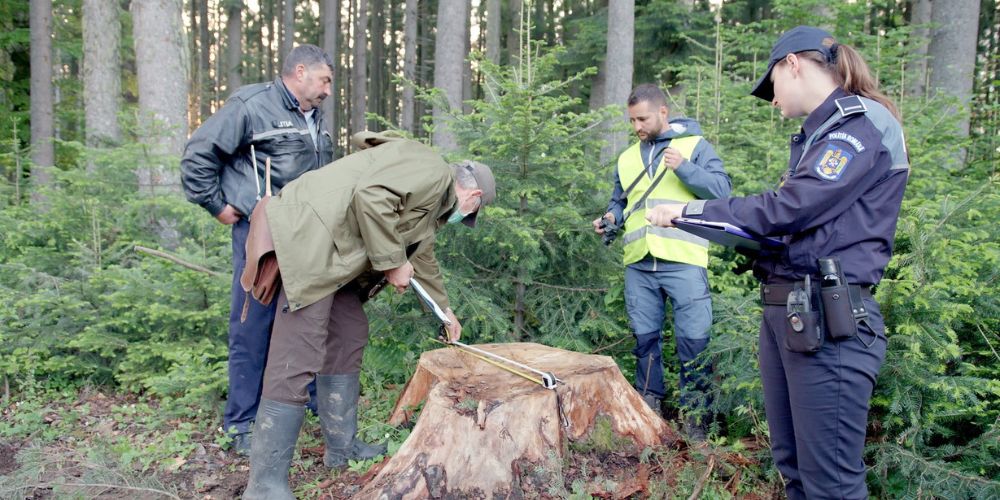
In 2021, Tooth & Nail co-directors #Mihai Dragolea# and #Radu Mocanu#, alongside their protagonist #Tiberiu Boșutar#, thought they might be drawing their last breaths. The two young Romanian filmmakers and the political activist had ventured deep into the country’s northern forests to expose the timber thieves decimating Europe’s last great woodlands. Instead, they found themselves surrounded by a dozen men armed with axes and clubs, demanding that they stop filming. They smashed their equipment, shattered the car keys to prevent escape, and beat the trio with impunity.
The ambush on Dragolea’s crew was a flashpoint in a war over Romania’s forests, where illegal logging syndicates will intimidate, humiliate, and even kill to protect their profits. In Dragolea’s words, the very «system broke us,» and justice, as he expected, remains elusive. Curious to understand the chain of complicity fuelling this ecological crisis, I spoke with Dragolea at the 18th One World Romania, where Tooth & Nail held its world premiere.
Romania boasts some of the richest remaining forests in Europe. Ancient, untouched ecosystems spread across the #Carpathian Mountains#, teeming with a wealth of biodiversity. Over half of Europe’s brown bears roam these woods alongside wolves, lynx, and wild cats. More than 7 million hectares of forest still cloak the country (about a third of its land), including 525,000 hectares of virgin old-growth stands. This is more than any EU nation outside Scandinavia (ibid. rferl).
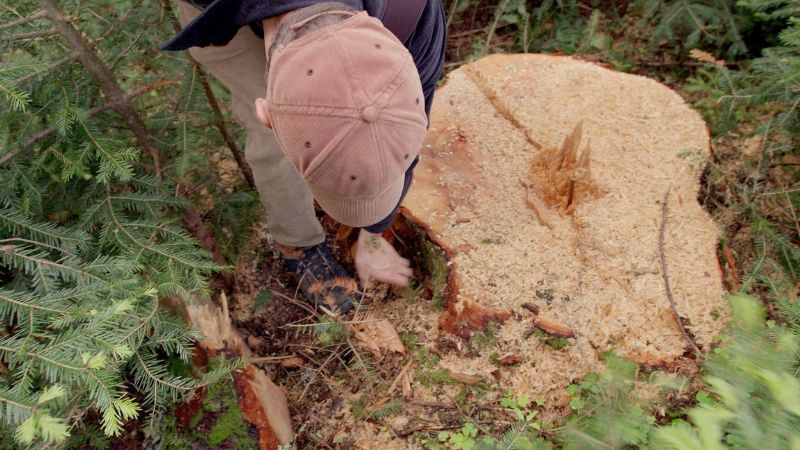
Yet those same forests are under constant assault. Satellite images and on-the-ground investigations reveal that bald patches are expanding where the ancient canopy once stood. An estimated three hectares of woodland are lost every hour, a bleak pace more reminiscent of the Amazon or Borneo than an EU member state. More than half of all timber logged in Romania is illegal. A leaked government inventory in 2018 found that 20 million cubic meters of wood are cut illegally yearly, exceeding the volume cut legally (19 million).
The ambush on Dragolea’s crew was a flashpoint in a war over Romania’s forests, where illegal logging syndicates will intimidate, humiliate, and even kill to protect their profits.
This black market harvest feeds a multi-billion-euro industry. Romania’s timber sector, worth over €6 billion annually, is dominated by powerful firms, including the Austrian giant Holzindustrie Schweighofer, now rebranded as HS Timber Group (CEO: Jürgen Bergner), which has long been accused of sourcing illicit wood. Investigations by the Environmental Investigation Agency and Romanian NGOs like Agent Green have also implicated Egger Holzindustrie (Managing Director: Ernst Egger) and Kronospan (CEO: Peter Kaindl), two more Austrian-based multinationals, in purchasing wood from questionable or outright illegal sources within the Romanian forestry supply chain. IKEA (CEO: Jasper Brodin) also features prominently in the Agent Green report. While publicly supporting sustainability initiatives, these corporations continue to profit from a system riddled with loopholes and silent complicity.
Despite official assurances that forestry is under control, the reality is one of a «chain of weaknesses» and complicity. «It would be too easy to say it’s only the corporations. It’s also members from the community. They have lived so close to the wilderness for so many generations that it is not something to be protected but something to be used to sustain their living,» Dragolea observes.
On paper, Romania has made strides. The government has implemented a timber-tracking system, stricter enforcement laws, and even a 2016 declaration that illegal logging threatens national security. Ancient woodlands enjoy «unprecedented protection,» and logging in protected areas is banned. In practice, however, the rules are bypassed with ease. Truckloads of illicit logs continue to cruise down mountain roads. Unscrupulous loggers have learnt to cheat oversight systems, mixing illegal timber with legal stock or bribing local officials.
The European Union has repeatedly rebuked Romania for failing to safeguard its forests. In 2020, Brussels launched an infringement procedure, citing «inconsistencies in national legislation.» MEPs urged an immediate logging moratorium in all Natura 2000 protected areas.
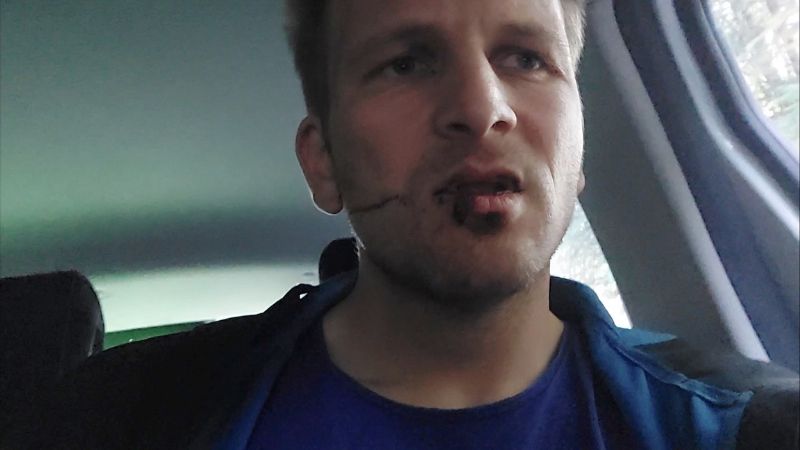
The assault on Dragolea’s crew was brutal but hardly isolated. At least six forest rangers have been murdered in recent years by illegal loggers. More than 650 forestry personnel have been beaten, slashed, or shot after interrupting timber thefts. Dragolea managed to escape by diving into a ravine. Radu Mocanu was knocked unconscious, and Boșutar was beaten bloody and stripped naked.
This violence thrives in a governance vacuum. In remote woodlands, «official laws…do not figure, just guidelines,» Dragolea says. Local police are often overwhelmed, frightened, or complicit. «[Illegal loggers] set your house on fire.… They don’t necessarily want to kill you, but they do want you to lose everything if you get in their way,» he adds. Prosecutors face threats, and justice is rare. Mocanu was dropped from the corresponding legal case entirely because he couldn’t identify his attacker. «They said you did not get beaten up because you cannot remember who hit you… it’s absurd but a bit comical also.»
This violence thrives in a governance vacuum.
Romania’s state forestry agency, Romsilva, controls nearly half the country’s woodlands. But instead of guardianship, it has been implicated in plunder. Its former director faced corruption indictments. Whistleblowers say the agency has been «infiltrated by criminals.» In one case, a forestry chief was caught offering a bribe to police to ignore logging.
Investigators found that Schweighofer built its model on the «legal purchase of illegal timber,» hijacking auctions and encouraging fraud. The 2015 exposé by the Environmental Investigation Agency sparked protests and forced government action. But the «wood mafia» remains.
Syndicates hide behind shell companies, falsify permits, and threaten dissent. «The police fear the community, the crime community,» Dragolea explains. «And in rural areas, everyone is related. You don’t want to put your cousin or your family in jail.»
The attack on the filmmakers left them shaken but also altered the trajectory of their project. «We got sucked into the movie as characters,» Dragolea says. «We had to go on TV and talk about our traumatic experience.» At one point, he describes the film as turning into a «Jim Jarmusch-style road movie,» with three men, a van, and an unravelling sense of purpose. «Our character… something broke… and we didn’t know what to do.»
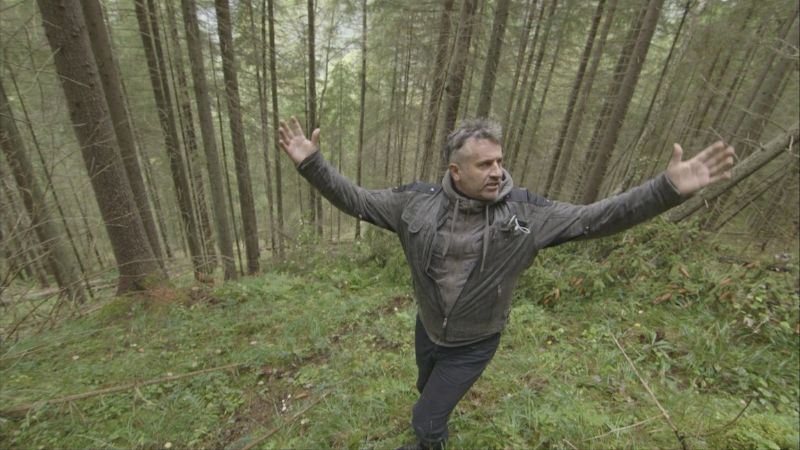
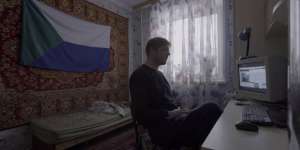
Tiberiu Boșutar was once a relentless anti-logging activist. A former timber worker turned watchdog, he live-streamed confrontations, chased logging trucks, and named names. In 2020, his Wild West-style confrontation videos—«cool cowboys,» as Dragolea called them—drew national acclaim. So, Dragolea set out to document the movement. «We got sucked into it, like down a rabbit hole,» he says. Village gossip suggested Boșutar’s political ambitions. «His father was quite important in communist times.» The man, Dragolea admits, was «not black and white.» Boșutar’s politics have since embraced the full rhetoric of Romania’s reactionary new right: anti-EU messaging, ultranationalist nostalgia, and aggressive land-use rhetoric that directly contradicts any meaningful ecological reform. In his populist speeches, he often invokes the ‘right to cut and work the land,’ echoing the ethos underpinning forest exploitation.
In 2021, Dragolea and Boșutar were ambushed, with their video footage shocking the country. But in 2024, Boșutar reappeared as a member of Parliament for the far-right AUR party. On the campaign trail, he positioned himself as an anti-establishment firebrand. In office, he was investigated for inciting violence after suggesting a government office «should be blown up.» «He was this activist turned nationalist politician—he’s like a tragic comedy,» Dragolea says. «Things are never black and white.» Boșutar is a personality far removed from the mainstream Western vision of the #activist#. A reality that has, perhaps, resulted in Tooth & Nail still waiting for a Western European premiere.
Boșutar is a personality far removed from the mainstream Western vision of the activist.
Faced with trauma and a crumbling system, Dragolea chose to resist quietly and personally. «After this system broke us, I said, ‘Okay, fuck you guys. I’m going to plant my own forest…one hectare,» he says about his reforestation efforts, «it’s my small form of resistance.» Today, that land is regenerating. The ravens have returned. One left a goat skull atop a sapling, which Dragolea now calls ‘the face of the land.’ It stands like a surreal monument to both defiance and decay.
Romania’s forests have survived empires, dictatorships, and the current ravages of capitalism. But now, they face internal collapse. Whether the nation can halt the destruction remains uncertain.