At once intimate and historically expansive, Where the Silence Is Heard unfolds inside a house that refuses to remain a static site of memory. Directed by Gabriela Pena and Picho García, the film quickly reveals itself as a negotiation between inheritance and reinvention, in which domestic space becomes a vessel for unresolved histories.
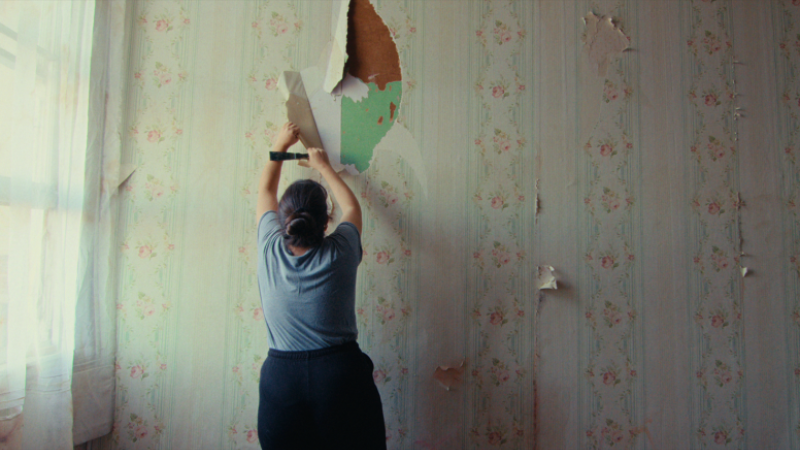
Set in Valparaíso, the film traces Gabriela’s attempt to reconstruct a family home left behind in exile, only to discover that what persists is more emotional than architectural. Across three generations, silence operates as a structure, shaping relationships through distance, fear, and the persistence of trauma. The act of restoration becomes inseparable from the act of filming, as peeling wallpaper and fragile walls mirror the excavation of memory itself.
Following its world premiere at CPH:DOX and ahead of its screening at the 2026 Guadalajara International Film Festival, Pena and García reflect on how a project that began as an investigation into family history gradually transformed into something more porous, shaped by political rupture, personal loss, and the arrival of new life.
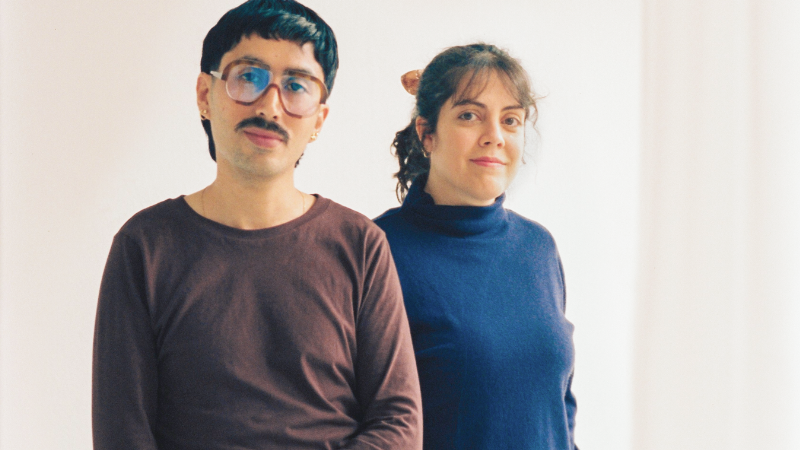
A film like this requires a significant commitment of time, travel, resources, and emotional energy. Where were you in your lives when you decided this was the moment to make it?
Gabriela Pena: The film began six years ago; these themes were already there long before the film. I had carried them since childhood.
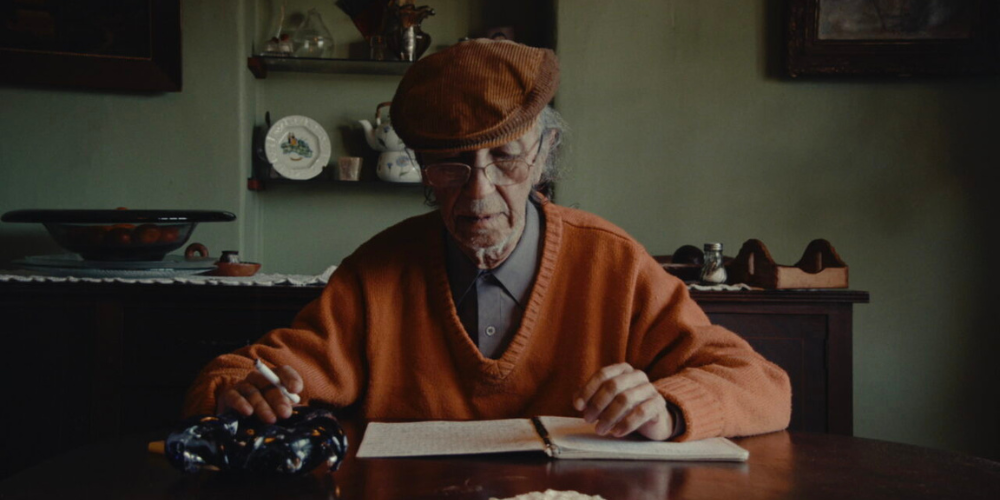
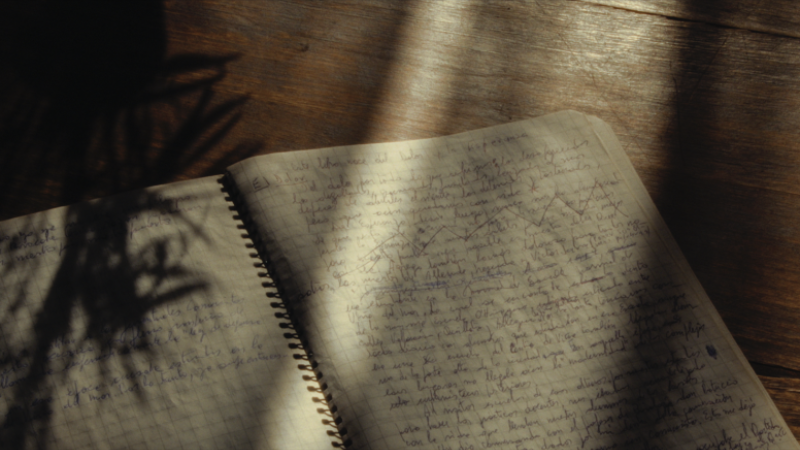
What really set everything in motion was a trip I made to Chile when I was 18. I found a notebook in which my grandfather had written about his story. I took it back to Spain and turned it into a printed book for the family and for friends. That process made me realise there was a mystery inside the family story, especially around my mother.
After university, I needed to know more. I went to Chile, lived with my grandparents, and learned more about their past. Then I discovered that my mother’s childhood house was still in the family. I convinced my grandparents to let me live there and renovate it. I was 22, completely excited by the idea that my mother’s first home could also be my first. Around that time, I met Picho; we became a couple, started working together, and, little by little, the project emerged.
The film began six years ago; these themes were already there long before the film.
Between that early childhood and the point when you began making the film, had you travelled back often?
Gabriela Pena: Not much. I went once when I was ten with my family, and then again when I was eighteen. So my experience of Chile was mostly through my mother’s memories and through my grandparents’ visits to Spain. Chile was something distant, but central at the same time. The story of exile was always present.
Picho García: You always talked about the smell your grandparents brought with them to Barcelona: their coats, their suitcases.
Gabriela Pena: Yes, a very specific smell, like the ocean, but a distinct ocean smell. I really wanted to understand that land, the place of my mother and my grandparents. Also, they were getting older and could not keep travelling to Spain forever, so there was an urgency there, too.
When you knew the themes you wanted to explore, how did the film you thought you were going to make compare to what it eventually became?
Gabriela Pena: A major turning point was October 2019, during the social outbreak in Chile. We had just started renovating the house, and suddenly there were helicopters, tear gas, and fear in the streets. I remember being in the house’s corridor, smelling the gas in the air, feeling it on my skin. Something happened in me then. I didn’t understand it until much later, but I suddenly felt connected to my mother in a new way.
Picho García: It was like resonating with horror inside the same house. Not on the same scale as what she had lived, but still a taste of it. A way of understanding, physically, emotionally, how fear enters a domestic space.
Gabriela Pena: Exactly. In that fear, in that atmosphere, I found a connection with my mother that I didn’t know I was missing. That moment was very important because it shifted the project. It stopped being only about recovering a family history. It became something closer to understanding how history remains in the body, in relationships, in the way fear moves through a house.
I didn’t understand it until much later, but I suddenly felt connected to my mother in a new way.
Sometimes a point of reference only becomes clear after you experience something for yourself, and suddenly you can grasp family history more deeply.
These are not easy things to visualise either, so I want to ask about the film’s construction. It has a minimalist, observational quality, but also uses re-creations and a more expressive visual language. How did that form come together?
Picho García: One thing we didn’t anticipate was death. We did not expect the grandfather’s death to become part of the film. When he passed away, we were lost. We stopped filming for a long time. We became caretakers for the grandmother. Life took over, completely changing the project’s rhythm.
And then, on the other side of that, our son also became part of the process. So suddenly, the film was holding both death and life. In the end, we discovered the film through the renovation itself, through the house, through the people around it, through living, and through everything life was imposing on us while we were trying to make it.
Gabriela Pena: The re-creations, though, were there from very early on. The military had taken so much from the house, materially and emotionally, and we wanted to find a cinematic language for what could no longer simply be shown. We were not interested in historical illustration in a strict sense. We were trying to work with memory, with fragments, with what remains and what cannot be accessed directly.
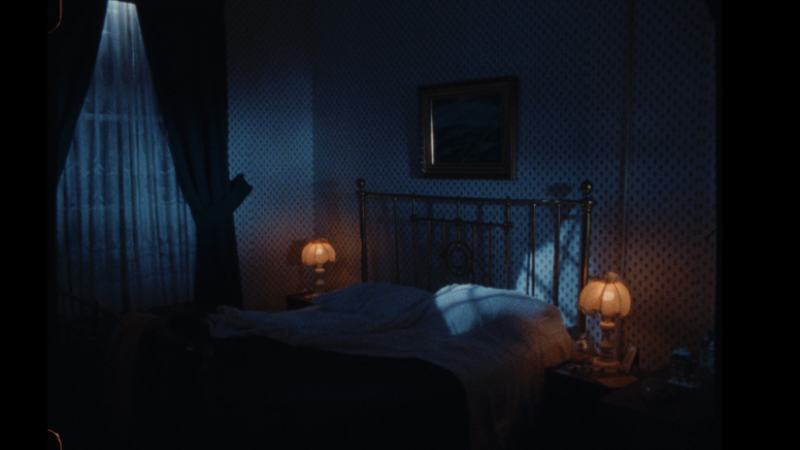
We decided to reconstruct the house not as it had been historically, but as I imagined it had been in my mother’s childhood. For example, my mother later said, «No, this room was not blue; it was burgundy.» But I had imagined it as blue all my life, so I made it blue. It was more like entering memory, entering feeling. It was about approaching what the house meant to me rather than recreating it as a factual museum piece.
We wanted the house to function almost like a portal, a place where time, memory, and present reality could mix. We wanted that sense that once the door opens, something breaks open too. But we only fully understood at the end that this was really a film about my relationship with my mother.
So that epiphany came quite late?
Gabriela Pena: Yes. I think it came when I became pregnant. That changed everything. I started thinking much more deeply about what kind of mother I wanted to be, what kind of relationship I wanted with my son.
Picho García: You suddenly have this responsibility forever, and it makes you look back.
Gabriela Pena: We were sleeping in what had once been my mother’s bedroom, and I chose that room because I wanted to be close to some pure part of her, something before the trauma. During pregnancy, I started to feel that the house was almost like a uterus. I wanted to return to that earliest connection, to begin again.
Then, when we became parents, the house took on a new meaning for us. It had been a place associated with trauma, but now it could also become a place where beautiful things happened. We could reshape what it meant in the family history. That was extremely important to me because it meant that memory was not fixed. The house could still hold pain, but it could also hold another future.
You suddenly have this responsibility forever, and it makes you look back.
I was struck by how tactile the house feels. The peeling wallpaper, the scars in the walls, the surfaces. It all carries history. But while you are turning a place marked by trauma into something beautiful, I imagine there must also have been conflict around covering over visible traces of the past. How were you dealing with that, both emotionally and as filmmakers?
Picho García: Now I sometimes regret not leaving one wall untouched, full of all those layers of wallpaper and memory, so that our son could one day see it exactly as it was.
But from the beginning, we knew we wanted to politicise intimacy. The social outbreak was so violent, and we were inside the house while it was happening. That made us ask: what happens when the protest ends outside and you return to the domestic space, carrying all of that with you? We wanted to stay in that inside place to show how violence permeates everything.
The challenge was balance. The social outbreak, the family intimacy, the grandfather’s death, all of it was happening at once. It took us six years to understand how much of each layer belonged in the film. So yes, now I really would have liked to keep one wall with all those layers, but at the time, the impulse was also to heal, to live, to continue.
Gabriela Pena: Restoring the house was not about covering history. It was about healing. A house is a place of identity. I had spent my whole life focused on my family’s past, and this project also forced me to think about the future, about what we wanted to build and what we wanted to pass on.
It was still the same house. We were not erasing it and replacing it with something new. We were trying to find a balance between the past and the future. That was really the key to the whole process. What do you preserve, what do you transform, what do you inherit, and what do you refuse to repeat?
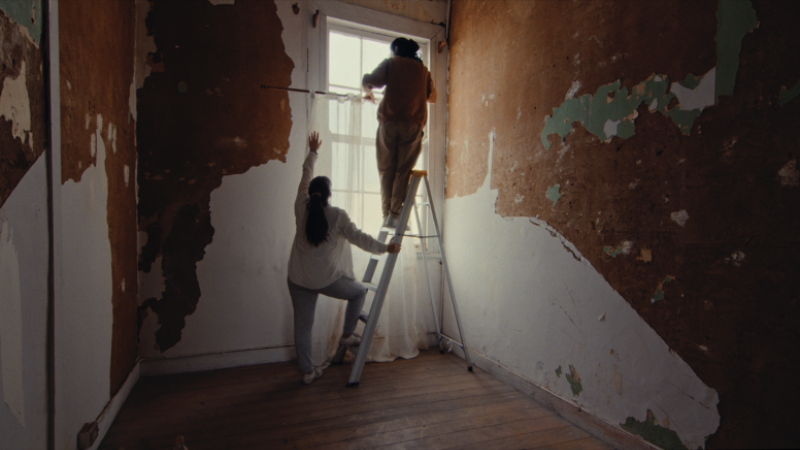
What was the hardest part of the restoration itself?
Gabriela Pena: We did have some help, especially with parts that needed professional work, but removing all the wallpaper was an enormous task. The house has very high ceilings and very old materials, and we were doing a lot of it by hand. The walls were fragile and started to crack.
But it was also exciting. You would peel back one layer and discover another, and then another, and suddenly you were asking who had lived there, what period this came from, why that wallpaper had ended up in this room.
Picho García: There was one wallpaper pattern with roses, very gothic, very dark. Something was fascinating in those discoveries, because each layer suggested another era, another taste, another life in the house. At the same time, the roof was another huge challenge. It was old, rusty, and leaking. That part needed professional intervention.
You would peel back one layer and discover another
When was the house built?
Gabriela Pena: Around 1912, if I remember correctly. I believe it was originally built by Italian settlers, and then my family became the second family to own it. My great-grandfather bought it in the 1930s, and my grandfather was raised there.
Is the house still in the family?
Gabriela Pena: Yes, it still belongs to my mother. But after the film, we had to make a very hard decision, and we are no longer living there. That was painful. None of the family is living in Chile now, not even my grandmother. We brought her with us because she was alone. At the moment, very close friends of ours are living in the house.
Picho García: It mattered to me that the people living there now were chosen carefully. It is still part of the family story. That was important emotionally: that it would remain in trustworthy hands, that it would not simply become a vacant symbol.
I also want to ask about your relationship with Chile itself, since you approach it from very different positions. One through exile and return, the other through remaining. How did making the film change your relationship to the country and to national identity?
Gabriela Pena: At first, I had a very romanticised idea of Chile because of the stories I grew up with. Then I lived there for eight years. I became a filmmaker there. I became a mother there. But people still saw me as a foreigner, and now that I’ve returned to Spain, I feel somewhat foreign here too.
So I no longer feel I have a stable national identity, either Chilean or Spanish. It’s more flexible than that. That can be disorienting, but it can also be clarifying.
Living in Chile also made me see Spain differently. It made me understand privilege more sharply, especially in terms of class and public services. In Spain, the public health system is far from perfect, but in Chile, the inequalities are much more brutal.
And politically, Chile remains deeply marked by the afterlife of dictatorship. That tension is still present. It is not over. It continues through institutions, through class structures, through the way the country is organised, and through what remains normalised.
Picho García: I feel very Chilean, but maybe also more pessimistic. We moved less than a year ago, and I still have one eye on Chile.
This project made me more politically and historically conscious. Even though I am Chilean, there were many things about the dictatorship and its consequences that I had not fully understood, that I wasn’t taught in school. Through the film, through travelling, through family, I came to feel much more directly part of that history and its chain of consequences.
Now I watch what is happening in Chile culturally and politically, and I feel that deeply. I see what it is doing to friends, to artists, to the cultural field, and that is no longer abstract to me.
The 2019 uprisings began with a transit fare increase, but of course, they were about much more than that.
Gabriela Pena: Exactly. People said, «It’s not 30 pesos, it’s 30 years». It was about accumulated inequality.
Picho García: I remember feeling a kind of release when it began, like a pressure cooker exploding. I had gone to protests when I was younger, and when the social uprising happened, I felt an enormous sense of happiness, even as I watched banks burn, because it felt like the system was finally being confronted.
Of course, it didn’t solve everything. But that energy, that rupture, mattered. It was an eruption of everything that had been contained for too long.