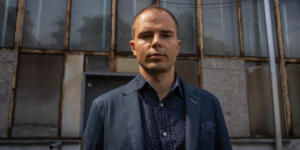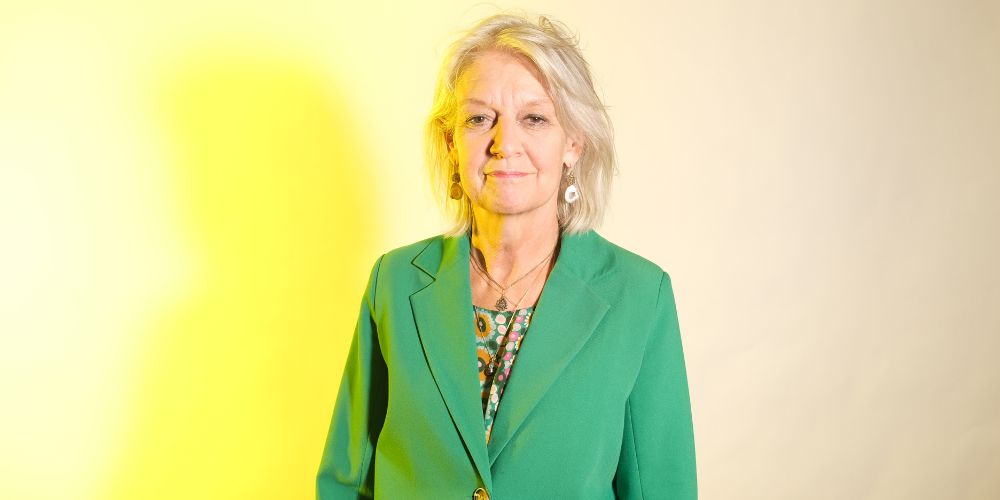
Based in The Hague, Movies that Matter is more than a film festival. With a strong international focus, it runs year-round programs, including workshops, educational initiatives, and support for festivals around the world. Speaking to Modern Times Review, Artistic Director #Margje de Koning# reflects on the challenges of curating a human rights festival in today’s complex political climate—from navigating global sensitivities to making space for underrepresented stories. In this interview, she discusses the festival’s broader role, its commitment to fostering open conversation, and how smaller films can have a big impact.
Movies that Matter isn’t just a festival—it has year-round initiatives, workshops, educational platforms, and other programs. How do you see its role within the landscape of human rights film festivals in Europe and internationally?
What makes Movies that Matter stand out is its strong international focus. We’re based in The Hague, which is known as the «City of Justice and Peace.» Our government is there, but more importantly, so are the International Criminal Court (ICC) and the International Court of Justice (ICJ), making it a city deeply oriented toward international law.
Another unique aspect is our year-round work. I believe we’re the only festival—at least, to my knowledge—that has a dedicated fund to support film festivals around the world. Of course, this is becoming more challenging with all the budget cuts, but we continue to provide support.
We also run a program called Cinema Without Borders, where we bring in about 12 participants from across the globe to exchange knowledge, develop skills, and share experiences. It’s not just training because that would be too patronising; it’s about mutual learning.
These participants are festival organisers, not filmmakers…?
Exactly—film festival organisers. I believe we’re the only ones doing this at such a scale. We’ve held workshops in South Africa, West and East Africa, and expanded into South America last year. We always work closely with local festivals to tailor the workshops to their needs.
This international reach is something that defines Movies that Matter. For example, we have what we call a film menu for Human Rights Day on 10 December. We provide around 80 Dutch embassies worldwide with access to human rights films—not Dutch-made films, but international films that align with our mission. Last year was one of our most successful years, with almost 80 embassies organising screenings.
Then there’s our Activist Competition, where we select eight documentaries that focus on activists as protagonists. Out of those, we choose five or six films, clear the rights worldwide, and make them available to human rights film festivals that otherwise wouldn’t be able to afford the fees. Many festivals don’t have the budget for these films, so by covering the rights, we ensure they can still be shown.
We also have a significant educational program within the Netherlands. During the festival, we welcome around 6,000 students over nine days. They watch films and participate in discussions about human rights, environmental issues, and other social topics—it’s quite impactful.
Beyond that, we run an industry program. When I joined nearly six years ago, I noticed there wasn’t a structured program for industry engagement, even though everyone knew it was needed. #FIFDH in Geneva had already started developing something similar.
The idea is to use film to start conversations, challenge perspectives, and break people out of their bubbles. That’s the driving force behind our industry program. We now have 10 projects being pitched, which is quite substantial. Unlike other industry platforms—like #CPH:DOX, for example—we don’t focus on business-to-business connections. Instead, we connect filmmakers with NGOs and other organisations that can amplify their impact. What makes this year’s projects particularly exciting is their global scope—we have films from literally all over the world. That internationalism is at the heart of what we do.
The Netherlands has always had a strong tradition of embracing films, both documentaries and fiction from all over the world. People here are eager to engage with complex topics through cinema, so we also maintain English as the festival’s primary language. Everything—screenings, discussions, panels—is in English to keep it internationally accessible.
We screen around 300 films during the festival. More than 60% of those screenings include in-depth discussions afterwards, moderated by experts deeply engaged with the film’s subject matter. This sets us apart from many other festivals, where moderators might ask a few general questions like, «How was it to make this film?» We go much further. Our discussions focus on the film’s meaning, its societal relevance, and how it could drive real-world change.
That’s what makes Movies that Matter stand out.
The idea is to use film to start conversations, challenge perspectives, and break people out of their bubbles.
What are the primary hurdles in organising a human rights film festival? Do these challenges differ between the Global North and Global South?
I wouldn’t want to make broad generalisations, but from my experience, I can say that any human rights film festival operates within a specific geopolitical context, directly impacting what can and cannot be shown.
For example, I’m on the board of #One World Slovakia#, and a few years ago, they decided not to screen any films made from a Russian perspective. Given the geopolitical situation in Eastern Europe, I completely understand that decision. However, here in The Hague, we feel it’s our role to foster dialogue from all sides—as much as possible. Of course, there are limits, and we always focus on human rights violations.
So, are the challenges different between the Global North and the Global South? That depends on what a festival wants to bring to its audience and what that audience needs. In the Netherlands, compared to places like Ukraine, Iran, Iraq, Afghanistan, Syria, or Gaza—where many of my friends come from—our challenges don’t feel as severe. People here generally feel safe discussing controversial subjects.
That’s why Movies that Matter strives to create a space where people who cannot speak freely in their home countries can do so here. Many films we screen are not shown in their country of origin. For example, Writing with Fire faced difficulties in India, Black Box Diaries—an Oscar nominee—still hasn’t been shown in Japan, and some Kenyan films have only premiered in their home country much later.
Ultimately, the ability to show certain films depends on the country. So far, we haven’t faced any direct government restrictions on programming. We still have full creative and political freedom. Of course, some people may disagree with my choices, but politically, we still have a great deal of freedom compared to many other places.
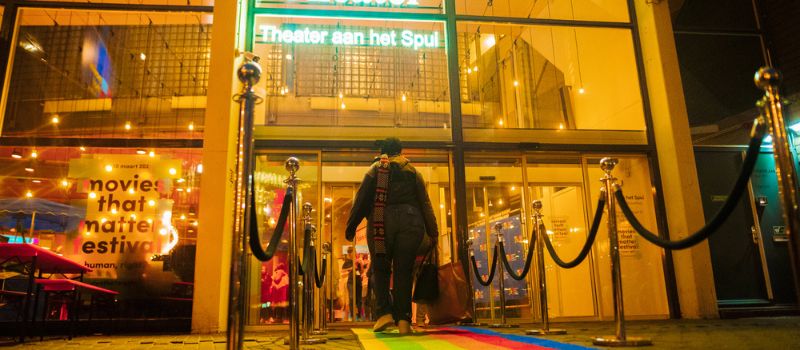
How does Movies that Matter ensure filmmakers, activists, and experts can engage in discussions safely and openly?
We put a lot of effort into preparing our moderators. They’re not randomly assigned to a film but extensively briefed. I hold prep meetings with them to explain Movies that Matter’s stance and approach. We aim to give panellists as much freedom as possible while ensuring respectful and non-violent discussions.
We don’t impose restrictions on what panellists can wear or say. They are free to express themselves as long as there’s mutual respect. We also conduct prep meetings with filmmakers and panellists to understand what might make them uncomfortable and ensure discussions remain productive.
That said, we can’t control what audience members ask during the Q&A sessions. We prepare as best we can, but unexpected or difficult questions always arise. However, I think it’s important not to stay within our own bubble. If someone asks an uncomfortable question, I hope our guests are well-prepared to engage with it, challenge it if necessary, and keep the conversation open.
One of the biggest issues today—amplified by social media algorithms—is that people remain within their ideological bubbles. We want to bridge that gap and create spaces for more challenging conversations, even when they’re uncomfortable.
Of course, there’s already a built-in limitation because our festival is entirely in English—without Dutch subtitles. Dutch attendees need to have a strong grasp of English to engage fully, which naturally excludes some people. We’re aware of this, and where possible, we add Dutch subtitles to locally produced films to make them more accessible.
Despite my generally dark and cynical outlook, I believe that small changes can ripple outwards. Maybe someone sees a film and tells a friend, «Hey, I saw this—why don’t you check it out?» That small ripple could grow into something bigger.
Yesterday, we had 500 students in the Eye Film Museum. These students come from what we call Schakelklassen—specialised classes for children who have recently arrived in the Netherlands from conflict zones. They come from all over the world and are adjusting to a new country, and their English is often stronger than their Dutch.
During the Q&A, the moderator asked them where they were from, and we heard answers from 20 different countries. Our educational program is intentionally targeted at students who might not otherwise have access to these discussions—not just the top-tier academic students preparing for university but also those at other levels of education.
Their questions always move me. They’re incredibly open and direct. They haven’t yet built the ideological filters that many adults have, worrying about political correctness or saying the «right» thing. They just ask what’s on their minds.
That’s why we believe so strongly in our educational program—these young people are still open to learning, and those conversations can have a huge impact. This gives me hope.
Can you gauge the overall temperature around potential conversations, the festival’s approach, or the topics raised each year? There have been many controversial and circumstantial events in the last two years, but things have been particularly intense since 7 October 2023. This is now the festival’s second edition, which takes place within that reality—alongside the ongoing Russia-Ukraine conflict and many other pressing global issues.
What is the atmosphere like compared to last year? Is it tense, contentious, open, or something else entirely?
We start on Friday, so it’s still too early to say. But I do notice that the films we’re screening are quite challenging—and they’re selling out.
For instance, our opening film, The Promise, is about our colonial past—completely sold out. Facing War, which follows former NATO head Jens Stoltenberg for a year, is drawing huge interest. We also have The Bibi Files, which examines alleged violations by NATO. But then, after 7 October interest in these topics intensified even further.
Last year, audiences were very focused on Ukraine, the broader Israeli-Palestinian conflict, and the Middle East in general. This year, at least in the Netherlands, I sense a lot of confusion—myself included. People are struggling to process everything that is happening, including the growing impact of Trump’s policies.
I don’t yet know exactly how that will translate to audience reactions, but I suspect that issues like censorship, the state of independent journalism, and questions of who can say what and when—are particularly sensitive right now.
the films we’re screening are quite challenging—and they’re selling out.
Human Rights concerns don’t stop in the Middle East or Ukraine. There are countless other conversations—some more universal, some deeply local. From an administrative perspective, how do discussions go within the programming team to ensure nothing is overlooked? In my opinion, no topic is too small, but of course, there are always considerations.
Absolutely, there are considerations. But if you’ve looked at our program, you’ll see that we make a conscious effort to ensure balance.
For example, we have a significant Ukrainian delegation and some very powerful films—like Alisa Kovalenko’s new film, My Dear Théo. We also have a film from Sudan—Remember Us—which is quite rare, given how difficult it is to get films out of Sudan.
Our programming team consists of 15 people who watch films throughout the year. In the final stage, we sit down as a team to map everything out, making sure we cover different continents and don’t miss critical human rights topics.
We have films about environmental activism, like one about a Russian woman fighting for environmental justice who eventually had to flee and now lives in Germany. We also have Mr. Nobody Against Putin, which is about opposition to Putin—the filmmaker had to leave Russia after making it. We also include films that address how propaganda works.
But beyond geopolitics, we also cover issues like the MeToo movement and sexual harassment. We think deeply about what resonates with audiences—not just the big conflicts but also broader human rights violations.
For example, we have a Dutch fiction film about mental health, which is incredibly important, especially for younger audiences. And as the Netherlands leans more right-wing, migration is a hot topic. We have a strong film on migration—it’s fiction in this case, but it addresses the issue powerfully.
So, we strive to maintain a balance, including some lighter films. I admit this is tough in the current climate, but we do try. That’s why we have a section called Take on Love, featuring LGBTQ+ films.
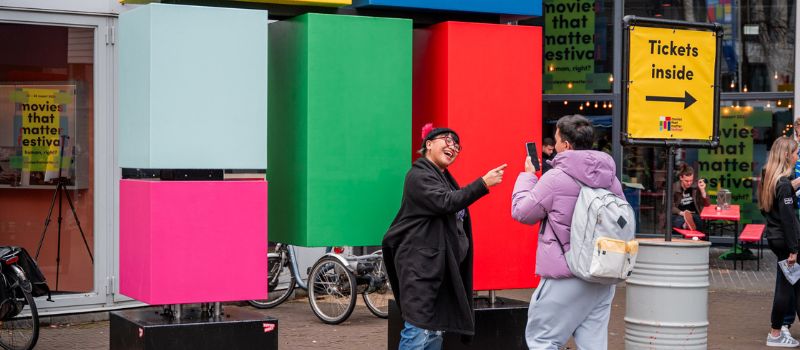
What exactly constitutes a «lighter» film?
I don’t know—you tell me! That’s what Movies that Matter is at its core—we tackle severe topics. And I can’t change that, nor do I want to.
At Venice, I saw Mãos, a Brazilian fiction film about #MeToo, abuse, and family trauma. It’s so beautifully made that it feels more digestible.
We’re also screening a film about the abortion law in Poland. The restrictions there are intensifying, which connects to what’s happening in the U.S. and across parts of Europe.
We also have a Dutch fiction film set in the Philippines about Western men travelling to Manila for sex tourism, often involving minors.
Of course, NATO and international conflicts are dominating attention right now. But when we were programming months ago, we didn’t predict just how tense things would become. We had planned a screening of Facing War with Jens Stoltenberg; it seemed like an interesting political discussion. With the growing NATO tensions, it’s suddenly a much more urgent topic—and our former prime minister, Mark Rutte, who was supposed to attend, can’t come anymore because things are too volatile.
I’m also moderating a panel on censorship and journalism. After yesterday’s news that Trump plans to cut government funding for independent media altogether, I’ll have to rewrite my questions—again.
While we try to stay sharp and react to current events, we’re not a daily news show—we’re a festival. But we do our best to stay relevant and meaningful.
Out of all the offerings at the festival this year, whether talks, screenings, or something else, what are you most interested in or looking forward to? Even if you weren’t associated with the festival, what would you want to see?
If I had to highlight a film that many people might not have seen, I’d mention Grey Zone.
This is the first year that Movies that Matter has become an Oscar-qualifying festival. That means our Grand Jury Prize has even more prestige now—winning it links directly to the Oscars. So, of course, we have big, important films in competition, like Facing War and Antidote, but Grey Zone stood out to me. I first saw it at One World Slovakia. It’s about a filmmaker who has a third child—a child with a disability—and how it completely upends her life. It’s a small, intimate film, beautifully shot. Some scenes are filmed by her two other children using a mobile phone, and she also interviews other parents who have gone through the same experience.
The themes are universally relevant in the U.S., the Netherlands, or anywhere else. The struggles of raising a child with disabilities and navigating healthcare systems are deeply human and often overlooked. It’s a highly creative film, and it’s important to include subjects that might not be as immediately political but still deserve attention. I hope I’m not influencing any jury members by saying this!
Another film that really struck me—political, yes, but also incredibly well-crafted—is Yalla Parkour. It follows a group of young people practising parkour in Gaza, right in the middle of a bombed-out city. But it was filmed before 7 October. Watching it now, you can’t help but think—what happened to them after this? It’s a deeply moving film, not just because of the politics but because of how it captures resilience and youth in the face of devastation.
Of course, for the audience, we have big, high-profile films. But I also want to highlight and cherish filmmakers who take enormous risks to tell these stories.
For instance, State of Silence, by Mexican director Santiago Maze Stern, is about the brutal targeting of journalists in Mexico. We often talk about 2024 being the deadliest year for journalists globally, but in Mexico, this has been the reality for years. The cartels operate with impunity, and the government looks the other way. Films like this deeply affect me.
At the end of the day, I still see myself as a filmmaker. I understand what it takes to make these films—even though I’ve never worked in a war zone, I can only imagine the risks. That’s why I have so much respect for those who do. This is what touches our hearts.
Whenever I give keynotes, I always say: You must open your mind, heart, and soul. If you do that, you can truly meet people—not just on the level you expect, but on deeper, unexpected levels. And that’s what keeps me going.
While we try to stay sharp and react to current events, we’re not a daily news show…
Honest conversation and dialogue have become so much harder. It’s no longer just about two opposing views debating toward some resolution. It often feels like different perspectives exist in completely separate dimensions—parallel realities that don’t intersect. Before you can even begin a discussion, you must first find a way to agree on what you’re even talking about.
Exactly. Beyond that, there’s also the question of who gets to tell the story. Who is allowed to tell certain stories? And as a viewer, am I even allowed to have an opinion on those stories? I see this a lot with the Ukraine-Russia conflict and the Middle East—questions about which side we’re on. You saw it last year at film festivals. I was in Berlin when the controversy over No Other Land erupted. It was much better this year, but last year, it was brutal.
But at the same time, I believe that the people coming to Movies that Matter—especially in The Hague—are part of a community that should be able to have nuanced, intellectual conversations. When we tour the country, the audience might be slightly different. But here, where everyone speaks English fluently, we have a responsibility to engage in these conversations. Whether as an industry or audience, we’re all in the film community. If we can’t have these discussions, who can? Politicians aren’t solving these issues, but we, as creatives and artists, have an obligation to try.