Members are the Keyword

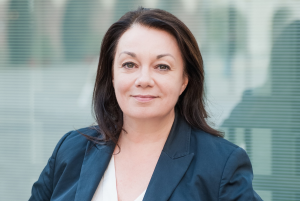
Leena Pasanen doesn’t need much of an introduction as she is already well-known in the international documentary business. In her current position as Head of Programmes at YLE Teema, she has distinguished herself as one of the most internationally oriented and enthusiastic commissioning editors in Europe, especially known for her support of new talent. Leena Pasanen has participated in numerous EDN workshops as a tutor and panellist, as she has at Discovery Campus, Eurodoc and Television Business School.
How did her path lead her to the directorship of EDN?
«Actually it’s Tue’s fault [Tue Steen Müller-ed.] I got involved. I met him in 1999, he invited me to Nordisk Forum and ever since, Tue has been inviting me to EDN events, pushing me more and more and challenging me. He lured me into this world of co-production and I am very grateful for that. So for me EDN was the only logical next step.»
How do you see the current climate for documentaries?
«It is very different in different countries. In Scandinavia where I come from it is pretty good, we have a good support system, the TV channels have primetime slots for documentaries, it is working well, we can see results. Then, on the other side, there are countries which don’t support their filmmakers at all. This is a challenging situation, but I strongly believe that when there is a good story, it will be told. More and more young people are making docs. I see their passion even when they have to struggle very hard to get the financing. We shall use examples from well-functioning countries to encourage the situation everywhere – not only in Europe, but bring the interest even further.»
«When stories are told they do find an audience. Not only the big, instant box-office successes, such as Michael Moore’s films and “Super Size Me”, but also in a broader area and slower state. I see the audience in cinemas, in festivals and, as a commissioning editor, I get feedback from our viewers. They really appreciate the films. There is a need for documentaries.»
What are the major challenges to documentary makers in the near future?
«The TV audience is splitting up into smaller target audiences due to the appearance of more specialized TV channels. It will be trickier to find your own way of financing. “You get tighter, stricter formats and it is alarming if this means that there will be less and less space for feature-length films. It is bad to force creative filmmakers into those formats. It is something we have to be aware of, but it is not a ‘mission impossible’. »
«I don’t think it will kill the business, because the developments also provide more opportunities with the new ways of transmitting via the Internet and mobile phones. The new channels also create a potential, having a sharper profile, and being more focused on what will work on their channel. It all changes quite quickly, things will not keep being as they are, so producers have to be aware of the transformations.»
How do you see the role of EDN and what do you want EDN to work with in the future?
«I think EDN has already found its task and role, having been alive and kicking for so many years. It is a members’ organisation and for me that is the keyword. We have to find ways to support our members by providing information and creating contacts. Regardless of whether they are established or less experienced filmmakers who have a diverse need, we have to find different ways of helping them. We should work for the best possible support for filmmakers.»
What I like about EDN is that it doesn’t try to do everything. It basically works to help. And if there’s anything I can do to make it stronger, I’ll do it. I have been participating in EDN workshops for many years, but I want to get into the everyday work first, not start by setting up Ten Commandments.
«What really appeals me about EDN is that I see all these talented filmmakers actually getting their things done, their dreams coming true.»