In Palestine, a child is never a child. He is a Palestinian child. Or, more precisely, the Palestinian child. He is just a character for our entertainment. And Mohammed el-Kurd is no exception. He is featured in many videos and is the key figure in My Neighbourhood, a film about #Sheikh Jarrah#, the area of #Jerusalem where settlers are seizing land meter by meter. He is 11 years old, and despite everything, he speaks about peace. He even speaks #Hebrew because many of the activists who defend his home are Israeli. Today, he writes, «It was only an act. I was repeating what you told me to say.» Today, he also says, «You are all accomplices. You are all guilty.»
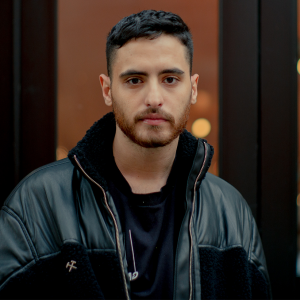
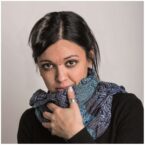
Today, he is 27 years old and a widely read writer—one of the most breakthrough voices in the Arab world. But when he pitches to international editors the story of Jawad and Thafer Rimawi, two brothers killed by the IDF near Ramallah, two students of Birzeit University, he gets binned because they were throwing stones. Because they were not innocent and, therefore, were not victims. Even though it is the fall of 2022, #Ukraine is at war and everything there is heroism. In Palestine, it is #terrorism. Literally, compare the news. Leaf through the New York Times, or any other daily, on any given day. The Ukrainians fight street by street, blending into the population because they have no choice, while in #Gaza, #Hamas shields behind civilians, and that’s why Israel causes so many deaths. In Gaza, it is Israel that has no choice, and so, when the #IDF guns down Shireen Abu Akleh, the al-Jazeera star who, in the New York Times headlines, «died in Jenin,» as if she had died of an asthma attack, activists stress that she had a US passport. She was a reporter, an American, and, on top of that, a Christian. To the Israeli, she should be perfect.
As a journalist would say, humanise her so readers and viewers can identify with her and see themselves in her story. This means that to tell it, you need to decontextualise it, depoliticise it, and disempower it. In other words, you need to dehumanise her, turning her into a character.
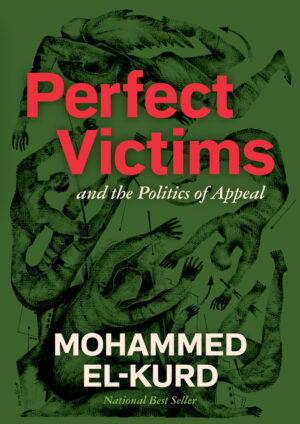
Think of I Shall Not Hate, the best-selling book about the first Gaza war in 2009. The author, #Izzeldin Abuelaish#, a doctor who studied at Harvard, is the first Palestinian doctor in an Israeli hospital. He loses three daughters in the war, and despite everything, he doesn’t hate anyone. He goes back to treating his patients, whether they are Palestinians or Israelis. He doesn’t call for revenge but for dialogue and reconciliation. But why, says Mohammed el-Kurd, if he hated the Israelis after everything he has experienced, would it be so strange? To be a victim, do you have to deserve it? Do you have to cry instead of spitting? Just suffer without reacting? In Perfect Victims, he says they comfort instead of being comforted.
In Palestine, a child is never a child.
Mohammed el-Kurd has a captivating pen and a powerful mind that catches you off guard. He stands among the Frantz Fanons, the Edward Saids, the Jean-Paul Sartres, and the Noam Chomskys. He spares nothing and no one with lucidity, disenchantment, and the urgency of a writer who writes from within. And doing so from a house where a settler entered, never to leave. Occupying half of it. But what are we discussing? About Mein Kampf being found in Gaza in the rubble of a house. Everyone analyses it to respond to the IDF and prove it is only #propaganda. It looks like an untouched book without a crease, which seems to have been placed there on purpose. Everyone wastes time. But what if it were true? asks el-Kurd. It is just a book. It’s an awful book, but one that many read because, in any case, it’s history. Usually, it is read to be criticised. But what if someone had Mein Kampf on his bedside table because they admired Hitler? he says. As long as a book remains just a book, as long as its owner is neither fighting nor doing anything else, not even owning a Mein Kampf makes you less of a victim or the aggressor any less of an aggressor.
International law has clear rules. It states in detail who is a combatant and who is not, what is a legitimate target, and what is not. A Mein Kampf, a tunnel under a hospital, or even weapons inside a hospital are not in themselves enough to justify an attack. But that’s exactly the aim of propaganda—to divert attention, to turn reality upside down, to make the victim responsible for being a victim, to make the victim guilty.
Read Mohammed el-Kurd. And reread it every time you read a newspaper, any newspaper, with stories on barefoot and hungry Palestinians—desperate, wounded, amputees, orphans. In Gaza, there’s nothing else. In the media, Palestinians are no longer writers, engineers, IT scientists, or businessmen. They have nothing to say. With 50,000 deaths, they have no opinion. That they are simply waiting for an #NGO and a bowl of rice. That they are there waiting for our aid. He says the true snipers in this war are those who do not shoot. All those who humanise Palestinians dehumanise them—erasing them. Palestinians do not want our aid. They want their rights. They do not want solidarity. They want justice.
Mahmoud Darwish said, the problem with the Palestinians is that they are «the Palestine question.» They are no longer Palestinians; they are no longer a self but a topic. We talk about Palestinians, but it is just theatre in which they are what we want them to be. Until next 7 October.