In November 1999, I sat in the home of #Foday Sankoh#, the Revolutionary United Front (RUF) leader in #Sierra Leone#. Sankoh sat in the living room, crying over the children whose hands his rebel soldiers had hacked off with machetes. «Short sleeves or long sleeves?» was the question. If you answered «long,» they would only cut off your hand; if you answered «short,» they would cut higher up.
I remember it as if it were yesterday. Alongside a British anthropologist and a South African peace and reconciliation specialist, I, working for the Church Aid at the time, was supposed to speak with different factions in the Sierra Leone #civil war# while the July peace agreement was still in effect. We promised millions of dollars in aid to actors we believed would contribute to lasting peace in the country. The ceasefire was broken, and the civil war resumed a few weeks after we left Freetown.
he strongly recommends not compromising democracy to achieve stability in post-war situations—since stability often is very short.
Lack of criticism
Foday Sankoh was the most infamous of all the rebel leaders in the country. Now, he sat there crying; he claimed he had never wanted his men to mutilate innocent children. There was a ceasefire now, and the international community and the civilian population in Sierra Leone hoped for peace. Sankoh asked us for suggestions for the name of the political party he was planning to establish. We had none, but we strongly advised him to choose something that would not be associated with the RUF. Nevertheless, he decided on «RUF-Party.» In 2006, when the movie Blood Diamond—starring #Leonardo DiCaprio# as a slick diamond smuggler in Sierra Leone—became a major success, the world became more acquainted with the RUF and their use of child soldiers and child labour in the country’s diamond mines.
The chapter on Sierra Leone, written by M.S. Kovacs and I. Bangura, addresses precisely this issue. Among other things, the authors interviewed Eldred Collins, the spokesperson for the RUF during the civil war from 1991 to 2002, both in 2012 and 2013. It is certainly exciting to have such central figures speaking, but at the same time, it is sad that the authors take Collins’ statements at face value; there is a lack of critical reflection regarding both the selection and the rationalisation of actions committed 10 to 20 years ago. However, the chapter on Sierra Leone is not among the book’s strongest.
Ethnic conflict
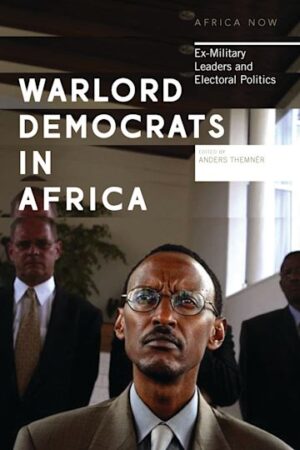
On the other hand, the chapter on #South Sudan#, written by J. Brosché and K. Høglund, is outstanding. The authors explicitly employ the analytical framework explained by editor Themnér in the book’s 40-page introduction. The editor provides the authors with three main questions, followed by several sub-questions, to guide the analysis of former warlords in peacetime: What campaign strategy did they employ to win votes? Did the warlords contribute to consolidating the peace process in their respective countries? And what was the international community’s and different governments’ attitude toward using former warlords in the reconciliation efforts?
Brosché and Høglund analyse, in their contribution, the strategies of #Riek Machar#, rebel leader and later vice president of South Sudan from 2005 to July 2013, when President #Salva Kiir# dismissed the entire government. They describe how Machar attempted to gain increasing power and why this led to the civil war in December 2013. Machar claimed that President Kiir had not introduced democracy but a «dinkacracy» [referring to the Dinka ethnic group in southern Sudan, ed. note] in the country, which was only 2.5 years old at the time.
Machar consciously and actively played on ethnic divisions stemming from the long civil war before Sudan was divided in order to challenge Kiir. In addition to employing rhetoric from the civil war, the former #rebel leader also highlighted his military capacity. In conflict-affected countries with a history of prolonged conflicts, military capacity brings both #power and prestige in peacetime; one is never completely certain how long the peace will last.
War and peace
Anders Themnér’s anthology provides fascinating analyses of former warlords who often transformed their rebel groups into political parties and, to varying degrees, became democrats with or without positions of power. In addition to the two mentioned, we gain detailed knowledge about Mbusa Nyamwisi in the Democratic Republic of Congo, Paul Kagame in Rwanda, Prince Johnson in Liberia, Alfonso Dhlakama in Mozambique, and João Bernardo Vieira in Guinea-Bissau.
Not all warlords manage to transform their military apparatus into a political actor once peace agreements are signed and the democratisation process begins. For example, Sierra Leone’s Foday Sankoh and Eldred Collins; Sankoh died of a brain haemorrhage in 2003 before standing trial for war crimes, torture, and murder, while Collins never achieved more than two percent of the votes in the elections he participated in.
On the other hand, Riek Machar succeeded in transitioning from the position of powerful warlord—a so-called big man—to becoming the vice president of South Sudan. However, Machar cannot be described as a peacemaker; after he was replaced as vice president, the conflict in the country escalated, and over 10,000 people were killed between 2014 and 2015.
On the other hand, Paul Kagame successfully went from leading the rebel movement Rwandan Patriotic Front (RPF) to being Rwanda’s elected president for the third time in 2017, with 98.8 percent of the votes. And peace in #Rwanda continues to be maintained.
«Short sleeves or long sleeves?» was the question. If you answered «long,» they would only cut off your hand; if you answered «short,» they would cut higher up.
Good advice
Editor Themnér’s comprehensive introduction comprises nearly a quarter of the book and includes a clear and synthesising conclusion in addition to the presentation of the analytical framework. Towards the end, he advises those working on peace and reconciliation processes in Africa: Based on the lessons learned from the book’s seven country examples, he strongly recommends not compromising democracy to achieve stability in post-war situations—since stability often is very short. This is something all peace negotiators in Africa should take note of.