When the Storting debated a request from French President #Macron for a force contribution to Mali in January of last year, the answer was no. In July of this year, the government answered yes to a similar request – without involving the Storting or the Foreign Affairs Committee. Could they have done so to support Macron and #France more than to support the people of Mali?
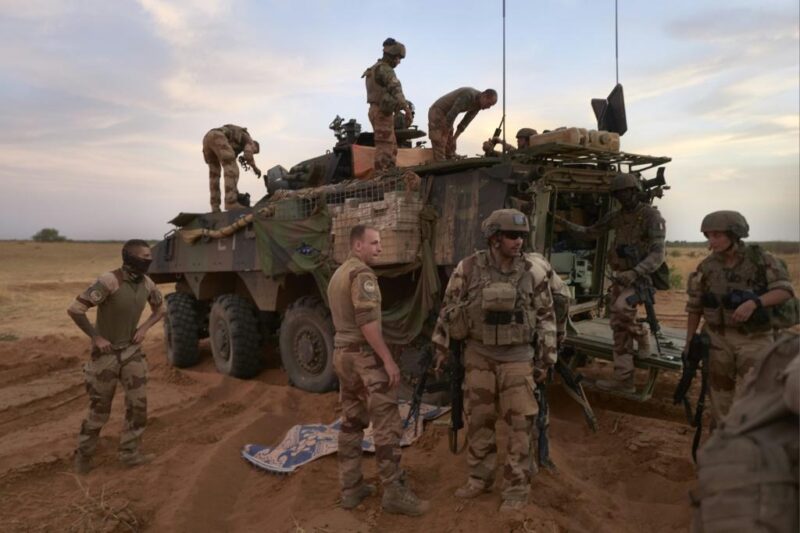
An opinion poll conducted by Mali-Mètre earlier this year and reproduced in Le Monde this summer showed that only 28 percent of the Malian population had confidence that international military actors were helping to stabilize the country. The 15 UN soldiers in the #MINUMSMA force in Mali and the 5,000 in the African G5000 #Sahel force raised confidence. The 5100 in the French Barkhane force, which has been in Mali since 2013, have less and less left over. While people cheered when the French military arrived in January 2013, only 9 percent now say they believe the French force contributes to increased security in the country. On July 9, President Macron announced that France would withdraw its Barkhane force from Mali and replace it with the international force called Takuba. The difference is not significant – Takuba will consist mainly of French soldiers and is led by France.

Historical relationships and personal ties
Norway spends approximately NOK 1 billion annually on aid to the Sahel countries – #Mauritania, Mali, #Burkina Faso#, #Niger and #Chad – this also includes the military commitment to the UN force MINUSMSA in Mali.
The Ministry of Foreign Affairs wrote about Norway’s new strategy for the Sahel (2021–2025): «Despite increased international efforts, the situation in the Sahel has not improved. On the contrary, the trend has continued in a negative direction. «This was launched a few weeks before the decision to send Norwegian soldiers to Takuba was made. The Minister of Defense and the Minister for Development Aid wrote in the introduction to the strategy: «We will use our experience from peace #diplomacy and peacebuilding to strengthen the Security Council’s work to prevent and resolve conflicts in the Sahel, promote the protection of civilians […].» But how Norway will contribute to resolving conflicts in the Sahel by sending soldiers to a French-clad force without trust from the population is incomprehensible.
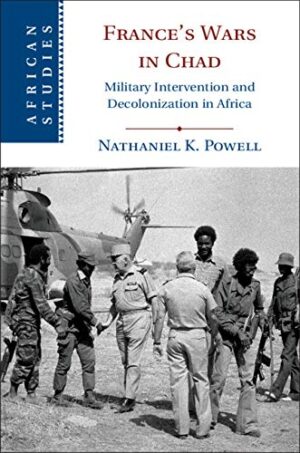
Nathaniel Powell’s book France’s War in Chad is a detailed analysis and historical review of France’s military presence in Chad from the decolonization in 1960 to the French-backed coup d’etat General Habré carried out in July 1982. Based on previously closed military archives, Powell has shown and proved how much involvement France has had (and still has) in Chad’s Sahel country.
Norway spends approximately NOK 1 billion annually on development assistance in the Sahel countries.
Using previously unknown exchanges between French presidents from de Gaulle to Pompidou, Giscard d’Estaing to Mitterrand and their Chadian counterparts – Tombalbaye, Malloum and Habré – the author manages to both bring to life complicated historical conditions and to show the close personal ties that ruled (and still governs) French African policy.
When France sent its Minister of Culture to the capital, Fort Lamy, to thank him when Chad became independent on August 11, 1960, his dependence on France continued. Until 1965, the French military controlled all of northern Chad. In 1969, several thousand French soldiers came to the rescue of President Tombalbaye. Since then, France has had military forces permanently stationed in the country. When General Malloum took over after President Tombalbaye was assassinated by his own bodyguard in 1975, France faltered and alternately supported the regime. One of the reasons for this was a very tense hostage drama that took place in the north of the country. There, two rebels kidnapped French anthropologist Françoise Clauster and German doctor Christoph Staewen in April 1974. While Germany took matters into its own hands and paid 4 million French francs to get Staewen released, France cooperated with President Tombalbaye and the Chadian military to have Claustre released – without success. France then sent Pierre Galopin to northern Chad to negotiate his release – the ransom increased to 8 million French francs and 12 million in weapons. However, Galopin was also captured and beheaded after a few months without France complying with the ransom demands. Françoise Claustre, on the other hand, was released in January 1977 through negotiations led by #Gaddafi, Libya’s head of state. Paradoxically, possibly, since it was France that was most eager to overthrow Gaddafi in 2011.
France’s double play
France still has its double play in the Sahel. France strongly condemned the coup in Mali in August 2020. The coup in Chad in April 2021 – in which the son of the assassinated President Déby set aside the constitution and seized power – was almost hailed by France. President Macron gave a tearful speech at the funeral of his friend, the late President Déby while assuring his son of full French support. France also supported Déby (father) with military intelligence and weapons when he overthrew his predecessor, President Habré, in December 1990 – although their official policy was to support Habré. France allowed Habré to come to power in Chad in 1982 without lifting a finger to defend incumbent President Malloum – even though Chad had a defence agreement with France that guaranteed military support for the incumbent regime.
It is no wonder the Sahel people do not trust the French military to maintain peace and stability. History has shown that France has taken care of itself, divided people and played with hidden cards ever since the independence of the Sahel in Mali. It is to this double game that Norway now sends our soldiers.
Our website features Amazon affiliate links, and we may earn a commission from purchases made through those links.