
My father’s thumbs were strong. He was used to handling tools, even though his left palm had several scars from the saw blade that jumped out of the track on the sawhorse and onto the hand that held the plank. His grandfather didn’t buy a saw; he cut the teeth in the metal plate himself. As soon as he could get off the Eidsvoll train, he got a job at the hardware store at the bottom of Karl Johan, where he forged skates for Oscar Mathiesen before becoming a gunsmith at Oscarsborg Fortress. For them, tools were simple devices. They were things. Things that were meant to create new things.
Tools enrich humanity
`
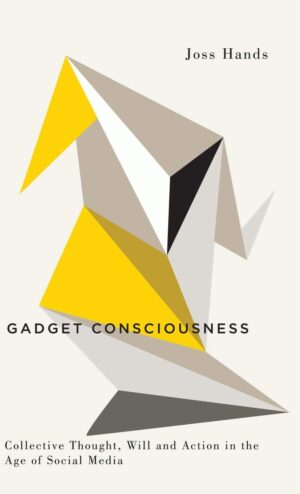
They are central to the modern society’s #economy and #culture. Machines are everywhere. But throughout history, things have changed. We produce endless amounts of things, but as Joss Hands says in the book The Gadget Consciousness, the new things are not material. Even bakers now need advanced network solutions to mix dough and sell bread. It is no longer gears, nuts, and bolts but «the fluid dynamics» – touchscreens, microchips, and digital codes. «Computers in the term of electrons and silicon […] operate at a different scale than industries machines. It is through linking, coupling, and other processes of becoming.» Machines are a «city», as in «multiplicity», writes Hands, with reference to Le Corbusier’s «the city is a machine» doctrine.
how can we raise awareness in the gadget brain within this realm of gadgets?
Tangibility
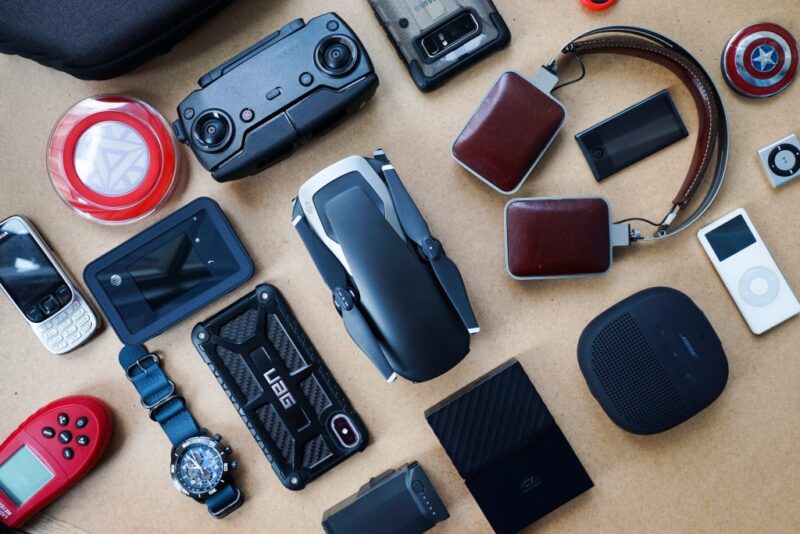
Hands’ book addresses our contemporary tools – not manuals for iPhones or Android, but fundamental questions about the «gadgets society.» According to Cambridge Dictionaries Online, gadgets are «a small device or machine with a particular purpose.» Like something in itself. In Norwegian, «dings», an inferior thing without any real effect, are often sold individually, like the fun gadgets you can buy in any online store. These gadgets have a material presence; they can be moved around, lost, or broken. We have them in our pockets, in the car, attached to our wrists, or plugged into our ears. They can be microphones or speakers, and they may also have touchscreens. But these are not what Hands is interested in.
A gadget is what makes an #iPhone more than just a square of glass and metal. Gadgets can be #Bluetooth or #Wi-Fi, accelerometers, nexus points (connecting users to networks), interlocutors (like GPS systems), or ad-hoc local networks in apps like FireChat. Hands defines gadgets as «a device that mediates between the user, the worlds of other users, and other devices.» He compares it to a milk carton where the carton (the thing) is between the user and the milk, but it is the pouring that is the essence of the thingness of the thing – «what is at hand for us», to put it in the words of the philosopher #Martin Heidegger#. The use of the thing makes it a thing, not the thing itself. Hands’ understanding of reality motivates us to see the gadgets society more materially.
Things for me
Hands points to the fascination with the object. He tries to bring individuals out of «the idiotism», away from the figure of the idiot – in the Greek sense, individuals without a connection to society. The uniqueness of the nerds is in a double sense. So how can we raise awareness in the gadget brain within this realm of gadgets? The modern subject, with its slender fingers and lacking forearm muscles, and the body hanging down from the head. Gadgets-me connected with a lack of bodily experience. This creates the community of web portals: «From the sky, we have the space of appearance […] that brings together the mortals,” writes Hands.
Thus, #social media# is society, and «society» means coming together. Hands wants to steer the perception of gadgets away from tool thinking. In other words, he wants to eliminate #fetishism – not the thing for me, but the thing for us.
Hands recycles Marx’s thesis that the workers, the system operators, the active citizens, as wage earners or users, have become tools that maintain the system – but now in a «Gadget materialism.» How can we connect as users and interact within such a realm of gadgets without being made available as tools ourselves – where we are exploited as willing slaves for a system we do not own?
How we deal with this is significant for the future – so who is in control? Are we the ones controlling gadgets, or are gadgets controlling us? Hands examines how these gadgets affect our consciousness as individuals, classes, societies, and as a species.
Our website features Amazon affiliate links, and we may earn a commission from purchases made through those links.