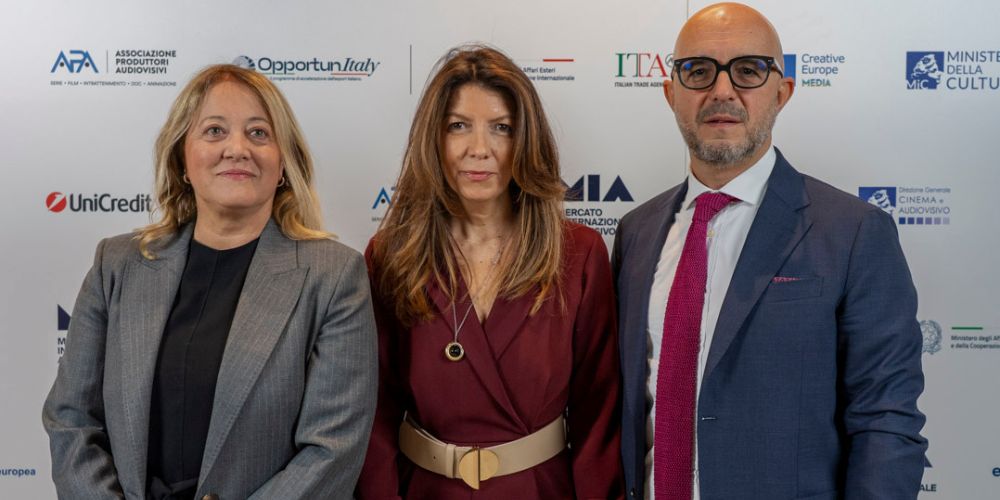
The 11th MIA | Mercato Internazionale Audiovisivo has returned to Rome, running from 6 to 10 October. Promoted by ANICA and APA, and directed by #Gaia Tridente#, the market presents its offerings with more than 80 events, including panels, keynotes, roundtables, and workshops. Its selection pipelines are dense: roughly 500 submissions to the Co-Production Market and Pitching Forum yielded 62 projects across Animation, Documentary, Drama, and Feature Film, while a further 44 titles appear in five showcases. The official tally thus rises well past 100 projects.
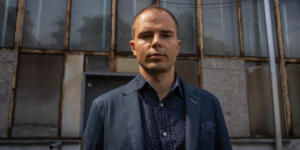
Tridente presents MIA as more than a commercial meeting place. She casts it as infrastructure that is actively curated. «MIA is positioning itself as a curated market, with a stronger attention to content,» she told our international press roundtable. «From development until the end of the value chain, until the distribution, we try to cover and support producers and all the professionals involved in the creation of new works… projects can be showcased at MIA, pitched at MIA, and find partners, financial and distribution partners.» She added that the «idea of a curated market is central,» with the team working to keep selection standards consistently high across sections.
From marketplace to cultural infrastructure
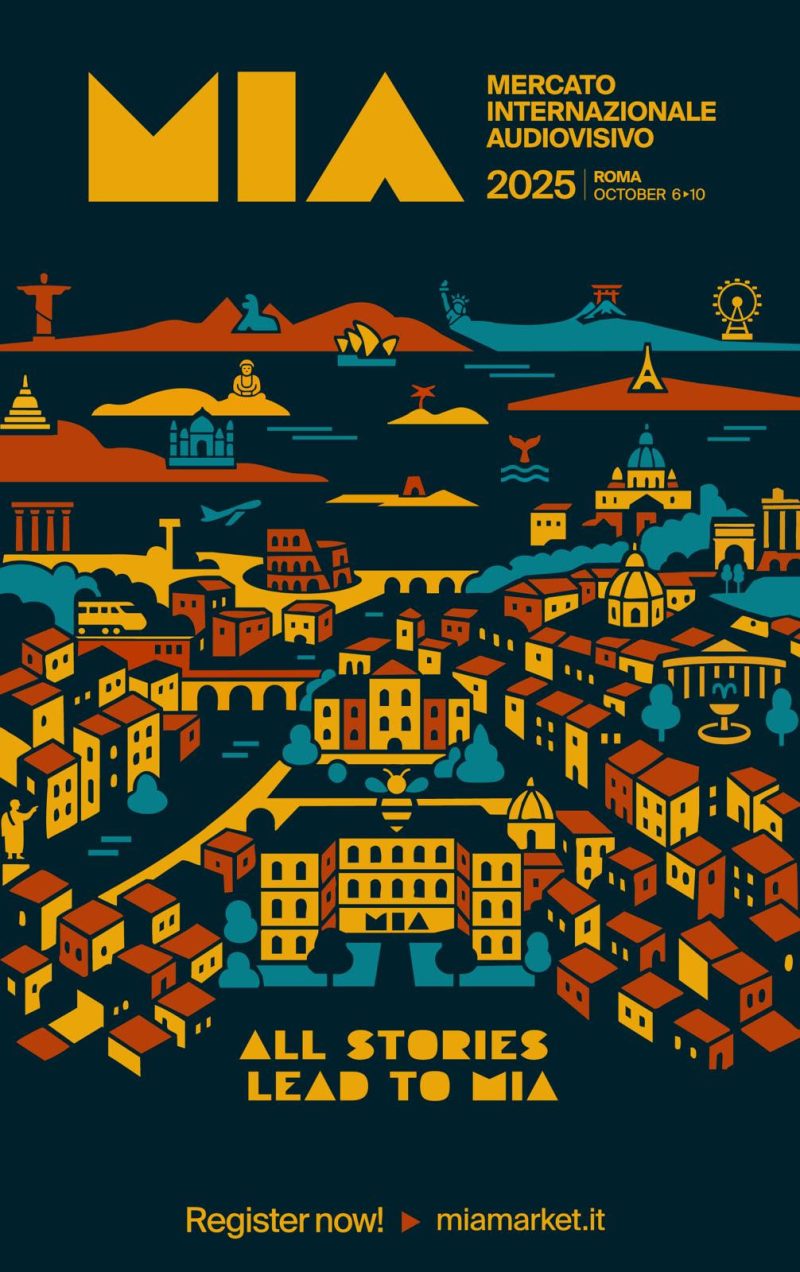
This edition debuts a new visual identity, All Stories Lead to MIA, which deliberately centres the Barberini district as a creative node where rights, commissioning, and financing intersect. Several additions are designed to facilitate the efficient movement of documentary and politically adjacent nonfiction through that node. The Book Adaptation Forum (BAF) formalises a publishing-to-screen corridor. «Every time we survey participants, the answer is ‘books, books, books,’» Tridente said. A jury has selected nine titles under the BAF label, with eight further works presented via Shoot the Book, most of them preview pitches aimed at producers and rights scouts.
The technological flank is equally deliberate. Five vertical #AI workshops are mapped onto the production chain, namely development, production, sales and forecasting, blockchain and AI, and VFX or post and AI. The aim is to normalise AI literacy in an environment where rights, workflows, and windows are in motion. Tridente describes these as value chain interventions rather than isolated masterclasses.
«MIA is positioning itself as a curated market, with a stronger attention to content»
Policy rooms, public broadcasters, and the documentary lens
Policy rooms and public service strategy are unusually visible this year. For a fourth time, MIA hosts the EBU Fiction Experts Plenary and the European Producers Club Heads of Drama meeting, both closed-door. New in 2025 is The Children’s Pubcasters Meeting, which convenes BBC, HR/ARD, France Télévisions, RTVE, and RAI for a private summit followed by a public roundtable. Tridente positions the meeting as an attempt to transform fragmented commissioning into cumulative capacity. «This is the first time we are organising the Children’s Pubcasters Meeting, and we would like to have it regularly… the closed-door meeting will be crucial,» she said, noting that «the lack of money is everywhere» in animation and that «having more players around one project could be crucial… bringing IPs and brands and projects that can really travel among public broadcasters.» What MIA can provide, she added, is a neutral table. «It is not usual to have all the broadcasters around the same table in the same venue,» and while a formal alliance is still distant, the market is «ambitious» about making such assemblies repeatable.
Two research anchors set the frame for policy discussion. APA’s seventh report examines television and streaming dynamics in Italy, and ANICA’s sixteenth Sala e Salotto surveys theatrical audiences in a windowing landscape that is still in flux. A session tied to the European Audiovisual Observatory will surface persistent gender gaps, with Tridente citing a headline figure of about 27 percent of women in crucial roles, followed by a discussion with senior women from across Europe. For documentary stakeholders, attention to film archives, in collaboration with the Centro Sperimentale di Cinematografia, speaks directly to access, preservation, and rights. Regionally, the Trentino Film Commission introduces a new green protocol for animation, developed in collaboration with Green Film and Ecoprod, which extends sustainability tools into a production area with distinctive environmental footprints.
If MIA operates as a barometer, its needle points to development-stage vitality coexisting with financing strain. Tridente reported a marked increase in first-pitch projects, including over 500 submissions to the Co-Production Market from approximately 62 countries and more than 200 proposals for the content showcases. She reads this as evidence of energy on the development side, even as closing packages, particularly at premium budgets, has become more difficult. In this context, she argues, markets such as MIA are central and crucial to bridging the gap between intent and execution.
International reach, financing strain, and the co-production climate
Internationally, the field of view widens. This year, around 60 countries are represented, with first-time delegations from #Cuba and #Mexico. Tridente links this outreach to Italy’s newly launched LATAM co-production fund, noting that the Cuban delegation will hold meetings with Italian counterparts throughout the week. The United States is also visible after a period of perceived retrenchment. «We have a lot of delegates coming from the U.S.,» including Sony Pictures Television’s Los Angeles office. For her, co-production remains fundamentally relational rather than narrowly transactional. «Co-production is a matter of a love affair… you choose your partner because you have to spend a lot of years together… This kind of relation would not change, even if something were to happen in terms of politics.»
Rights and talent services receive additional reinforcement. Alongside BAF, MIA LAB and the B2B Exchange return, and an Industry Insiders Bootcamp with United Talent Agency in the United Kingdom offers an open microphone clinic for pitches and a U.S. buyer strategy. «Charlie Ferraro is on 8 October, it is the Industry Insiders Bootcamp,» Tridente confirmed.
Guest programming keeps nonfiction in focus. Italian author Erri De Luca appears in the biographical documentary Fish Don’t Close Their Eyes / I pesci non chiudono gli occhi, within the Italians Doc It Better showcase. Director Thom Zimny delivers a keynote, drawing on a body of work that includes films on Bruce Springsteen, Willie Nelson, and Sylvester Stallone. Producer Rodrigo Teixeira, known for literary-rights driven projects and the recent I’m Still Here, joins the funding conversation, reinforcing the market’s attention to adaptation and long-tail IP.
On the awards side, a new Sony Pictures Television Award will recognise the best project in the Drama Co-Production Market and Pitching Forum. Returning prizes include the MIA Development Awards, the Paramount New Stories Award, presented this year to a factual entertainment project, the Women in Film and Television Italia award for gender equality potential, the GEDI Visual Award for a title in Italians Doc It Better, and the Screen International Award for a film selected for CEU Soon.
Taken together, the 2025 architecture is pragmatic. Documentary, drama, and animation share the same frictions, including financing, rights, skills, and distribution, so the market now convenes commissioners, public broadcasters, producers, and policy-adjacent actors within one structure. That is the point, Tridente suggests, to operate not only as a curated selection window but as a «real platform» that converts ideas and IP into market-ready projects through targeted expertise and repeatable relationships.