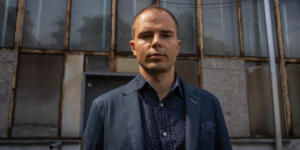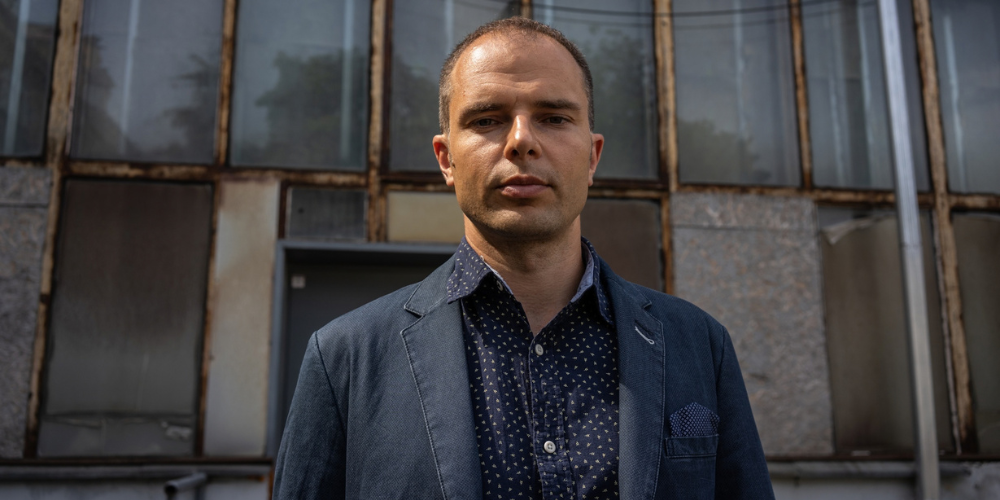
As the Baltic region’s only international human-rights documentary festival reaches its twentieth edition, Modern Times Review spoke with Inconvenient Films festival director Gediminas Andriukaitis about arriving at documentary from human rights, the shifting temperature of Lithuanian non-fiction, and a programme increasingly built around the measured impact of individual films. The 2026 edition opens across Lithuania on 5 October.
You don’t come from a cinema background; it’s more the human rights space. As someone already working in human rights, what was it about documentary that you wanted to work with too?
If you look across the human-rights film festival landscape, it’s not that unusual. A lot of these festivals were started by people who came out of human-rights organisations, not out of cinema. Watch Docs, One World — they all grew out of that world, so my story is quite similar in that sense.
I started the festival twenty years ago, back when I was a human rights activist, studying international law, and interested in global issues and international justice. And I fell into the human-rights documentary almost by accident. That first trip to Watch Docs in Poland was a huge inspiration. I got to experience the power of real stories, how they drive empathy and a deeper understanding of how complicated things actually are. It struck me as such an impactful way to talk to people and raise difficult issues. I was already engaged in human rights education and advocacy. Then I got pulled into this whole documentary world, the festival world, and it’s been quite a journey. I didn’t know where it would take me, or take us. So it’s exciting to be at this stage with something that was completely new to me.
it’s exciting to be at this stage with something that was completely new to me.
Do you remember any particular films from those early days, ones that really pulled you toward the form?
It’s hard to say exactly which film I saw where, to be honest. But a few from that early period were just extraordinarily powerful. Hubert Sauper’s Darwin’s Nightmare, that one stayed with me for years, and it still does. And at Watch Docs, I think I saw Alex Gibney’s Taxi to the Dark Side, which really challenges you in so many ways regarding justice and human rights violations around the world.
This year we’re revisiting the films that were most impactful for us. It’s a selection we call «20 Years of Inconvenient Films». We invited our audience to reflect on these two decades, pick the films that stayed with them, and share the stories that go with them. For me personally, Joshua Oppenheimer’s The Act of Killing is one of those groundbreaking films, the kind that changes your whole sense of what’s even possible in a documentary.
The name itself, «inconvenient films». When you started out and landed on that word, how were you defining it, and why was it the right title for the festival?
Sometimes I still wonder whether it was the best idea to call the festival «inconvenient». Especially when approaching private donors or sponsors. Some of them will tell you, it’s an important festival, but maybe not exactly our cup of tea. But for me, inconvenience is really about challenge. These films have to challenge you, your perspective, the way you see yourself and other people, your stereotypes, your prejudices. I’d call it intellectual entertainment, but with that edge that unsettles you a bit and lets you experience something from a completely different angle.
How was the documentary scene in Lithuania twenty years ago compared with now? Are you seeing more documentaries coming from Lithuanian filmmakers, and has the appetite changed?
Back then, most of the issues we were trying to programme were really challenging, definitely not mainstream. We once opened the festival with a film about a pride event in Jerusalem, and seventeen or eighteen years ago, LGBT rights were a super-sensitive topic in Lithuanian society.
Lithuanian documentary makers generally avoided social and political issues altogether. The tradition here was very poetic, philosophical: these portraits of particular personalities, observing things without really showing your position or your attitude. So that made us quite an unusual festival within the documentary community. But it’s changed. This newer generation is really starting to reflect on society, on the bigger issues, so Lithuanian documentary is becoming a bit more political, which, honestly, we’re happy about. And at the same time it’s holding on to those poetic, philosophical qualities from the old school.
What about the reaction early on, from the audience and from the authorities, when you were putting these uncomfortable conversations out there? Has there ever been real adversity toward the festival?
Back then, the supply of documentaries was much more limited than now. There were no platforms, nothing, really. You could only see these films at a handful of festivals around the world. So we were fresh, and a lot of people got fascinated with the programme.
But there was definitely a backlash too. I remember protests in the venues, especially when we showed certain films on LGBT issues. Not clashes exactly, but protesters in the audience who’d openly oppose us. And our early campaigns were very focused on political human rights issues rather than the artistic side of film, so they drew a lot of attention and opposition. It was intense. Over the years, maybe we moved a little more toward the film side, the artistic side of things, but human rights stay right at the core of the festival’s identity.
the younger filmmakers are definitely much more interested in the political realities happening around them.
There’s a small Lithuanian section, the student competition, a couple of films. So among the local filmmakers, especially the younger ones, what topics are you noticing them really wanting to dig into?
There aren’t that many documentaries being made in Lithuania. It’s a pretty small community of creators. But I’d say the younger filmmakers are definitely much more interested in the political realities happening around them. For example, I know of at least a couple of films still being made about the migration crisis at our border, the one that was escalated by the Lukashenko regime in Belarus, where there were also a lot of human rights violations. One of them is December; it’s mainly a Polish film, with a Lithuanian co-producer, and it deals with that border crisis. There’s also been interest from the younger ones in the environmental side of things, but it’s treated in a slightly more political way.
When did you bring in the interactive strand, and how does curating those projects compare to curating the films?
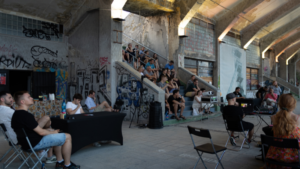
That’s a real passion of my colleague Judita; she’s the one who introduced it. For a small festival like ours, programming is a real challenge; it’s resource-intensive and takes a lot of effort. But what I appreciate is that my colleagues really try to make it an experience for the viewer. They don’t just find a space and put out some headsets. They build a nice, engaging environment, and we hold it in a separate venue from the main festival, so someone can come and spend two or three hours there, exploring the different works, trying them out, being immersed in the whole environment, not just the pieces. And this year, honestly, it’s one of the best selections we’ve had. Something like In Pursuit of Repetitive Beats is long and complex, really hard to stage properly, so we’re proud of what the team pulled together.
These days, it feels like there are human rights issues everywhere you look, but they also get tangled up in today’s ideological tribalism, so the definition almost becomes subjective to whoever’s defining it. I won’t ask you to define human rights, but how do you make sure you’ve put together a well-rounded programme, that you’re not leaning too hard on one issue or one place?
That’s a super tough one. Probably one of the toughest you can ask a programmer of a festival like this. Because, as you say, how do you decide which themes, which issues, which situations are worth highlighting when you look at the state of the world now, and you see red flags all over the place?
For this edition, most of our conversations were actually about the impact of film, whether a film can genuinely make a difference. We tried to find those instances where a documentary did make a difference. So it was less about chasing some thematic balance and more about diving deeper into the impact of documentary as a form and as a way of communicating. We even have a person on the programme team who’s responsible for the impact activities and for actually measuring impact. So we run focus groups to see whether a particular film has affected the audience one way or another. That’s where most of our attention went this year, rather than trying to tick off certain themes or regions.
We call Inconvenient Films one of the most accessible cultural events in the country.
This connects to one of my own frustrations that runs well beyond documentary into the wider media culture. There’s this retreat into the safety of constant reinforcement. You see it in how a social-media feed gets curated: you click one thing, and it’s the same thing back at you for a week. In the documentary world, it’s been rare, in my travels, to find events that platform genuinely opposing viewpoints, partly because the industry and its gatekeepers lean mainstream left. What’s your approach as a festival to keeping the environment open, so real debate can actually happen?
For us it happens at the level of each individual panel. When we feel a film or a theme needs discussing, we try hard to find the right balance for the panel, the gender balance, the range of views. Because quite often, if you bring people to a panel who all agree with each other, well, you’re basically talking to a mirror, and it usually won’t be that enriching. So we look for different angles, different views, different experiences among the panelists to make the debate more interesting for a wider audience than just human rights activists or a single political group. And every side event has to answer one simple question for us, which is, what’s the purpose of it, why do we need it? Once you answer that, you see that, to be enriching, it has to offer a real counterpoint.
What aspect of the 2026 edition are you most excited about?
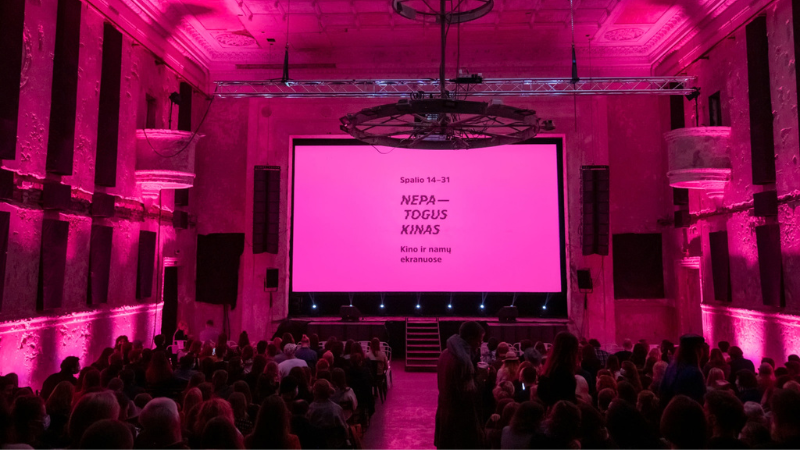
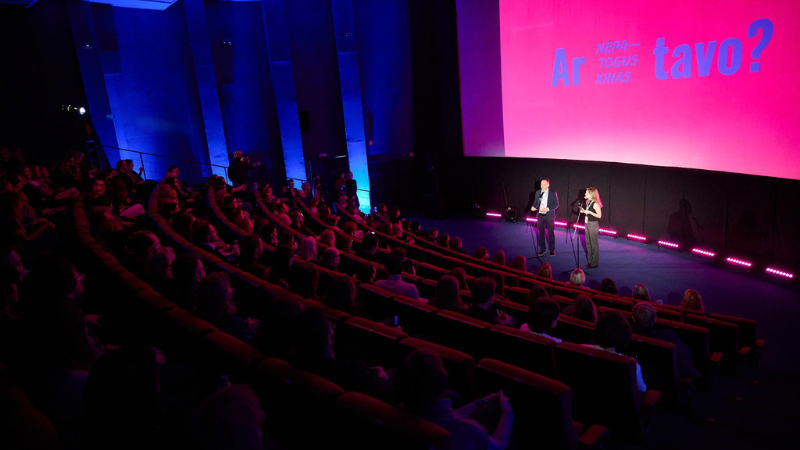
A couple of things! One I already touched on, which is the impact, going deeper into what documentaries, what media, actually do. The other is accessibility. We call Inconvenient Films one of the most accessible cultural events in the country. This year, for example, the opening’s going to happen in lots of places across Lithuania at the same time. We’re doing it as a kind of watch party, streamed in libraries all over the country, so essentially anyone can take part. If there’s a participating library near you, you can just go and be there. For this twentieth edition, impact and the accessibility of culture and documentary are really the key themes. In a way, it sums up everything we’ve been trying to do: reach as many audiences across the country as possible. Not just talking to the same bubble in the big city all the time, but making it as open as possible.