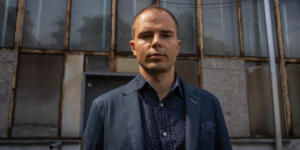
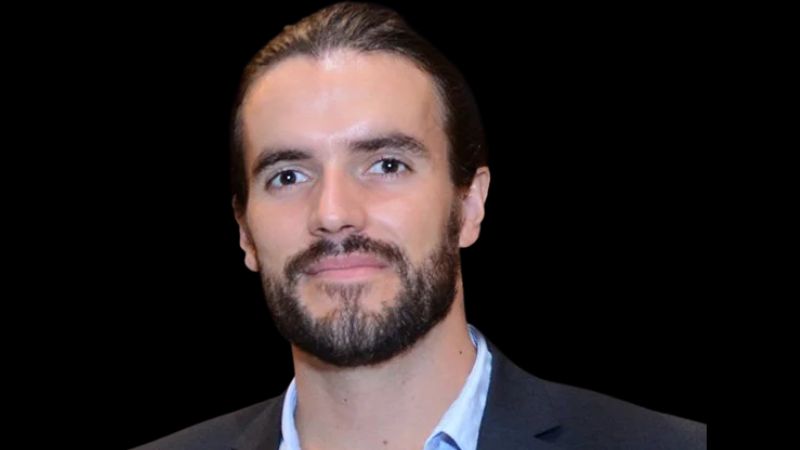
Lisbon’s nonfiction conscience returns in October with a clear stance. A festival is a civic instrument. #Doclisboa is prepared to act like one. In that light, #Hélder Beja# describes to Modern Times Review that a Festival Director’s job is like a form of listening. «First of all, I had no interest in being an executive director,» he says as calibration. The title, he explains, carries a promise he never wanted to fake. «I also did not feel prepared to take the full responsibility for the artistic programme. I never programmed a film festival before, so I would feel like an imposter. We came up with this solution of having me as director, having an associate programmer and creating two positions of co-heads of programme.»
Before Lisbon, there was Macau, a long spell that honed his instinct for coalition. «My background, first as a student and then as a professional, has been journalism,» he says. He founded The Script Road in 2012 and watched it swell year by year. «It started as a very small event,» he says. «Then it grew to become one of the largest festivals of that kind in Asia,» a sixteen-day tangle of writers, filmmakers and musicians, with readings and screenings that ran late. Its growth was handmade. «We were crossing different art forms, bringing people together who would not usually meet, and building audiences from scratch.» In 2018, however, the limits announced themselves at the border. «The [Macau] government forbade three guests from entering the territory,» he recalls. «I decided to quit and start planning my move back to Portugal.»
Back home, «In 2023, I joined the [Doclisboa] team for a couple of months to serve as a press attaché,» he said. «In March 2024, I joined the team full-time. After Doclisboa and the former director decided to separate paths, I was invited to run the festival – a new director coming from within the team, as so often happened in the history of Doclisboa.»
Listening as leadership
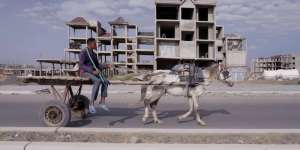
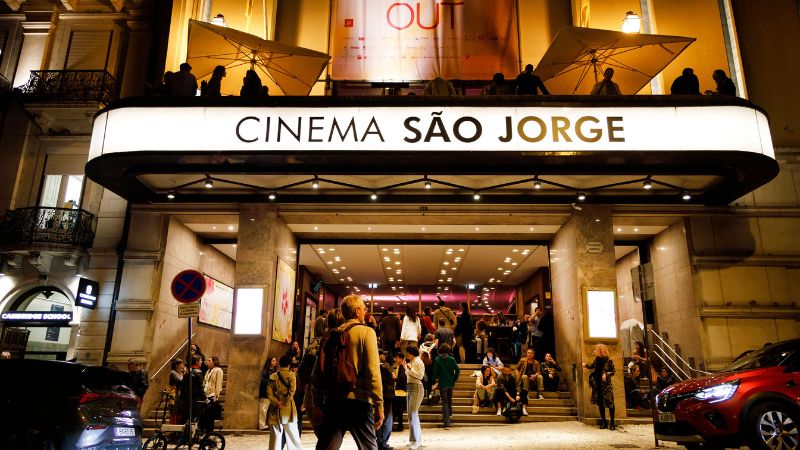
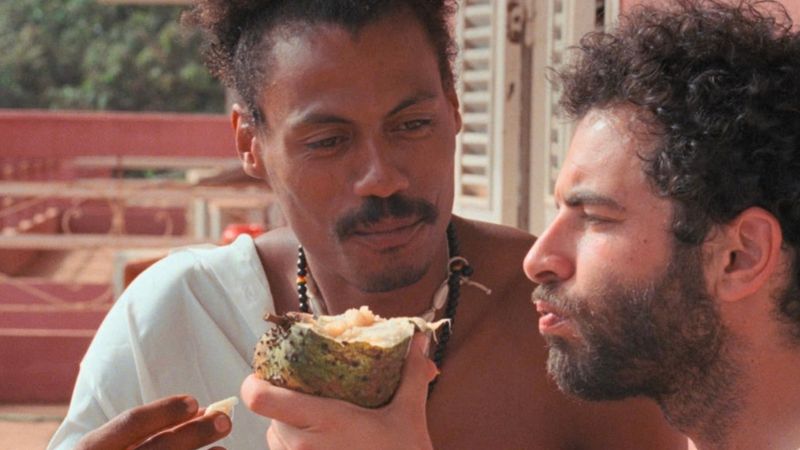
Now, as director, he carries a refusal of euphemism into Doclisboa. With Hasan in Gaza, by #Kamal Aljafari#, is the first image the city will share at the festival’s kick-off on 16 October 2025. «One of the things we do not want is to sound populistic,» he says. «It was very important to be in line with the fact that the film has its artistic merits, that it is a good film in its own essence, despite the political moment we are living.» Only after that came the sentence he repeats without flourishing. «By choosing a film like this to open the festival, you are also making a political statement.»
«Cinema is not the solution, for sure,» he says. What it can do is modest and real. «Spark discussions, open consciousness, and leave that little fire inside people.» «We hope it will be a moment for eight hundred people to be together inside that cinema, to celebrate this film and to celebrate life instead of death.» Unfortunately, Aljafari cannot attend, so he will send a message.
«By choosing a film like this to open the festival, you are also making a political statement.»
Power, money and the commons
The talk turns to money because programmes consist of both budgets and ideas. Last year, Lisbon’s City Hall scheduled a branded import on Doclisboa’s first weekend. «It was shocking to us and to everyone else that seven hundred thousand euros were given to an event like that when a festival the scale of Doclisboa receives around one hundred thousand euros from the City Hall.» A meeting with the mayor brought a small rise in support. «They decided to raise our support by fifteen percent this year.» «We are still waiting to be paid this year in order to execute that budget,» he says, remembering how last year’s funds landed when the festival was already in motion.
Nationally, the picture is steadier, with caveats. Support from the Portuguese Film Institute has been consistent, but growth is another story. What troubles him are the signals. «The party in the government is traditionally not very supportive of culture,» he says. He remembers when a ruling party ended the ministry and later folded it into the Culture, Sports, and Youth department. The counterweight at Doclisboa is coalition. «We have more partnerships this year than we have had in the recent history of the festival. More than ten diplomatic missions are partnering with us and supporting the festival, as well as institutes, foundations and companies.»
Inside the office, the festival’s temperament survives because people carry it. «We have with us #Cíntia Gil# as associate programmer, and she was the director of the festival for many years,» he says. The other anchor is a curator whose path crossed borders for a different reason. «And also #Boris Nelepo#, who has been with the festival for many years after leaving Russia when the war started, and he is now co-head of programme. These two people have immense knowledge about the festival. We have some new faces that make us stronger, such as Cecilia Barrionuevo, our other co-head of programme.»
Making space for different eyes
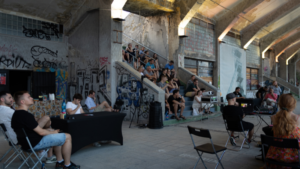
Lisbon holds several audiences, and Beja tries to meet them all. «We just had a warm-up of the festival where we crossed literature, poetry, music and cinema together on stage,» he says. New entry points bring new bodies. «It is a very interesting way of attracting new audiences, reaching out to people who would not come only for film.» «Arts festivals make too much of a separation between the production teams and the artistic teams.» He has them watch films and argue about the future together. «Make everyone feel part of something a little bit bigger and more important than their own job and position.»
When he talks about the Portuguese films, the conversation reflects the current mood. There are more local world premieres than in recent years. The mood is restless. «There is a sense of urgency in most of these films, because Portugal is again changing politically,» he says, thinking back to the earlier decade when funds froze. The titles widen the frame of what people expect from a national cinema. He mentions Mário Mercede’s short «full of desire,» Three of Cups, I Only Rest in Storm, a five-hour world premiere by Pedro Pinho that explores post-colonial NGO entanglements, as well as André Guiomar’s Kuandza work and Carlos Conceição’s «dystopic film Tiger Bay, one of the most adventurous,» shot in Angola. Even an archival counterculture piece about Nova 78 made it to the competition, which sparked a discussion about what competition is for.
Nebulae, the industry arm, treats circulation as part of curation. #Benelux is the guest focus this year. «Sometimes you just travel somewhere and you meet the right people, and conversations start,» he says. The ties are already concrete. A co-production protocol with Luxembourg is already in use. Regular trips to Brussels feed the slate. «Every year, a programmer goes to Brussels to watch a huge amount of films looking for an international world premiere. I did that this year, and again we found interesting stuff for our programme.» He prefers a porous border between the market and the public. «It makes no sense that you fight so much for world premieres if you do not help the films to circulate after that.» Six one-to-one craft talks will feature directors from the lineup. Professionals are steered toward premieres so that calendars overlap instead of clash.
As we conclude our talk, he circles back to first principles. «We do not believe in neutrality,» he says. But this is no slogan. It is a way to organise 11 days in October so that hundreds of people can sit together in one room and pay attention. The rest, if it works, is what lingers when the lights come up.