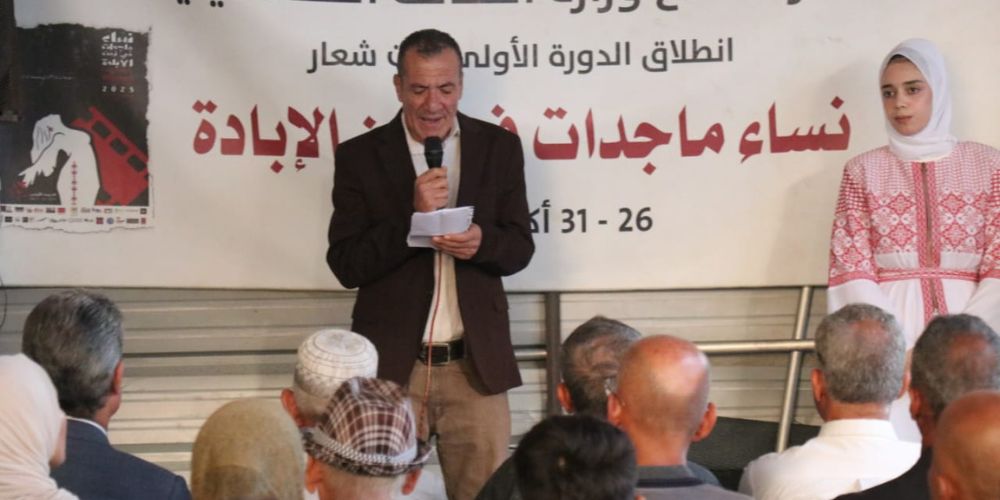
Over two years into Israel’s brutal war on #Gaza, in which more than (officially) 68,000 Palestinians have been killed, over 170,000 injured, with nearly eighty percent of the Strip’s buildings damaged or destroyed, and around 1.9 million people displaced, the Gaza International Festival for Women’s Cinema (GIFWC) is a resilient cultural anomaly in a landscape structured to prevent it. In the Gaza Strip, cultural life has been targeted alongside everything else. By early October 2025, #UNESCO had verified damage to more than a hundred cultural and heritage sites across the Strip, including Gaza City’s Rashad al‑Shawa Cultural Centre, once a key venue for screenings and public gatherings.
Ceasefire fiction
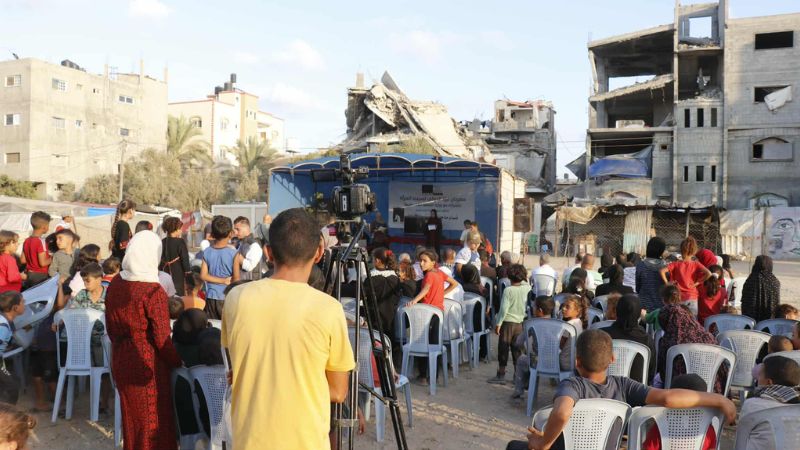
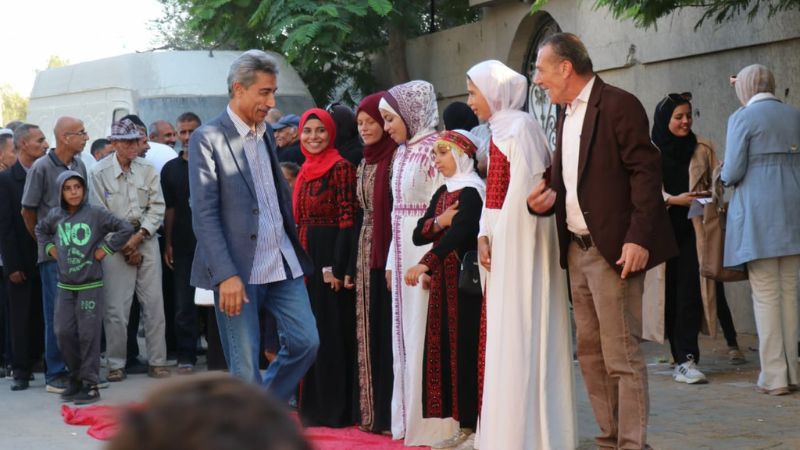
Officially, a #ceasefire has been in place since 10 October 2025. In practice, it is more a legal abstraction than a lived guarantee. At the time of writing, Gaza’s media office and international observers have logged dozens of Israeli violations in the first weeks alone, from sniper fire and shelling to airstrikes framed as retaliation that nonetheless land inside the truce. On the night of 28–29 October, while the festival was mid‑run, Israeli airstrikes across the Strip killed at least 104 people, including dozens of children and women, in what even ceasefire guarantors described as the gravest breach of the agreement so far. This is the weather system in which a women’s film festival tried to unfold—a tent city in Deir al‑Balah, a 55‑inch television powered by a generator, a red carpet held down with rocks.
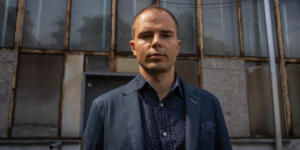
Cinema once had a real footprint here, but Gaza’s cinemas have been shuttered over decades of blockade, war, and political upheaval. More recent attempts to revive film culture have relied on pop-up screenings, cultural centres, and community halls. The latest war destroyed even those stopgap spaces, reducing cultural infrastructure to ruins. Finding somewhere to screen films was, as festival founder Dr #Ezzalden Shlah# puts it, the first and most basic challenge.
«The truth is, the idea of the festival was born out of slavery,» he tells Modern Times Review over FaceTime from Gaza, speaking through an assistant. In this phrasing, «slavery» is a way to name decades of enclosure and control, linking the origin of GIFWC directly to encounters with displaced women, often widows, who have «lost their husbands, their dads, their sons.» Therefore, the festival came from a need to respond to that reality with more than symbolic charity. «Through cinema and films, she can talk more about her problems and about everything women face,» he explains.
«The truth is, the idea of the festival was born out of slavery»
Before he describes what the festival is for, he grounds who is doing the work. «First of all, I have a PhD,» he says. His assistant adds that he has «a PhD in cinema and [is a] director, and he is also running the Jerusalem Festival for Cinema in Palestine… he’s already been in this field for the past eight years, but he extended to Gaza to make it more special for women’s cinema in the Strip and in Palestine in general.»
Shlah describes his work as having a dual aim. «I make festivals, and I have two goals,» he says. «The first is to entertain the people… And the second goal is to bring light to Gaza through the festivals.» To «entertain» here means to carve out a pocket of shared time in which people can sit in the dark and look at something other than destruction. To «bring light» means to use the infrastructure of festivals – programming, juries, guests – to insist that Gaza exists as a place of creativity, not only catastrophe.
Cinema on diesel
Programming the inaugural edition was one prolonged exercise in turning that abstract mission into tangible decisions. For the opening night, Shlah was adamant about a single choice: «For me, it was life or death to have this film,» he says of the decision to open with the acclaimed The Voice of Hind Rajab. He recounts the process of securing not just the film, but also its status, as he wanted the first Arab-world screening to be in Gaza, to reverse the usual flow in which Palestinian stories are seen and validated elsewhere first.
The audience response was palpable, perhaps cinema in its truest form. The assistant describes the event as «very heartbreaking and very touching for the people there, when you see your life on screen.» Shlah’s language is more clipped but no less pointed. «People tell you that she was martyred. She and six other members of her family,» he says. Many in the crowd had lived some version of that loss.
The physical conditions of the festival were, as he tells it, improvised at every turn. The original plan was to open at the Rashad al-Shawa Cultural Centre in #Gaza City#, a symbol of public culture that now lies in ruins. «It was destroyed by the occupation,» Shlah says. The team cleared a patch of rubble to install a temporary screen, only to step back when displaced families moved into that cleared area and turned it into a shelter. «We had to go to Deir al-Balah and did it there,» he says.
In #Deir al-Balah#, «the opening was in a camp,» the assistant explains, «and the closing was in the Journalists’ Syndicate.» The syndicate’s hall is «very basic,» but it has one crucial advantage: «They have stronger internet power.» That single technical detail became the structuring principle that any space with sufficient bandwidth to send files, receive jury feedback, and maintain contact with the outside world counted as a cultural venue.
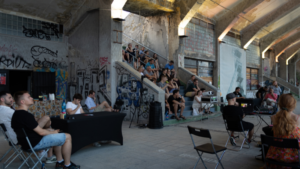
Inside these spaces, almost every technical aspect was compromised. «There was no electricity,» Shlah says of the opening days. «We had to use a generator. We placed a huge television and connected it to a laptop. That was our cinema.» The big screen they had hoped to use was destroyed, so they brought «a 55-inch home screen for 300 people.» The result was surreal: «The sound of the generator was louder than the sound of the film itself,» he laughs, «but people stayed. They watched everything.»
«We didn’t have full houses… But we had people. And that was enough.»
The festival’s structure had to absorb not only logistical fragility but also open violence from consistent ceasefire violations. «The ceasefire was supposed to be in effect. Then suddenly the bombing began again,» Shlah says. «Over a hundred people killed. We couldn’t continue.» Bombs fell in multiple areas, including near #Nuseirat, north of Deir al-Balah. «We couldn’t move. We didn’t know who would be next. It was chaos.»
For two days, 29 and 30 October, «we had to stop everything. No screenings. We waited,» he says. Everyone stayed home or in a shelter, listening to the sky. These days of enforced silence are part of the festival’s story as much as the screenings themselves, exposing the degree to which every cultural gesture here is conditional, dependent on the whim of a ceasefire that can be broken at any moment.
When relative calm returned, the team weighed whether to resume at all. «On the last day, things calmed a little, and we managed to do a closing ceremony,» he says. They chose the Journalists’ Syndicate hall again. It offered some semblance of safety, though there was still no main electricity or running water.
The audience that did come was small but telling. Many were displaced from other parts of Gaza; some were journalists, some students, some mothers with children in tow. «We didn’t have full houses,» Shlah says. «But we had people. And that was enough.» Enough to justify the effort. Enough to affirm that culture still has an audience in Gaza.
Behind the scenes, the institutional scaffolding looks pieced together from favours and long friendships rather than institutional structures like the Palestine Film Institute. Shlah is explicit about the origin of support. «They supported me with a very small amount of money,» he says of the Ministry of Culture. The main organising work came from a small, transnational group: «myself, and our colleagues in Italy: Melina, Monica, and Graziella,» plus the assistant, who also served on the selection committee. Together they sifted through «over two hundred» submissions and chose «forty-eight films» for the core programme.
Who gets seen?
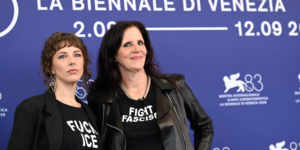
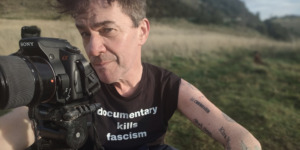
The festival’s fiction and documentary juries, too, carried a deliberate structure of context and understanding. Among those invited were #Céline Sciamma##, #Jasmine Trinca#, #Annemarie Jacir#, and #Monica Marriere#. «I did not accept people just because of their names,» Shlah says. «I chose them because they understand Gaza.»
When the conversation turns to Palestinian cinema at large, Shlah steps briefly away from the festival to sketch the field in which it sits. «Palestinian cinema has a very important role,» he says. «We don’t have a cinema industry, but Palestinian cinema is dependent on individuals. Individuals who work independently, not as part of an industry.» His assistant elaborates that «we have individuals… who can make a really good film and present it around the world… they work really hard to deliver the voice of Palestine… even in the poor things they have.» Asked what someone should watch to understand that history, she does not hesitate: «the director Annemarie Jacir’s, Palestine 36… if you want to come and watch something and really know what’s going on there and how it started there, you have to watch this film.» The film could not screen at GIWFC because Jacir served on the jury, «and it’s against protocol,» but its absence in the programme sits alongside the festival as a kind of recommended syllabus.
Shlah is unflinching when he talks about how Palestinian stories have been represented elsewhere. «No, not at all,» he says when asked whether international cinema has done justice to Palestine. «International films do not logically present our subject.» The assistant sharpens this critique: «They never told the real true story about our situation in Palestine. They bring us as terrorists or savages.» Against that backdrop, GIFWC’s insistence on curating films «with Gaza, and from Gaza to the world» acts as a corrective as much as a cinematic celebration.
«Palestinian cinema is dependent on individuals.»
Looking ahead, Shlah’s attention turns from exhibition to production. He outlines a training initiative for twenty girls in Gaza, who will learn screenwriting, acting, and filmmaking, often via Zoom classes with volunteers abroad. The goal is to produce five short films that will premiere at the next edition of the festival. «This is about building a cinema movement from scratch. One that belongs to Gaza. One that belongs to women,» he says.
When asked whether he believes the festival will return, his answer lands somewhere between determination and doubt. «We don’t know,” he says. «We don’t know if Gaza will still exist next year. But we are preparing. We have no choice but to prepare. We have no choice but to believe in the future.»
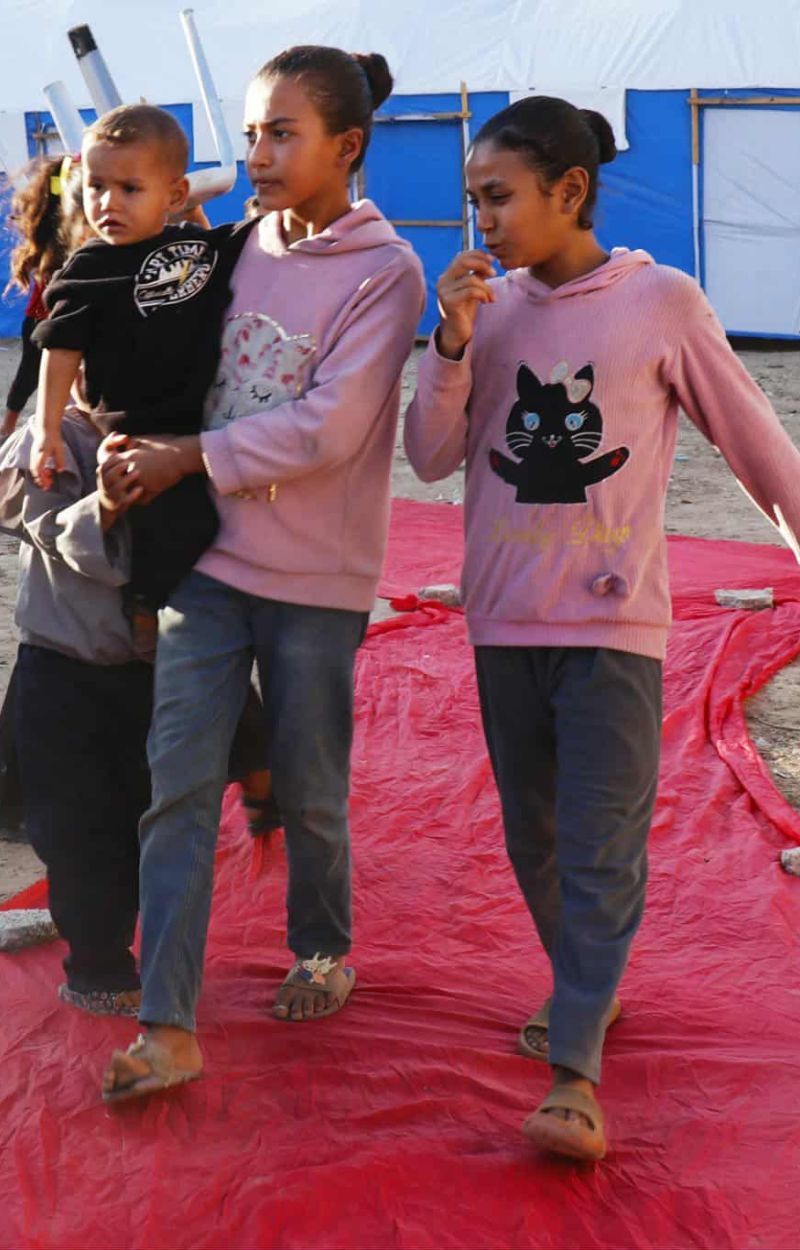
The image that stays with him, he says, came from opening night. A little girl carrying her younger brother walked across the makeshift carpet and smiled. In that moment, he dropped the private promise that this would be the first and last edition. «No,» he told himself. «You have to do it again, and even bigger, and even stronger.»
The Gaza International Festival for Women’s Cinema is both an institution in the making and a symptom of its time – precarious, improvised, structurally fragile, yet insistently alive. It reveals as much about Gaza’s cultural ecology as it does about Gaza’s refusal to disappear.