
Le Train Bleu, Gare de Lyon in Paris. A place frequented by Luis Buñuel. As a bourgeois in life, he enjoyed his drink in the quiet atmosphere of a bar with its air of decadence and hedonism. This is the right place to write some words about a filmmaker who was a provocateur and has a strong place in the history of cinema. A filmmaker whose films are timeless efforts in the search for the Meaning of Life. And a filmmaker whose films have stolen hours of serious reflection and writing from young people like me back in the 70s, when like many others I tried to understand Belle de Jour (1967) and other enigmatic works from the hands of Don Luis.
https://www.youtube.com/watch?v=vKXLtgDPTc4
February 22 was Buñuel’s 100th birthday. Articles were published about his importance, and a film was released on Arte that very same day. The excellent Apropos de Bunuel is directed by Javier Royo and José Lines, the creative couple behind the Cero en Conducta company, who also made a brilliant, joyful and playful documentary portrait of Garcia Lorca, a friend of Don Luis.
“Laugh, don’t fear Existence”, they say about Buñuel. And his close companeros and collaborators, actor Michel Piccoli and screenwriter Jean-Claude Carrière, emphasize this bright side of a man, who is famous for having said, “Thank God, I am an atheist!” The film about him is filled with wonderful anecdotes like this.
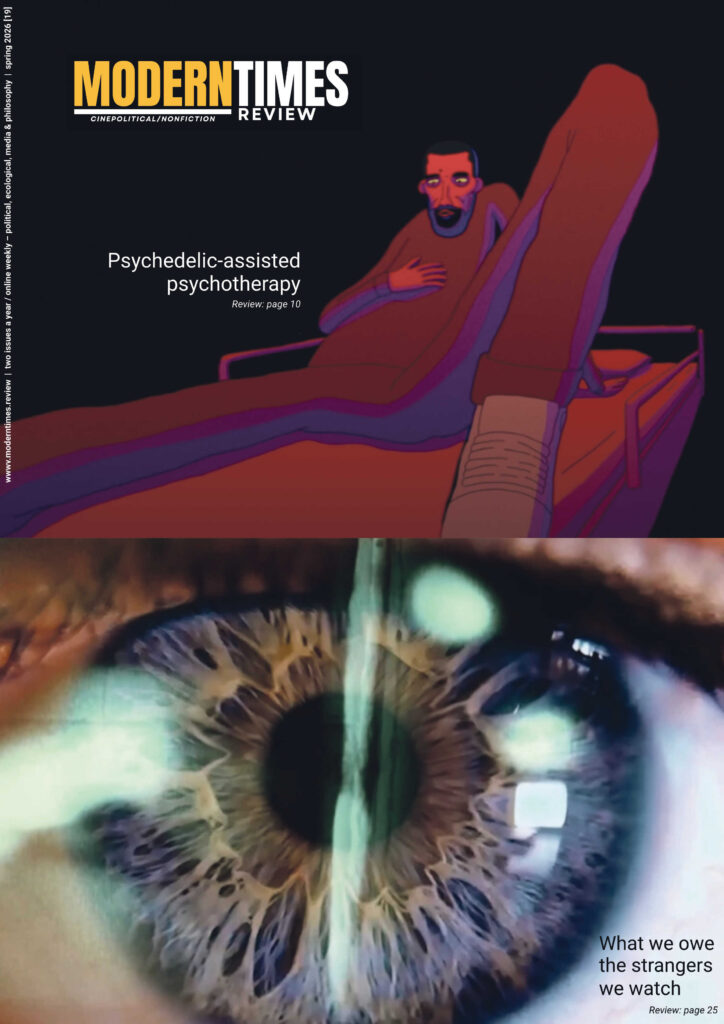
Look at Un chien Andalou(1928). Watch the eye that is being cut by Buñuel himself. What did he and Salvador Dali mean by that opening provocation? Did they want to use the shocking effect to tell us not to trust what we see, but look into ourselves? Or was it a straightforward message: This is a film, what a wonderful medium for bad behaviour. Zero in Conduct.
Here we go again in a search for reason – where there is no reason. Is this not the strength and weakness of all documentary making? That the documentarists always want us to understand the nature of the world?
It is indeed shocking to watch the cutting of the eye. But it is also shocking to watch a father who calls for his son in the film on Srebrenica by Leslie Woodhead, A Cry from the Grave. The first scene is from a fiction film, the second one from a documentary. But they are both surrealistic and horrifying. The same goes for sequences in Buñuel’s Los Olvidados (1950), his Mexican, socio-psychological portrayal of Evil. And yet what Buñuel mostly does is put the constant struggle between Good and Evil into perspective, inviting us to laugh, like in Belle de Jour of my youth.
Some days ago I watched a documentary on Israeli soldiers beating up a Palestinian in the street. Nothing to laugh at. Not at all funny. Like the Srebrenica film, it calls for anger and frustration, as did Buñuel’s own documentary Land without Bread (1932) about poverty in a Spanish village. This is the way we are.
And yet sometimes a satirical and provoking statement might be a better way to fight Life’s absurdity. Today’s documentarists hesitate and behave, except for people like Werner Herzog who always go against political correctness.
You may very well argue that there is no reason to laugh in a xenophobic Europe with politicians like Jörg Haider. But why not? Anyway, it was very refreshing to watch the news clips from Vienna some weeks ago. As the bourgeoisie were holding their annual ball, an actor dressed up as Hitler was arrested outside the theatre as he was getting out of a big car on his way to join the party. Bad behaviour! Zero in Conduct! Buñuel would have loved this artistic expression.
The Buñuels in contemporary documentary filmmaking make us laugh. Life is crazy and horrifying. Enjoy!