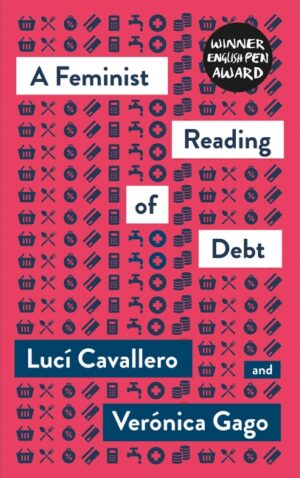
A Feminist Reading of Debt is a critical feminist look at debt and credit. The authors Lucí Cavallero and Verónica Gago have received the English Pen Award for the book published in 2021. The authors convincingly argue that #gender is a contributing factor in economic inequalities. Since debt disproportionately affects women, it increases the marginalisation of both women and #LGBTQ+ people in general.
Cavallero and Gago explain that the marketing of lending companies and financial institutions specifically targets women, as women are often responsible for household finances and perform unpaid care work for the rest of the family. At the same time, the work they are actually paid for is vastly undervalued. Women are also more likely to take out loans because they are in low-paid jobs because a higher proportion of them are unemployed or outside the regular labour market because they have caring responsibilities at home. Therefore, they are also more vulnerable to aggressive lending practices, high interest rates, and fees.
The feminist movement Ni una menos
While Argentina’s inflation rate is currently above 100 percent, its worst in 30 years, debt is also further affecting the daily lives of the country’s population. However, collective reactions to debt and gender economic inequality have also been expressed in recent years. In 2016, there were a series of demonstrations against violence affecting women; they came as a reaction to the brutal murder of a teenage girl. This also inspired the creation of the inclusive feminist movement Ni una menos, which has been adept at linking its political struggle with student and housewife groups, trade unions, and migrant organisations.
The authors’ involvement in Ni una menos has influenced the argumentation in the book, which basically maps how #patriarchy goes hand in hand with #state violence#. They also argue that neoliberal economic policies are a tacit form of violence against women since the economic framework conditions affect women the most. They defend measures such as debt cancellation to eliminate economic inequality between the sexes.
Reproductive rights
A Feminist Reading of Debt presents a balanced understanding of #economics. Reflecting on the value of care work, the authors recognise the importance of addressing systemic inequalities and the necessity of introducing alternative economic community arrangements to counterbalance greedy lending practices.
The chapter ‘Some Milestones of a Brief Chronology’ charts how everyday life in #Argentina has been financed over the past five years – a period that also coincides with a feminist discourse that increasingly advocates for #reproductive rights# (including access to medical abortion). Here, debt repayment and economic inequality between the sexes are contested.
The chapter describes how Argentinian youth gained access to savings accounts and payment cards in 2016. It also describes the acquisition of Cordial Microfinanzas by Banco Supervielle in March 2017, with five branches in low-income neighbourhoods in ##Buenos Aires and surrounding areas and a loan portfolio valued at USD 192 million. In July 2017, management introduced credit and loan opportunities for pensioners, social security recipients, and other disadvantaged groups with «around 24 percent annual» interest rates. In the same period, in October 2018, the W20 – the G20’s ‘women’s group’ – has argued that the higher poverty rate among women is due to the ‘economic gap’ between the sexes and wants microcredit schemes to compensate for this.
The authors show that marginalised and economically vulnerable communities are forced to adopt credit schemes that expose people to perpetual debt and poverty.
«around 24 percent annual» interest rates.
Compañeras
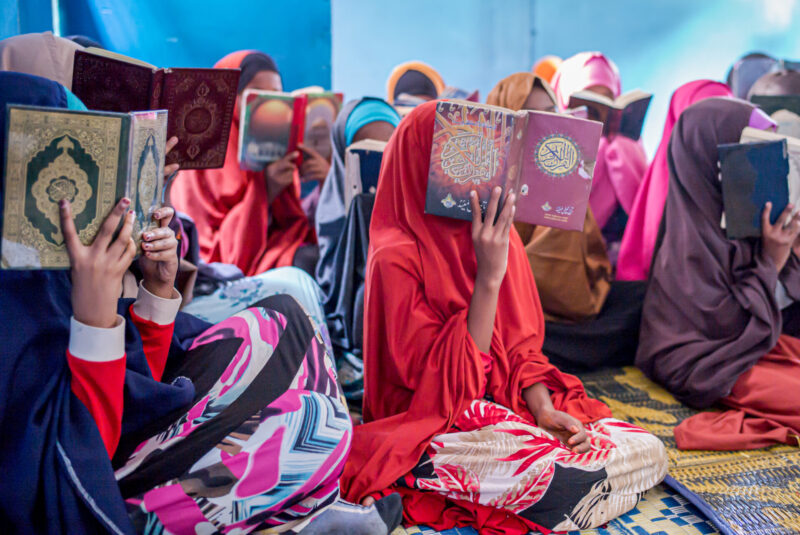
The section of the book that brings together a series of interviews with other activists, called compañeras, is particularly insightful. These women from different activist organisations give first-hand accounts of resistance and concrete tactics against debt.
One campesina, for example, describes an alternative loan system in response to traditional lending schemes. Migrants from #Bolivia living in Argentina have joined a community system as a method of debt cancellation. This system is called pasanaku, which roughly translates to «pass it on.» It is a form of interest-free loan, where everyone deposits the same amount of money each month, and each month, a compañera receives the total sum of what has been paid in until everyone has received it once. The method works to get rid of debt and to prevent compañeras from resorting to credits and loans to buy something expensive they need.
The testimonies
Other interviewees talk about how women are exploited and end up as debt slaves, and also how parents or vulnerable workers have to resort to loans, whether it is to buy a motorbike as in the first case or to secure means of production to continue working. This section of the book helps the reader assess the authors’ arguments through several examples and compare these specific cases with similar cases in other parts of the world.
In addition, the testimonies tell of a feminist practice that emerged within consciousness-raising groups. In an earlier chapter, the authors refer to #Rosa Luxemburg# and how her writings have influenced their understanding of «current forms of displacement, [and] exploitation» and shaped the book’s theoretical framework, while the interview section illustrates the authors’ practice.
the authors refer to Rosa Luxemburg and how her writings have influenced their understanding of «current forms of displacement, [and] exploitation» and shaped the book’s theoretical framework
A critique of debt
The book ends with two manifestos from the Ni una menos and Yonofui collectives that support debt cancellation and economic autonomy.
This section also situates the authors’ position and the book within an entangled political environment. In sum, the book offers «a methodology for connecting experience and struggle» and a critique of debt grounded in the belief that economic policies and practices must be reshaped from a feminist perspective to address the conditions and needs of marginalised communities.