– Emilie Bujès, what is the overall theme or focus of 2019’s edition of Visions du Réel?
– From this year on we will no longer organize the Focus program (films and projects from one country). The concept seemed a bit too reductive and not very relevant for 2019. Instead we decided to look towards countries with less (strong) cinematographic structures. We went for instance to Burkina Faso and to Indonesia this year, and came back with films and projects. The idea is to aim for diversity to support developments of projects. But it is also to financially support filmmakers and producers who, for example, cannot attend the festival and its market.
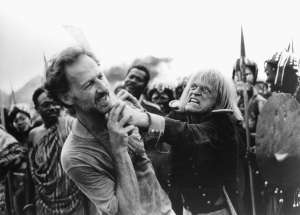
– The Maître du Reel this year is Werner Herzog. He will spend several days at the festival to introduce films and give a masterclass. We will screen 14 of his films to give the audience the chance to dive into his work.

– Are there some particular criterion or aspect you look for in the selection process?
– We work in a small team, only six people. We have no pre-selectors. The team has an overall image of what we want to do and express. And our main criterion is cinema. Important political topics often belong of course to cinema of the real – but we are first of all looking for authors that try to communicate their view of a specific topic, no matter which one.
VOD platforms should be as open as possible to authorial approaches.
– Do you have a documentary that was seminal to your interest with the genre?
– The work of Werner Herzog definitely is essential in my interest in film in general. His films, both fiction and documentary, cover a great spectrum of forms and subjects – they are very impressive in regard to how much he stretches things without losing coherence in his oeuvre.
– Can you think of a film that had political or social impact in recent years?
– Last year we presented Srbenka (by Nebojša Slijepčević) – a very important film in terms of politics. It was afterwards screened in Croatia thanks to its international success – a politically sensitive film then appeared in the country of which it is about.
– Where do you see the documentary landscape progressing in the next decade?
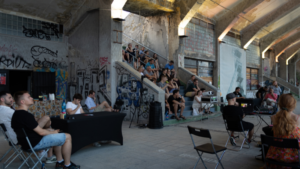
– While countries like the Czech Republic have festivals attended by many young people, other countries are struggling to reach younger audiences. Festivals need to be attractive for them, so they watch films that are hard to access. VOD platforms with some documentaries should also be as open as possible to authorial approaches. Non-fiction films are also more and more shown in those large fiction-based festivals – so cinema of the real is not a sub-genre.