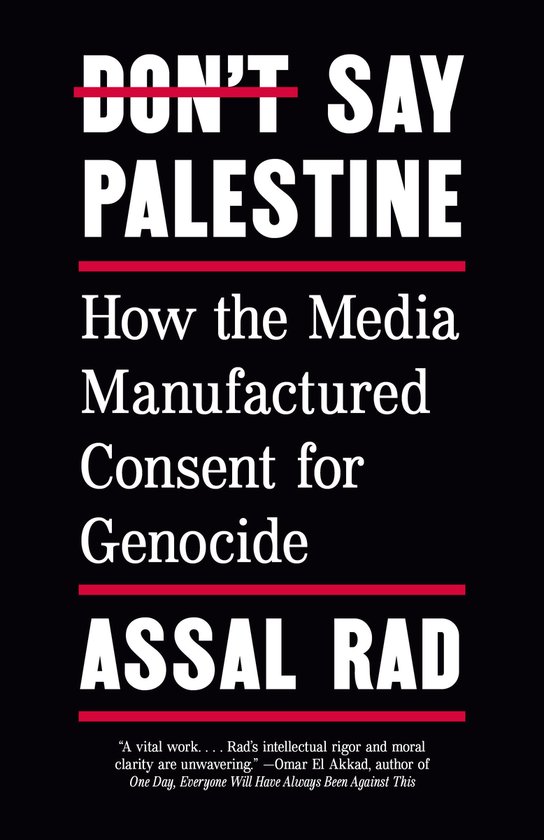
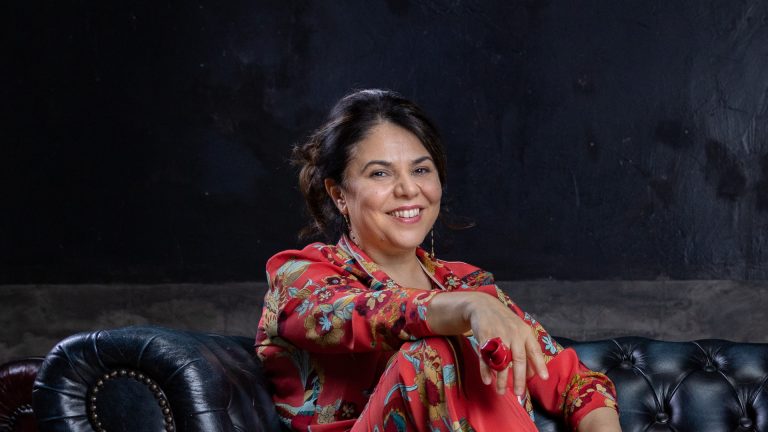
The recent debate on feminism, queer, and #transgender issues has dealt a blow to second-wave feminism (equality, family policy, state feminism, self-determined abortion, etc.). One question from reading this book is whether Murgia envisages feminists, queer people, and transgender people all falling under the concept of queerness and fighting the same battle. The answer is «yes and no», as the author gives us an ABC of naming and exclusion, such as the dichotomy between homosexual/lesbian being just as exclusionary as the heterosexual/homosexual opposition. In its non-binariness, #queerness is more inclusive, a catch-all term to cross the Christian threshold.

The body
Thresholds and doors are central to the book. Besides the creed, Credo, Jesus’ words recur: «I am the door to the sheep” (John 10:7). However, the author herself does not distinguish between identification and transition (moving to another gender). The complex question of identity and biology leaves out biology.
But it can’t be avoided. Well into the book, it says, «If Christ’s existence is a crucial event for my body as a woman, and his flesh is the meeting place, my body is the battlefield for male control in the church.» #Biology cannot be ignored; any woman knows that the body is the battleground against #patriarchy. Anyone seeking to liberate themselves from this control begins to think about the body in a new way – as a symbolic place. Murgia points out that both feminism and #Christianity are places of conversion, from passivity to struggle, from ignorance to conviction, from the fleshly to the symbolic. I don’t quite understand what applies to feminism and what applies to queer and queerness, and I wish the author were more in dialogue with other thinkers within queer theory than she is with the Gospels and the New Testament in general.
Groundbreaking theorists in feminist studies, such as #Donna Haraway# and #Judith Butler#, should be a matter of course in the discussion but are not mentioned. And the person considered to be the architect of queer theory, Eve K. Sedgwick, is only mentioned in the bibliography. Most of the other references are to theological and political texts. The book also has an afterword by a professor of the New Testament at the Pontifical Athenaeum St. Anselm, which suggests a weight towards the theological perspective rather than the queer one.
what does it actually mean to have a queer theological perspective?
Toxic masculinity
So, what does her Christian perspective add to feminism and the LGBTQIA+ movement? For a believer like Murgia, it is crucial to soften the church’s patriarchal structure. She points out the paradox that the church is too «weak” for the macho ideal and recalls fathers who stood on the church steps smoking during funerals while women and children intoned the prayer inside. The #Catholic Church# has a problem with the lack of recruitment of priests, even after #Pope Francis# has allowed women to perform sacraments to a greater extent than before. Homosexuals are also looked upon more favourably. Nevertheless, the church, like society as a whole, struggles with toxic masculinity.
And where is the feminist Murgia, then? How can she fail to mention the phenomenon of femicide, the murder of female partners and relatives, and instead get caught up in formulations such as men «denying Christianity’s open gestures inspired by misery, tenderness in the soul, and a willingness to forgive – all considered female values»? Is this a declaration of openness and depatriarchalization of the church? Yes, what does it actually mean to have a queer theological perspective?
Rublev and the Trinity
Murgia’s method is to deconstruct the church’s image of the Trinity, leaving us with the masculine, omnipotent father, the forgiving, feminine #Jesus who died on the cross for our sake, and the Holy Spirit. As genderless, represented by a dove, the Holy Spirit can offer the Catholic Church a way to «come out of the closet» and be a portal to a queerness within its doctrine. This way, queer people can be incorporated into the church without being labelled or confessing their sexuality. Here, Murgia uses the Jewish concept of breath, ‘ruah,’ and ‘disorientation’ as a channel to a new type of symbolism. From the ‘feminism of differences’ of the 70s to the ‘feminism of the body,’ we end up with a form of threshold practice for queer people. As Murgia emphasizes, both feminism and the church have always practised conversion.
Revelation is incomplete until each person is allowed to feel seen by «God’s generative gaze, while God declares what it sees, ‘is good’.» Even the language is adapted to Italian, where gender inflexions are neutralized with a 3-number: credenti spaventat3.
Icon painter #Andrei Rublev# occupies a prominent place in the book. His interpretation of the Trinity as pivotal to the view of the Holy Spirit is interesting reading, and Murgia establishes a relatively well-thought-out theory of expanding the Holy Trinity into a holistic pyramid that includes female saints and the Virgin Mary. Whether it has been discussed before, whether it is in line with the actors of feminism and the queer movement, we do not find out. As a non-fiction writer, she belongs to general literature rather than more specialized literature – there are no footnotes or an index of recommended reading.
For those who want a queer, feminist reading of the gospels, the book’s premise will thus be well underway, but I cannot help but think that the Holy Spirit – here by emphasizing genderlessness – once again comes to the rescue in a God paradigm struggling with an explanatory problem.