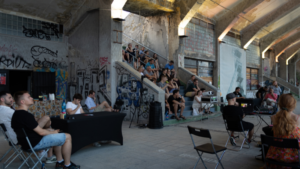
MAJORDOCS Creative Documentary Film Festival meets across 6 days each year in #Mallorca, where the festival’s unique slow experience approach provides a space to discover other realities and perspectives through eight carefully selected creative documentaries.
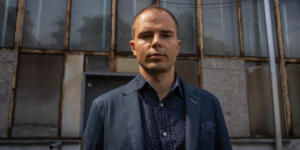
With its 2nd edition, 29 September – 3 October 2020, Modern Times Review spoke with the festival’s Artistic Director, Miguel Eek.
What is the concept behind Majordocs and what makes it a «slow festival»?
Majordocs is based in Mallorca, an island torn between remaining the quiet place it has always been, and the dynamic, modern, and consumerism-defined setting it has become. Majordocs proposes a «slow experience» through a limited selection of films that expand the view and generates debate. We have two important aims: to place the auteur at the center of our experience and to develop a pedagogy of documentary cinema amongst youngsters and teachers.
What makes the films in this year’s selection ‘risky’?
We focus on the auteur’s gaze, on bold films and on challenging ourselves to face our own prejudices, through other rhythms and different points of view. The selection reflects this and our intention to short-circuit the standard content Hollywood-style platforms promote. With an unprepared audience that could either be a big success or a complete failure. But we’re willing to take the risk.
Can you provide some insight into the selection process?
We rely on an international selection committee – that reviewed more than 400 films this year – the promotional work of distributors, as well as on suggestions from professionals from different film festivals. This year we received a great variety of films from more than 50 different countries. The committee is loyal to the Majordocs’ manifesto: risky and profound films, able to transcend the present, in which the auteur’s gaze prevails and is free from the limits of the classic narrative.
Majordocs proposes a «slow experience» through a limited selection of films that expand the view and generates debate.
Do you have a documentary that was seminal to your interest in the genre?
There is a generation of Spanish filmmakers on which the documentary, En Construcción (Work in Progress) by #José Luis Guerín# made an impact. In a sense, the film is a lesson on how to submerge oneself in reality from a free and non-restrictive point of view. Thinking of international films – La Batalla de Chile (The Battle of Chile) by #Patricio Guzmán# in 1975, and Herzog’s cinema were both open windows to a type of cinema that marked my professional career.
Where would you like to see the documentary landscape progressing in the next decade?
On a creative level, I believe that we’re going through a vibrant yet quite confusing moment, where auteurs are experimenting with the limits between documentary and fiction with less fear. There’s a proliferation of this mix of both genres which forces the audience to take an active and critical stance towards it and that’s positive. Regarding the audience, there’s a general awareness that the weakening of certain fiction formulas is attracting a new public towards documentary cinema. However, what’s sad is that it’s attracting people to the most sensationalist and formulaic type of documentary. I’m very worried about this homogenizing view, especially for a younger audience. That’s why film festivals, independent cinemas, and schools are playing a key role in protecting the tranquil experience of cinema over the next decade. The evolution of television networks feeding the growing trend of view-on-demand will condition the financing of auteur cinema and will probably affect the riskiest forms of documentary.
What event or moment marked your entry to the documentary world?
From a very early age, documentaries have acted as a rendezvous, as a cultural focus in my family. When I was twelve, I started shooting fiction pieces, as well as documentary diaries, in a very natural and also thoughtless way. It was during my early years at the Film Academy in #Barcelona that I understood, through an interview about the early years of #Kieslowski as a documentarian, that the documentary form was not only the best way to tell an interesting story but also the best way to live my life.