Films discussed:
Ceremony (dir. Bianchi Hanuse, dir., Canada)
Let Our Mountains Live (dir. Havard Bustnes, Norway/Finland)
Black Zombie (dir. Mary Annik Bedward, Canada)
Parasisi (dir. Zaide Bill & Sebastien Segers, Belgium)
Dona Anete — This Tiny Piece of My Heart (dir. Mini Kerti, Brazil)
Nanmesake (dir. Evan Adams & Eileen Francis, Canada)
Aanikoobijigan (Ancestor/Great Grandparent/Great Grandchild) (dir. Adam Khalil & Zachary Khalil, USA/Denmark)
The lives, philosophy and history of Indigenous people throughout the world have become one of the most significant subjects for documentary filmmakers to explore in recent years. It is uppermost in the thoughts of many of us– in the Zeitgeist, the cultural air of what’s being breathed and talked about today. As many of us condemn, or at least severely question, the impulses behind the rapacious capitalism and imperialism that govern Western society, the stories of those who were attacked and demeaned by them have come more plainly into focus. As we look at a devastated environment and the rise of Fascism in many Western democracies, the examples of Native peoples—their notions of respect for the land and themselves—are increasingly offering an alternative to a declining European and North American culture.
Without deliberately doing so, the programmers at Toronto’s recent Hot Docs festival chose films about Indigenous culture from diverse series, including Canadian Spectrum, Artscapes, and World Showcase. Their unconscious choices indicate that interest in Native histories and thoughts is affecting contemporary thought in North America and elsewhere. Looking at docs set in countries as different as Belgium, Haiti, French Guinea, Canada, Norway, Brazil and the USA, it’s fascinating to see how similar the concerns are throughout the dominant Western world and its former colonies. Seven of the top films at Hot Docs 2026 — Ceremony, Let Our Mountains Live, Black Zombie, Nanmesake, Parasisis, Dona Anete— This Tiny Piece of My Heart and Aanikoobijigan — are about Indigeneity and how it’s being dealt with in the purportedly free West.
What’s fascinating is how the concerns in so many different societies are remarkably similar. History and family — important in all of the «hot docs» — are two major areas of emotional belief that are just as important along the northern coast of British Columbia as in the Sami region of northern Norway and the Great Lakes district of Michigan. Trauma, tears and fears caused by mistreatment by White colonialists are still affecting Indigenous people — the protagonists of the films — though they’re all astoundingly polite in dealing with the descendants of imperialists who dramatically changed the lives of their ancestors. Redressing the burdens of the past is a major issue for Indigenous characters in the films, but so is addressing current situations affecting the globe’s original inhabitants.

Each documentary is extraordinary in its own way.
Ceremony, which won the Directors Guild of Canada’s special jury prize for best Canadian documentary at Hot Docs, is a populist film set in British Columbia, where the Nuxalk people have their own radio station that, with honesty and feistiness, reflects the community’s love of local news and heroes. If there’s one thing they miss, it’s the eulachon, a fish resembling a smelt that used to swim upstream in multitudes and was easily caught by the locals. Loved for their taste and medicinal grease, eulachons were captured and cooked in the springtime and traded to other nations for many months of the year.
The history of the Nuxalk is tragic: they were deliberately poisoned with smallpox-laden blankets by representatives of Canada and died in the tens of thousands in the 19th century. After the demise of so many Nuxalk, the area was opened to settlers, many of whom were Norwegian. In a letter from the late 1800s, the Norwegian Wilfred Christenson wrote that he’d give back his land if the Nuxalk wanted it. That generosity was unusual at the time—and even now. Despite their calamitous past, the Nuxalk persevere and are trying to rebuild their community and bring back the long missing eulachon as the film is being shot. A tale of hope despite tragedy, Ceremony is a complex and inspiring film.
As we look at a devastated environment and the rise of Fascism in many Western democracies, the examples of Native peoples…are increasingly offering an alternative to a declining European and North American culture.
Let Our Mountains Live is a tale of politics and discrimination in contemporary Norway. Despite a Supreme Court verdict in their favour, the Indigenous Sami nation in the mountainous Fosen region didn’t receive an apology from the government for allowing hundreds of wind turbines to be built in their region without their consent. The turbines—which are good for «green» power—are making it impossible for the Sami to herd their reindeer to the best region for them to be in the winter season.
Havard Bustnes’s well-crafted film follows their court appearance and acts of civil disobedience as the Sami try to force the government to destroy—or at least cut back—on the turbines so they can farm their reindeer. It profiles the Sami leadership — in particular the feisty Sissle Stormo Holtan and her friendly mentor Terje Holgan — as they pressure the government and the courts to save their centuries-long dedication to their way of life. Despite a compromised «victory» for the Sami, including the long-delayed apology, this film is a devastating critique of liberal democracy as practised in Norway, which exposes an inherent racism towards the nation’s Indigenous peoples.

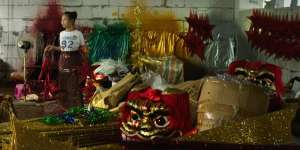
Black Zombie is a thoughtful and ultimately moving film about many things: colonialism, imperialism, old-fashioned horror films, contemporary — and much more gory — terrifying movies, Voudu and its meaning, the history of Haiti and its modern culture today. Bedward tells the tragic tale of Haiti, the first Black colony to successfully revolt against their oppressors, the French government. She engages with slavery, a practice brought to the island by their white oppressors, and what happened to the transported Africans who ended up making imperialists wealthy through their labour.
Bedward proposes that the Zombie myth started with slavery, with people losing their souls thanks to the repressive nature of the colonists, who would do anything to keep their labourers powerless. She then moves from economics to religion: how Vodou, an African cosmology, could keep the spirits of enslaved Black people alive in their new Caribbean country.
Bedward segues to Zombies in cinema — as powerless but spooky creatures alive without their souls in the West Islands. Then, she moves to contemporary, bloody, relentless Zombies, the kind that started with Night of the Living Dead in 1968. Using contemporary experts, she shows that the modern Zombie has a new meaning: those remorseless creatures represent the fear that White North Americans and Europeans have towards new immigrants — that they’ll eat up their society. Bedward has crafted a brilliant analytical film, which is radical in its roots. Though the transplanted Africans who now make up the majority of Haiti aren’t Indigenous to the island, one can argue that they have taken on the role through their centuries of slave labour, pain and love of the land.
Parasisi is a lyrical look at the continued existence of colonialism in French Guinea. Shot in black and white—totally appropriate for its shockingly old-fashioned social and economic structure — the film quietly shows the lives of native people — the Wayana — as they struggle to survive in their rural homes. Zaide Bill’s and Sebastien Segers’s film shows the naïve local people accepting their diminished lives in an environment that has become toxic due to mercury-contaminated water, placing the children at high risk. Shot in classic cinema verité style, Parasisi is a beautiful but ultimately sad film—one that moves a viewer to anger and tears.
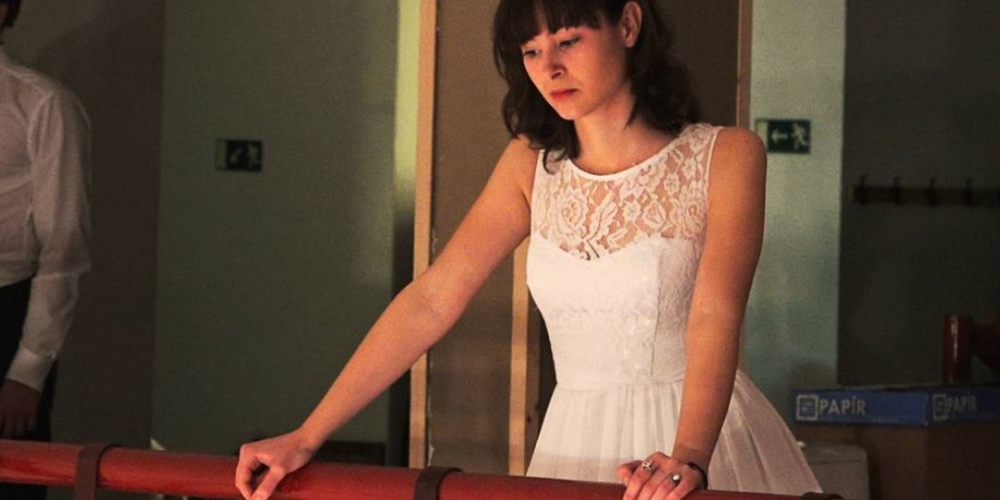
Dona Anete — This Tiny Piece of My Heart is a beautiful portrait of a grand figure in Brazilian culture, the singer-songwriter Dona Anete. Now in her eighties, Dona Anete made her mark as a union activist and educator before becoming a beloved composer and, latterly, a singer who has been embraced by Brazilians far from her home in the impoverished but spiritually rich North. A happy mixture of Indigenous and Black parents, she writes and sings with feistiness and honesty. Happily, her brilliance inspires other artists—particularly women—to follow their own paths. Director Mini Kerti has made a film brimming with love.
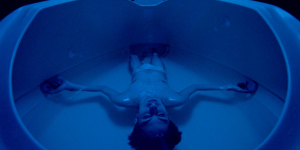
Namesake is a very intelligent examination of words and their meanings. What’s in a name? Even considering giving Powell River, B.C., a less prejudicial name is enough to spark a conflict that exposes the town’s fraught history. A community of white settlers next to the Tla’amin nation, whose land was stolen a century ago, Powell River is a beautiful if contentious spot — one more than worthy of an intelligent documentary.
The leader of the Canadians who took over the majority of the area, Israel Wood Powell, was, along with Egerton Ryerson, one of the creators of the regional school system that separated Indigenous children from their parents and subjected them to harsh, discriminatory childhoods. He is a divisive figure—hated by many but beloved by the older White community. Should the town continue to honour his legacy?
Redressing the burdens of the past is a major issue for Indigenous characters in the films, but so is addressing current situations affecting the globe’s original inhabitants.
Aanikoobijigan asks, «Where should our bodies go»? For white settlers, the answer may be personal. Some believe that cremation is the way to go. That’s not the case for Indigenous people, where an ancient system exists: everyone should be buried in local cemetery sites.
Adam and Zachary Khalil’s film exposes and reflects on a blasphemous situation for native peoples. For centuries, White Imperial societies have been collecting items from «exotic» cultures in Asia, Africa, and the Pacific Islands, and, well, anywhere interesting to colonialists. Robes, jewellery, dishes, journals, clothes — all are grist for the mill. That includes collecting the bodies and bones of Indigenous people despite the beliefs they may have had to the contrary.
Archaeologists, anthropologists, and archivists are suddenly being exposed to critical commentary — particularly those who have spent decades propping up the current system. The «cabinet of curiosities», which morphed from aristocratic collections to museums, is under attack for an unexamined racism that has allowed thousands of «bones» to become part of archives in such prestigious institutions as Harvard and the Smithsonian.
An emotional film in parts, Aanikoobijigan focuses on the return of bodies, or at least bones, to Indigenous authorities who are burying (or re-burying) their ancestors. Once again, this is a film that looks at—and condemns—racism and imperialism but tries to do so in a peaceful, friendly manner. This is a tactful film on a controversial subject.

Will the Indigenous people around the globe become more important in the coming years?
Films and essays may help, but a major question will be: how will global politics play out in the next decade or two? If the world concentrates on the North, as it likely will, how much of an impact will the Canadians—including Inuit—have on the Russians and Chinese, and, well, Americans? It’s hard to predict that eventual confrontation. Will Canada’s legendary negotiating prowess save the world from warfare? How will the Inuit and the Sami affect the world as the North becomes more essential to world power? Time will tell. And so will documentaries.