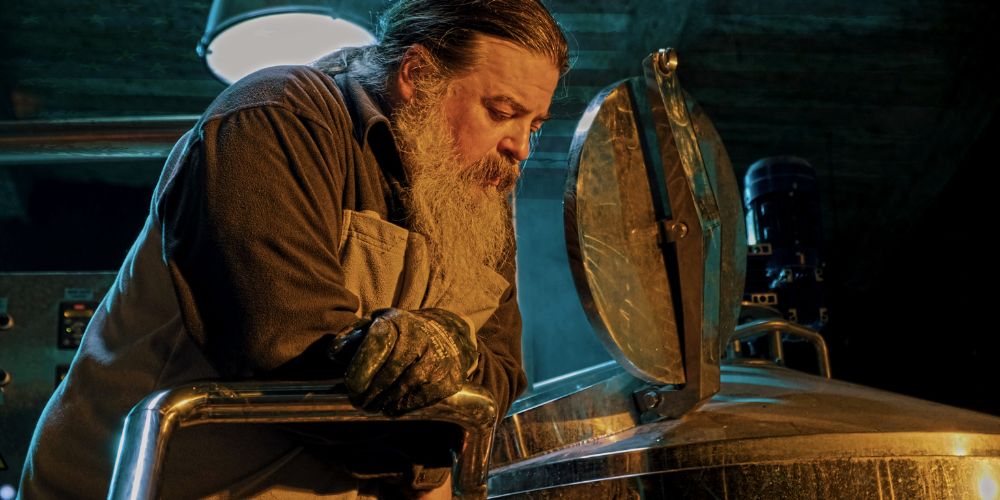
John Carpenter made They Live in 1988 on a shoestring budget. The setup is deceptively simple: aliens have colonised human society, hiding behind a scrim of normalcy; their control mechanism is advertising every billboard, every Pepsi sign carrying a subliminal command. Obey. Consume. Sleep. Vance Packard could have written the treatment. The only way to see through it is a box of cheap plastic sunglasses that a Black street preacher has been quietly stockpiling, intending to distribute them as the opening shot of a resistance. The protagonist finds the box, puts on a pair, and can’t take them off. He recruits a Black construction worker, and they start hunting. Carpenter meant it as Reagan-era satire. David Sirota watched it and didn’t laugh. He took notes.
Collective weaponry
That seriousness drives Master Plan, now into its second season. The glasses in Carpenter’s film are a collective weapon—you hand them out; you build the resistance one newly-seeing person at a time. Sirota’s podcast works similarly. In Don’t Look Up (2021), the film he helped bring to screen, the monster needs no disguise. The comet is naked to the eye, the scientists are screaming, and the country changes the channel. The horror has migrated from concealment to performed indifference—people who have quietly calculated that seeing costs more than not seeing.
Between those two films lies the history Sirota is excavating. Eisenhower named the beast in his farewell address. Kennedy said the CIA was operating a parallel government and would be dead within three years. In 1975, Senator Frank Church presented the tools of domestic surveillance to the Senate, declaring that the capability had become totalitarian, a term he used, and the country shifted its focus for approximately ten minutes. Ronald Reagan arrived and made the indifference glamorous and the trickle-down treacly. Citizens United cloaked corporate capture in constitutional language. In 2013, Edward Snowden left the NSA with the blueprints and handed them to journalists, prompting a shift in the country’s focus. His memoir Permanent Record was sued into commercial obscurity by the government—though Amazon, which runs cloud infrastructure for the same intelligence agencies Snowden exposed, cheerfully kept selling it. The government sued his memoir, Permanent Record, into commercial obscurity, and he ended up in Moscow—which you could read as a refuge or as a lesson administered—and has been quiet there since being made a Russian citizen. The glasses carry a price.
Molly Ivins said Sirota instinctively understood that the only real questions were who’s getting screwed and who’s doing the screwing. He went on to found The Lever outside the corporate press infrastructure he’d spent years exposing, write speeches for Bernie Sanders, and earn Season 1 of Master Plan, the National Press Club Award, and the Gold Medal for Best Investigative Journalism Podcast. The New York Times, ironically considering its own history, referred to him as a populist rabble-rouser with a ruthless approach. Sirota knows the rooms he’s describing. He’s been in some of them.
His origin story is instructive. Fresh out of Northwestern’s Medill School, he went to work for Sanders on a campaign to bus seniors across the Canadian border for prescription drugs Americans couldn’t afford at home. The bill passed. The pharmaceutical industry had already bribed its way into the fine print. The reimportation program died before it launched. The announcement came between Christmas and New Year, timed for maximum obscurity. His political innocence, he writes, was gone. Once you see the monsters, you can’t unsee them.
Master Plan Season 1 is what fifty years of not-unseeing looks like across eleven episodes and a co-authored book. How did unrestrained money from the wealthy so thoroughly capture American politics? The answer begins in 1971, with Nixon trading milk price support for dairy industry cash routed through committees with names like «Americans Working to Build a Better Community.» It moves through the Powell Memo, through Watergate’s reforms and their deliberate dismantling, through Citizens United and the $4.3 billion in dark money it unleashed, and finally to Trump 2.0 — the logical conclusion of a fifty-year campaign. The pretence, Sirota writes in his Afterword, is gone.
Season 2, subtitled The Kingmakers, launched in March 2026. The question driving it: if the founders designed the Constitution to prevent a king, how did the American presidency accumulate enough power that the word «king» is now used without irony in the streets?
Episode 1 opens with the No Kings protests of Trump’s second term and rewinds fifty years. Nixon’s impoundment of congressionally allocated funds—simply refusing to spend money the legislature had passed— and his secret bombing of Cambodia without authorisation represented what historian Rick Perlstein calls the imperial presidency in practice. Congress fought back: the War Powers Resolution, the Budget Impoundment Control Act, and the Church Committee. Sirota lets you feel the brief exhilaration of a legislature that defended itself. Then it tells you it didn’t last.
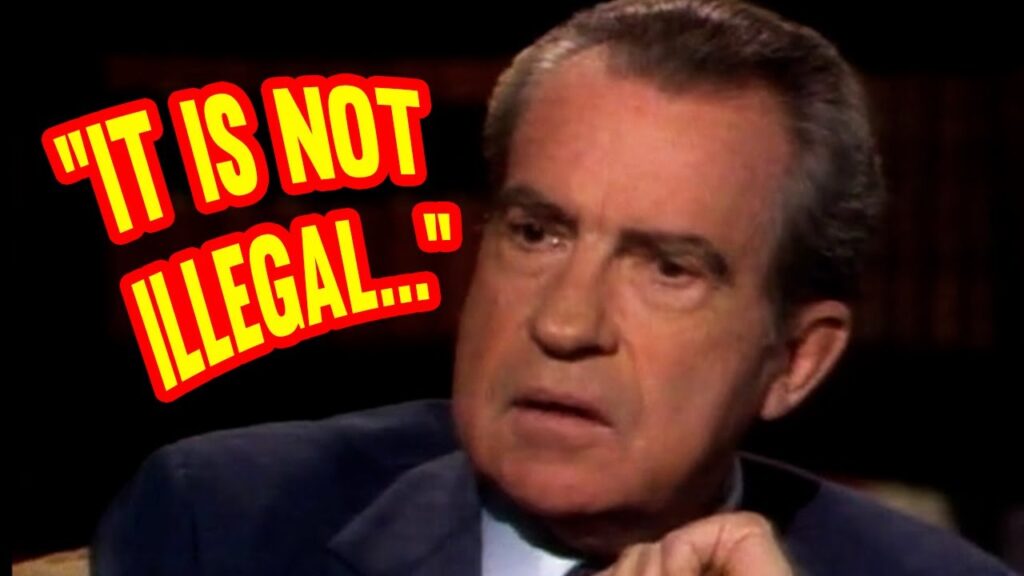
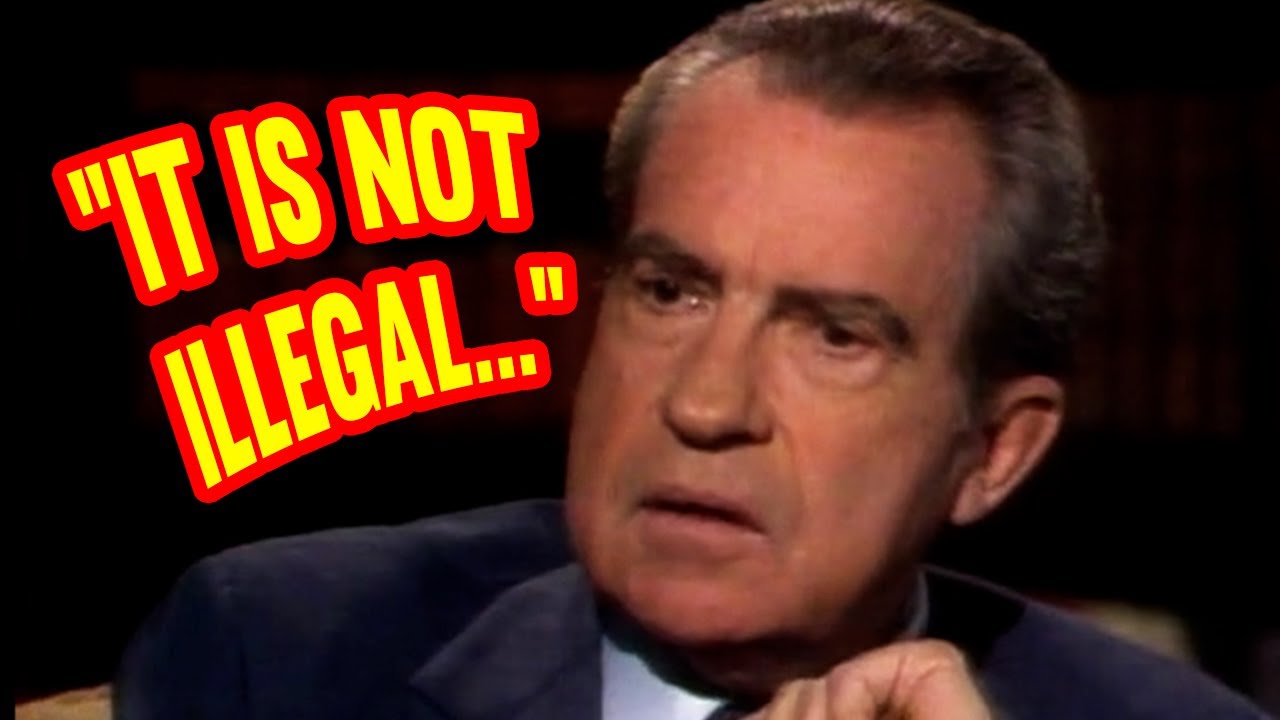
Episode 2 traces the backlash to the backlash. While Nixon was in disgrace, young conservative lawyers were already treating his assertion—«when the president does it, that means it is not illegal»—as a guiding star. The Heritage Foundation, seeded by beer baron Joseph Coors after reading the Powell Memo, produced a 1,100-page instruction manual called Mandate for Leadership, the original Project 2025. Reagan used it like scripture. His team of Federalist Society lawyers—a young John Roberts, Ted Olson, and Samuel Alito—produced the memos for an imperial executive, including the deliberately soporific Executive Order 12291, which gave the White House power to kill any regulation it deemed wasteful. Sirota notes, with characteristic bluntness, that the order was the original DOGE.
Episode 3 follows the logic of Iran-Contra: Oliver North as a real-life 1980s action hero, selling weapons to America’s sworn enemy and funnelling the proceeds to the Nicaraguan Contras in explicit defiance of Congress. Executive power stripped of its last pretence.

The heel-turn
The man who found the box of glasses in They Live was “Rowdy” Roddy Piper—a WWE heel turned reluctant revolutionary, a man the machine had chewed up, who walked funny because his pelvis had been shattered. The WWE universe that produced Piper is the same one that produced Donald Trump, the same entertainment ecosystem whose faithful turned politics into a cage match and cheered for the villain. Carpenter’s revolutionary and Trump’s base share a ZIP code, economically. What separates them is whether you put on the glasses or smash them.
The Roberts Court provided the capstone in July 2024. In Trump v. United States, six justices ruled that a president carries absolute immunity from prosecution for official acts. Justice Sotomayor’s dissent identified what the majority refused to acknowledge: ordering the SEALs to assassinate a political rival, organising a military coup, or taking a bribe for a pardon—immune, immune, immune. In every use of official power, the president is now a king above the law. The John Roberts who signed that opinion wrote, as a young Reagan administration lawyer, that he was institutionally disposed against limiting statutes that conferred power on the president. The circle closed on a Tuesday in July while most people were planning their Fourth of July weekend.
Donald Rumsfeld stood at a Pentagon podium on September 10, 2001 — the day before the towers came down — and announced that the Defence Department could not account for 2.3 trillion dollars in transactions. By the next morning, the cameras were turned elsewhere and never turned back. Rumsfeld also gave us the epistemological frame for everything that followed: there are known unknowns, he said, and unknown unknowns—things we don’t know we don’t know. Master Plan Season 2 is Sirota’s attempt to convert the unknown unknowns into known knowns, to name the framework before it becomes permanent. Whether enough people put on the glasses in time is, as it has always been, the only question that matters.
Master Plan Season 2 is available on Apple Podcasts, Spotify, and — perhaps surprisingly for an audio series — YouTube, where full episodes are posted. The Lever’s website at levernews.com carries transcripts, source documents, and archival links for each episode. The companion book, co-authored with Jared Jacang Maher, is available through Lever Books and major retailers.
«Orders the Navy’s SEAL Team 6 to assassinate a political rival? Immune. Organises a military coup to hold onto power? Immune. Takes a bribe in exchange for a pardon? Immune. Immune, immune, immune. In every use of official power, the President is now a king above the law.» — Justice Sonia Sotomayor, dissenting, Trump v. United States, July 2024
Featured Image: They Live,a film by John Carpenter