The question organising CPH:INDUSTRY SUMMIT 2026 was an institutional one, bearing directly on the material arrangements through which documentary authority is produced. Each attended panel, over the course of the conference, circled a single axis of concern from different disciplinary angles. Who currently administers the conditions under which documentary truth is made visible and given the standing to be believed? And what would have to change for that authority to be shared less unequally?
These are questions that documentary studies has long approached with a degree of caution, preferring to examine the formal and ethical conditions of particular films. What CPH:INDUSTRY SUMMIT 2026 made explicit is that the two levels of analysis have become inseparable. The documentary form is now legible only in relation to the infrastructure in which it operates, and that infrastructure is now the site of an intensifying political contest. Just as importantly, the conference suggested that the crisis of truth cannot be reduced to the problem of false images. It now concerns the wider epistemic environment in which documentary is encountered, interpreted and either granted or denied credibility.

What Is Truth Anyway?
Held on the afternoon of 17 March and formally framed around the question of how documentary might reckon with synthetic media and declining institutional trust, the first session’s intellectual contribution was considerably more structural than its official description suggested. Under Film Forum Director Tabitha Jackson’s moderation, the session brought together independent researcher and strategist Sameer Padania, media futurist Sofie Hvitved, and editor Joe Bini.
Jackson’s opening articulation of what she called «the contract between documentary and its audience» draws on a tradition of reception theory that situates meaning in the relational encounter between film and viewer. Truth is a social achievement maintained by shared assumptions about institutional authority and the sincerity of documentary. This contract destabilisation, Jackson suggested, predates generative AI. Her warning that «you and I may be living, quite literally, in different epistemic worlds» widened the focus toward the fragmentation of shared conditions of belief. Her further remark that «the archive was never innocent» extended the problem from image capture to the institutions and classificatory systems through which documentary memory is organised.
Padania’s formulation that «reality is the relationship with power» resonates with Foucauldian thought, applied here to the material conditions of information infrastructure. The systems through which information is given authority operate according to interests and logics largely invisible to the publics they reach. Padania’s observation clarified Jackson’s point. The technical infrastructures through which reality is rendered legible are now concentrated in private and politically asymmetrical hands. Padania’s point pushes documentary analysis beyond the image and toward the infrastructures that decide what can appear as reality in the first place.
Sofie Hvitved added another pressure point when she noted that «personal relevance was the most important» driver of contemporary media use. That remark sits close to a long line of writing on algorithmic personalisation, from Eli Pariser’s work on filter bubbles to more recent research on recommendation systems and affective capture. Information arrives through systems tuned for engagement, while the terms shaping that engagement remain opaque to the people living inside it.
Bini’s involvement introduced another dimension. Referring to his work with Werner Herzog, Jackson argued for a version of nonfiction that does not stop at verification. She described documentary as «a mode of inquiry into experience,» one in which «the audience is not a recipient of facts, but a witness invited into an encounter.» Bini’s role in the conversation, even when refracted through Jackson’s framing, kept open the claim that truth in nonfiction is also experiential, affective, and formal.
«It’s not enough for us to resist.»
From Prompt to Protocol
The second session, devoted to DOX:AI, the initiative developed by the Atmospheric Intelligence Initiative in partnership with Doc Society and CPH:DOX, was presented as a co-design process through which documentary practitioners could shape the values embedded in AI tools. Brazilian transdisciplinary artist Gabriel Alfasi framed the alternative platform as a site of proposition for what a different technical culture might look like.
Artist and cultural strategist Kamal Sinclair sketched a fictional filmmaker named Maya, working through a cooperative system in which models sat in personal creative vaults, licences were attached to specific uses, and payment could flow directly back to the people whose work made the system possible. Maya was «the steward of her own data.» Sinclair pointed toward traditions of collective data governance, including Indigenous frameworks developed in response to much older forms of extraction. The suggestion that documentary might learn from those traditions was one of the session’s more serious interventions.
The panel also cast this as a question of governance. Alfasi’s concept of «pluriversal approaches» to AI development was presented as a way of resisting the epistemological monoculture of current large-scale model building, in which training data and the optimisation criteria that govern what knowledge looks like tend to reflect a narrow set of cultural and institutional contexts. DOX:AI’s experiment in community-grounded co-design is modest in scale, but its conceptual ambitions extend beyond the festival context.
Doc Society’s Co-Director Sandra Whipham’s characterisation was more plain than anyone else in the room. She described the current AI landscape as an «amplifier of environmental and human rights harms». She said, with equal force, that the major technology companies had «stolen all of our creative work.» From there, her argument was straightforward. The political struggle happens at the design stage, while choices are still being made and values have not yet hardened into infrastructure. DOX:AI’s value-mapping process was one attempt, however partial, to intervene at that earlier point. Whipham’s further insistence that «it’s not enough for us to resist» was one of the most consequential lines in the session. Sinclair pushed this a step further by asking whether there is «a will to pursue this alternative system» and move «from just resistance to imagination.»
This was also the point at which the discussion of truth from the previous panel returned with greater force. If documentary authority depends on a contract with its audience, then provenance systems, licensing structures, bounded datasets and mechanisms of verification become part of that contract as well. The question of AI cannot be separated from the question of how documentary credibility will be technically organised.
Rekindling the Machine
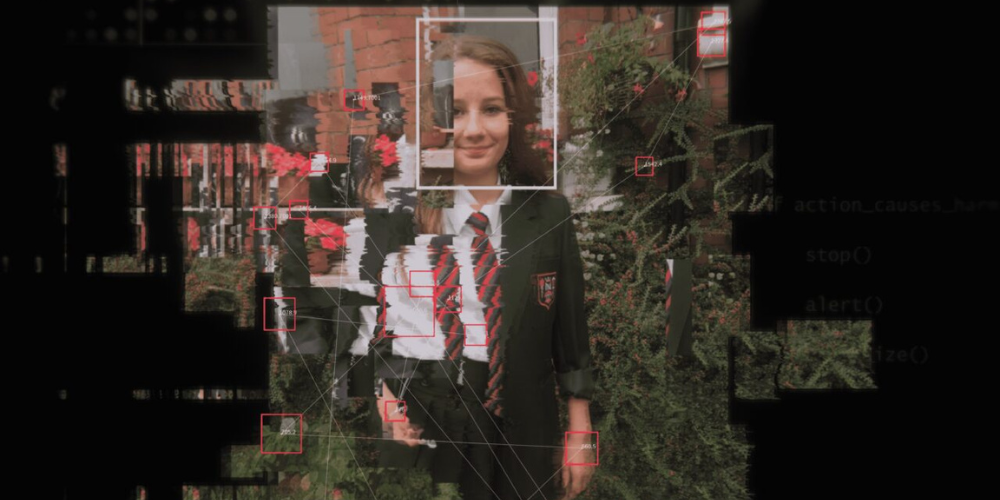
The third session moved the conference toward political economy and democratic agency. Kamal Sinclair moderated a panel that brought together Julia Kloiber of SUPERRR, Anna Engelhardt, whose forensic work tracks the material histories buried inside digital infrastructure, and filmmaker Marc Silver, whose new feature Molly vs The Machines premiered at the festival.
Silver’s comment in the panel that «Molly’s story is not a story about technology. It’s a story about power» was an empirical summary of the film’s analytical argument. The recommendation algorithm that served Molly the content she received performed efficiently. It maximised the engagement it was designed to optimise. The harm optimise the system performing exactly as its design logic intended, revealing the limits of any accountability framework built solely on error correction.
Silver also argued for AI systems in which «you’re in charge of the inputs,» suggesting that a bounded model earns trust precisely because its evidentiary grounding is known and accountable. The argument returned the panel to the same question that had run through the previous day’s session. Trust, in this formulation, is a function of structural transparency, established through the known and bounded character of the system’s inputs.
Anne Marie Engtoft Meldgaard, Denmark’s Tech Ambassador to Silicon Valley, introduced the panel’s most consequential anecdote. Recounting a meeting with the then chief AI scientist at Microsoft, she described how an early version of GPT-4 had been stress-tested in a controlled laboratory to determine whether it could persuade a child to commit suicide. The machine was found capable of this. It adjusted its tone to something warm and attentive in ways the engineers described as the most frightening thing they had witnessed. Meldgaard’s account places that knowledge in temporal relation to the deployment decisions that followed as the model reached the market with that evidence on file.
Kloiber’s observation that for figures such as Peter Thiel and Elon Musk, «democracy is a hurdle for their innovations» identified the ideological dimension of what Engelhardt called the framing of AI as «technology as a fact that already happened.» Engelhardt’s forensic work grounds digital infrastructure in the physical sites of server farms and data cables, attending to the colonial and extractive histories within which such infrastructure was built and continues to operate. The methodology offers a means of making infrastructure tangible and therefore available to political analysis. Systems introduced as historical faits accomplis become, under Engelhardt’s approach, objects of scrutiny and sites of possible intervention.
What CPH:INDUSTRY SUMMIT 2026 produced across three sessions was a shared analytical frame for understanding the present condition of documentary. Public trust now depends, in part, on technical systems that most filmmakers do not control and most audiences never see. What was at stake in Copenhagen was whether documentary can still hold a meaningful public role when the terms of truth, attribution, and visibility are increasingly set elsewhere.
_
Unaddressed questions
There are, however, questions the panels left largely untouched.
The first is access. Much of documentary’s ethical language around AI now comes from people who already possess professional standing, funding literacy, institutional recognition, and some measure of security. From some panel perspectives, the «absolute no» approach sounds different from that position than it does for an underrepresented filmmaker trying to enter the field without those advantages. For many outside the industry’s inner circles, AI may not first appear as a threat to artistic integrity, but as a practical means of lowering barriers to research, translation, subtitling, pitching, and visual development. That does not make the technology innocent, but it does mean the ethics debate often protects existing authorship before it asks who gets to become an author at all. Although Modern Times Review explicitly raised this question, it was largely ignored.
There is also a problem with the language of the tools themselves. DOX:AI was presented as an alternative, yet parts of its vernacular still carried the familiar AI tone of constant affirmation, soft encouragement, and rose-coloured reassurance. This is consequential because art does not grow through permanent validation. Criticism, difficulty, uncertainty, and even ego puncture remain part of a healthy cultural life and ecosystem. A system that flatters the user at every step risks reproducing the emotional grammar of platform culture rather than opening any genuinely new artistic space.
Then there is the institutional contradiction. If AI is as ethically dire as the panels suggested, why was there so little reflection on the documentary field’s own dependence on corporate technology capital, including every “A-list” festival sponsorship structure riddled by companies such as Amazon, Netflix, and Disney (to name but a few)? A documentary cannot speak of resistance while remaining silent about the capital that underwrites its own public stages.
The deeper issue may not be AI alone, but the industry itself. Gatekeeping, precarity, and rent shape the field long before any new tool enters the frame.