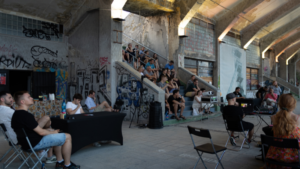
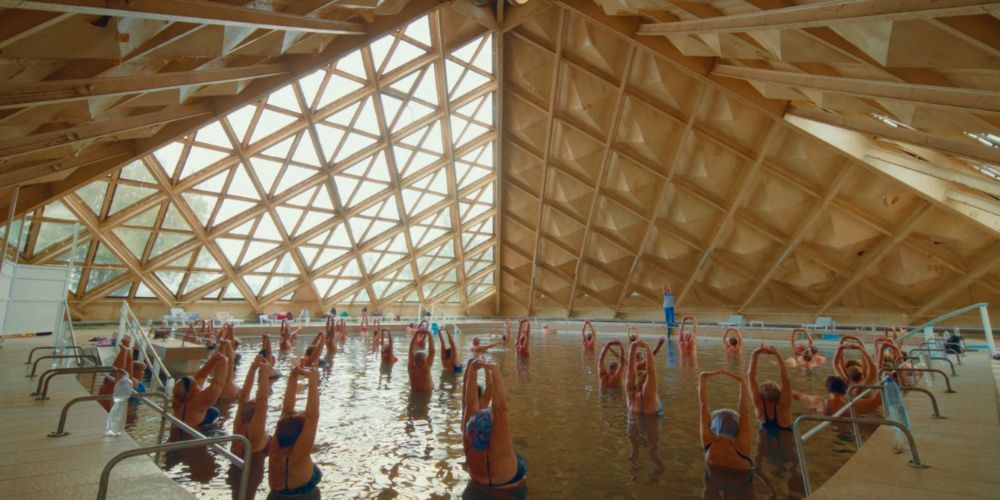
As Ukraine pushes through its third year of war, the 22nd edition of #Docudays UA# International Human Rights Documentary Film Festival, held from 6–13 June 2025, in Kyiv, adopts the theme «Rare Resource.» This concept, inspired by recent geopolitical agreements on rare earth metals, expands beyond material extraction to explore the invaluable human, cultural, and ecological assets of the nation . The festival opens with Gar O’Rourke’s documentary Sanatorium, which examines the historic Kuyalnyk resort in the Odesa region, symbolising Ukraine’s unmined, living resources: its medical workers.
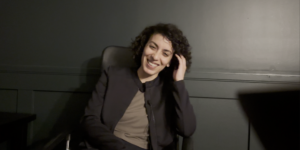
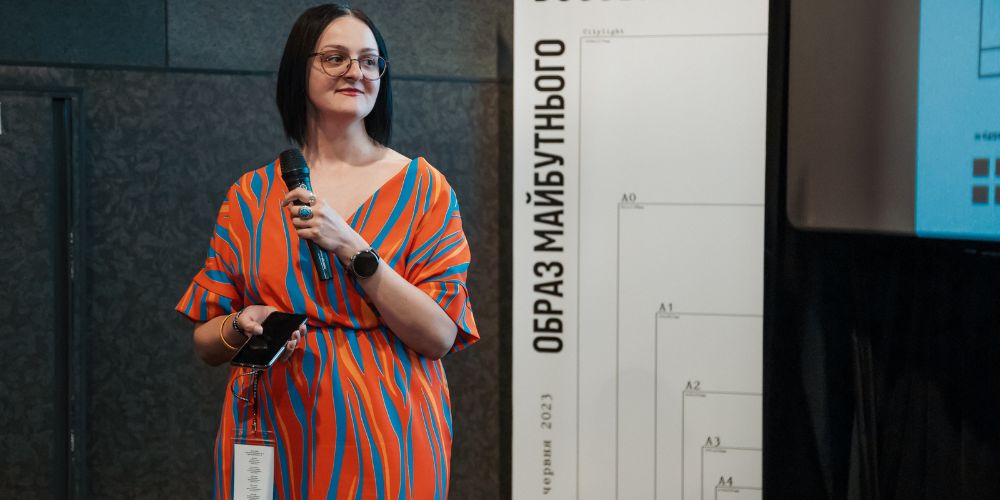
In our interview, Festival Director #Yuliia Kovalenko# delves into the motivations behind this year’s theme, the challenges of organising a festival amid ongoing conflict, and the resilience of Ukrainian documentary cinema. She discusses how the theme of «Rare Resource» not only reflects Ukraine’s natural wealth but also underscores the strength and determination of its people. Kovalenko also addresses the international community’s engagement with Ukrainian documentary films and the evolving landscape of participatory democracy in wartime.
I’m interested in this theme of resources—not just physical, tangible resources, but also the more abstract ones that belong to human beings, the population, civil society, and so on.
This new resource deal between the U.S. and Ukraine comes with the new Trump administration, which is volatile in its ideological consistency. But regardless, it marks a significant shift from the Biden administration and its more unquestioned support.
What’s the consensus among the population since the administration changed? Was there already a sense that major things could shift? And how has that affected wider society?
It’s a tricky question. On the one hand, many people were already tired of what the Biden administration had promised but never fully delivered. There was a sense that we were stuck in the current situation, with no light at the end of this long tunnel.
So, in some ways, the new administration brought hope—at least that things would move, would shift in some direction. However, on the other hand, we all recall vividly what the first Trump administration was like and how unpredictable it became. So it didn’t really bring a lot of anticipation that he would change everything quickly—like when he said he would stop the war in 24 hours. Of course, that sounded ridiculous because everyone here knows it’s impossible to stop this war in a single day.
That statement was a red flag for many people who were hoping for a change in power. It signalled that he might be overly populist at best—or, at worst, simply out of touch with what’s happening on the ground.
There wasn’t much hope that this change would bring good news for Ukraine. However, there was a sense of anticipation that the situation might shift rather than remain in this more or less frozen state. But now we’re here, and we’re seeing things changing drastically. We hear something new from the White House almost every day.
And that, in itself, is a challenge. It’s challenging for people who are still living in Ukraine, who’ve been here the whole time, struggling with the conditions of war every day. They want to see at least some fair treatment and a sense of justice. They don’t want to hear that Ukraine is somehow also responsible for this war.
That’s an important point. The general inconsistency of Trump as a person… I say this because I come from the New York City area, so for us, Trump didn’t just appear in 2015. He was always there in some capacity.
But one consistent aspect of his personality is this idea of the transaction—everything is a deal, a negotiation. And this new mineral deal is a textbook example of that. From the festival’s perspective, did the theme of “resources” arise immediately after that deal was made? Or was there already some version of the theme you were thinking about beforehand? Or was it more of a spur-of-the-moment decision?
It was inspired mainly by that mineral deal and all the discussions around resources—especially ground resources and minerals.
Like you said, it’s predictable. Trump is primarily focused on deals, money, and transactions. But on the other hand, it was disheartening. All the discussions about values—democracy, human lives—were suddenly pushed into the shadows.
Now, the conversation was primarily about money and how the Trump administration could benefit from the developments in Ukraine. But this war has been going on for 11 years now—three years of full-scale invasion—and so many people have died.
It’s a huge tragedy. And now we’re just talking about minerals. This brings up the larger question: What are we actually fighting for? It’s not just about land or territory. It’s also about values. And for some reason, those values aren’t on the table right now. In the sense of people’s capacity to keep going. If Ukrainian soldiers didn’t find the strength to continue fighting, then we wouldn’t even have the resources to offer, to negotiate, or to «trade» with anyone.
So yes, the theme was definitely inspired by that deal. However, by the end of 2024, we had already begun discussing the direction we wanted to take with the festival’s topic.
We have been thinking a great deal about participatory democracy—how to continue building democratic processes in Ukraine, even under wartime conditions. And we were asking: How do we keep people motivated? How do we motivate ourselves? That’s also about resources—not just physical, but emotional, psychological, and social. So, the theme was already forming around those questions.
What are we actually fighting for? It’s not just about land or territory. It’s also about values. And for some reason, those values aren’t on the table right now
How will this theme play out in the festival itself—in the films, in the peripheral events, talks, and workshops?
We will open with a film that is entirely dedicated to the topic of resources and how we can replenish them. The film by Gar O’Rourke, Sanatorium, is about a sanatorium near Odesa that can heal both the human body and the soul. It’s a fantastic film, and it’s something that resonates strongly with Ukrainian audiences and the broader discourse here, as many people in Ukraine have heard about this sanatorium.
That’s how we begin this discussion—with an invitation to heal ourselves and take some time to debrief so that we can continue fighting and building our path forward.
Then we’ll have a special program—the main non-competitive section—which will consist of five feature films. These films will approach the theme from different perspectives and angles, rethinking or uncovering the broad topic of participatory democracy and resources. It’s about how democracy can develop and what role society plays in this process. At the same time, it’s about the resources each country possesses and how those—whether minerals, landscapes, or territory—can shape a nation’s democratic trajectory.
These resources shape history, they influence the capacity of a society, and they define the challenges it faces. We’re exploring resources in a broad sense, encompassing both material and human resources and how these intersect with participatory democracy. Democracy is impossible if a society lacks resources—especially human resources.
That’s how we begin this discussion—with an invitation to heal ourselves and take some time to debrief so that we can continue fighting and building our path forward.
The DOCU/UKRAINE program also has five films. As a thematic or focus section, that’s not a huge number, but it’s not small either. You’re clearly trying to cover a lot of ground while presenting strong work.
From a programming perspective, when you have many very competent and strong films that fit into a section like this, how did you arrive at these five?
This Ukrainian film program is the most challenging for the selection committee of a Ukrainian film festival. We have to be very careful in making the final selections. Luckily, we’re seeing a boom in Ukrainian documentary cinema right now. There are a lot of emerging filmmakers who are just starting out, and yet they’re producing very interesting work that could easily be part of the festival lineup.
At the same time, we find ourselves in a situation where at least one or two Ukrainian documentaries are being programmed at almost every major festival, especially in Western countries, such as Cannes, Venice, and the Berlinale, among others. We’ve almost become used to seeing Ukrainian films included in those lineups. In this context, it became clear to us that we needed to highlight this stage of development in Ukrainian documentary cinema.
We made a conscious choice to select films that had already premiered at major festivals or had received some recognition. We had a lot of internal discussions with the selection committee about this. Several other documentaries had notable premieres, but they didn’t make it into the final five simply because there were only five slots in this competition.
I’m very curious to see how these five films will appear together in the context of the competition. It will be very interesting to follow the jury’s decisions. Honestly, I wouldn’t want to have to choose between them myself. They all seem equally compelling to me.
Looking ahead, we hope this momentum in Ukrainian documentary filmmaking continues next year. But we do still face a lack of funding—especially state funding—for Ukrainian docs and cinema more broadly.
I’m keeping my fingers crossed that things continue at the current level. And if that happens, perhaps we’ll even need to expand our programming—maybe introducing another competition specifically for emerging Ukrainian documentary filmmakers or something along those lines.
From someone actually working within the Ukrainian industry and also travelling around, has the feeling of being embraced by the European festival infrastructure changed from 2022 to now, from your perspective?
Do you still find it tangibly supportive? Does it feel repetitive? What are your thoughts now, and have they changed since the beginning?
I wouldn’t say that something has changed drastically since 2022. We still see support from our colleagues abroad, and of course, that remains very important.
However, I want to emphasise that the programming of Ukrainian documentaries at international festivals isn’t just a helping hand or a mere gesture of solidarity. I genuinely believe that these films are powerful in their own right and absolutely deserve their place at these festivals.
Of course, back in 2022, some programs were driven by the urgency of the moment. It was important then to show solidarity and to say, «We are with you.» That kind of symbolic gesture helped keep the discussion about Ukraine alive.
But beyond that, many strong Ukrainian documentaries would be selected even without any ideological motivation.
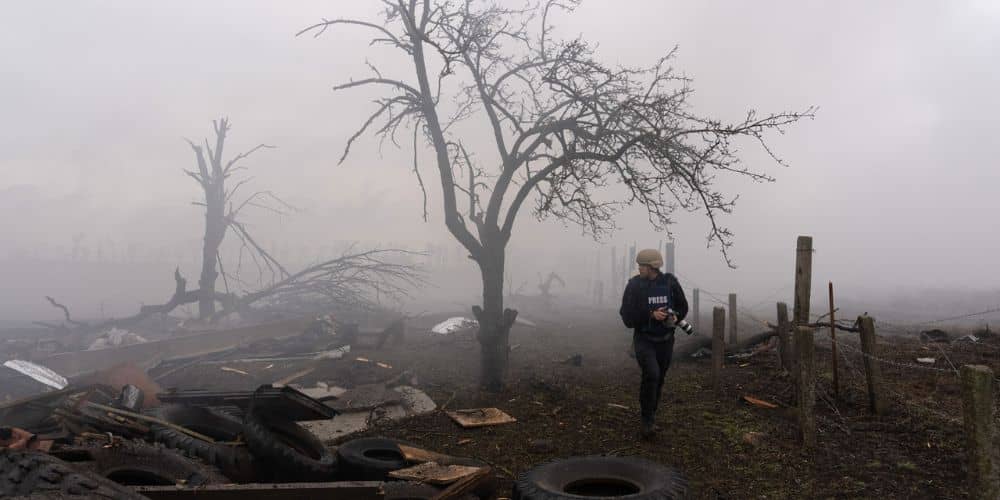
How has the Academy Award win for 20 Days in Mariupol played into this conversation?
It’s interesting because that film is actually an anomaly. And that raises some interesting points when it comes to emerging Ukrainian documentary filmmakers—sometimes the work is so powerful that it earns very significant awards.
However, I don’t think the Oscar win had a dramatic impact on the Ukrainian industry. Of course, it brought more international interest in co-productions with Ukrainian producers and directors. But I wouldn’t call it a turning point or a significant catalyst. It felt more like a natural result of the development that was already underway. That film wouldn’t have been possible without the previous groundwork in Ukrainian documentary filmmaking—the networking, the collaborations, and the expansion of the documentary community here.
There were years of building that made a film like 20 Days in Mariupol possible. So, Mstyslav Chernov receiving that award was a result of long-term growth. And I hope it won’t be the only recognition we see.
For example, this year, we have another film participating in Cannes’ Quinzaine des cinéastes, which is also a result of the growing strength of the entire documentary industry and community here. So, all of these things are connected.
Some people—not necessarily critics, but let’s say observers—say this wave still needs to develop a certain aesthetic or artistic coherence. But I would argue that it already has that.
Then again, I’m not sure if it makes sense to define a cinematic wave through a checklist of qualities. Sometimes it’s simply circumstantial.
Under extreme circumstances, the urgency to express oneself in any form becomes the unifying element—and that, in itself, creates a kind of coherence. Listening to you talk, it sounds like you agree: there is a real, tangible wave of high-quality filmmaking happening in Ukraine right now. Is that accurate?
I gave a lecture on Ukrainian documentaries at the Ukrainian Institute in London a couple of weeks ago, and we discussed this very question—whether there is a Ukrainian wave or, at the very least, a Ukrainian documentary wave.
It depends on what you mean by «wave,» by «artistic wave,» and what criteria something must meet to be considered a wave. For example, we all have a general understanding of what the Romanian New Wave refers to—we have a sense of what those films share in common. The same goes for the French New Wave. However, with Ukrainian documentary cinema, several factors must be considered.
The first is artistic coherence. I’m very happy if critics, journalists, or audiences feel that Ukrainian documentaries share a certain aesthetic sensibility or something in common that gives viewers a sense of, «Yes, this is Ukrainian,” and sparks a desire to learn more. We may still need some time to fully develop that sense of aesthetic coherence. At this point, we mostly see slower, more restrained films documenting the war in Ukraine. And there’s already a shared understanding that Ukrainian documentaries tend to focus on war, war crimes, and the realities of conflict. But that’s only part of it.
The second thing to consider is whether documentary cinema, in general, has the potential to form a «wave» in the way that fiction cinema has historically done. All of the so-called waves in the past were built around fiction films, which come with a very different economic structure.
Documentary filmmaking typically operates on much smaller budgets, and the economics function quite differently. So the question becomes: is it even possible to speak of a «new wave» in documentary cinema? Can the term apply?
And more importantly, would developing such a term be beneficial to the industry? In many cases, when a country produces a new cinematic wave, it also influences its internal film economy—funding, visibility, and infrastructure. So, it’s a complicated issue, even from an economic standpoint.
Still, regardless of the terminology, it’s worth emphasising that we have a strong movement of Ukrainian documentary filmmakers. They’re producing artistically powerful films, whether or not those films share a coherent aesthetic. At the very least, they share a common context: the war. That alone could be considered a unifying feature.
What’s especially important is that many of them are developing expertise in the ethical dimensions of documenting war. That contributes enormously to the development of the community here—its skills, its discussions, its dialogues about how to film war, how to narrate tragedy, and how to shape these narratives.
Under extreme circumstances, the urgency to express oneself becomes the unifying element—and that, in itself, creates a kind of coherence.
Can we expect many more films like this to come out?
Yes, definitely. We’re lucky in that regard. Ukrainian cinema has proven itself resilient. Ukrainian documentary filmmakers have become accustomed to finding ways to create films even under extremely challenging conditions—with limited state funding or by seeking co-production opportunities. It’s not just about sitting and thinking about concepts or narratives—it’s also about being practical and resourceful.
I’m really happy that we still have many projects currently in development, and many of them are by emerging filmmakers. That’s great for the community. Some directors who were just getting started in 2021 or 2022 are already becoming masters. And they already have audiences waiting for their next films. That’s a great feeling.
In 2023, I travelled up to the festival from Bucharest by bus. I didn’t attend last year, and unfortunately, however, I am interested in attending again in person in the near future.
Back in 2023, when I came, I felt like I was one of the very few international guests who made the trip. Last year, more people came, I understand. How does that trend look this year?
Can you discuss the willingness of international guests to attend the festival? How has that changed since 2023?
I distinctly recall meeting you in 2023 during the festival. It was great, and I really appreciated the effort you made to come. It meant a lot.
Throughout the year, I meet many people during small talks or networking events, and I have the opportunity to invite them to the festival. And most of them respond, «Yes, I’d love to come.» But then, a few weeks later, they usually write back something like, «I looked at my calendar. Maybe next time, maybe not this year.»
I understand. On the one hand, the situation in Kyiv remains unpredictable, and the security concerns are completely valid. Many people aren’t comfortable taking the risk to travel to Kyiv.
On the other hand, there are still no flights to Ukraine. It takes at least a full day—or even longer—to travel to the festival and another full day to return. It’s time-consuming and logistically complicated.
The participation of international guests hasn’t changed significantly. We still don’t have as many as we did before 2022 and the pandemic, when we could welcome up to 100 international guests. But we truly appreciate every person who does come. We know their decision means a lot—it means they’re willing to travel to a city still living under wartime conditions. They spend a lot of time and effort to be here for the festival.
This year, we’ll also have a special focus program on Chile. We attempted to bring some Chilean filmmakers to Kyiv, but after the major Russian shelling in April, some of them cancelled their travel plans. It was completely understandable—but still really sad for me personally.
We had prepared this focus for many months in collaboration with our colleagues from Chile, from the Fidocs festival in Santiago. It made me feel both sad and angry because under different circumstances—if there were no war in Ukraine and flights were available—it would be much easier to organise such programs and host an international community at the festival.
Right now, it takes so much more effort to bring international guests here. That’s why we value each person who attends the festival so much.
The festival is approximately a couple of days away. So, given everything we’ve discussed—just you, as the festival director and as a person—how are you going into this edition? Are you treating it like business as usual?
We’re at the peak of festival preparations right now, and there are still so many things that need to be done. I’m almost too emotional, or I’ve lost my emotions altogether at this point.
I’m going into the festival with the hope that everything will go relatively according to plan. And I hope for a calm period in Kyiv so we can hold the entire festival and all the planned activities.
Every year brings its own set of challenges in organising and executing the festival. That’s why my team and I are completely—well, we’re exhausted.
But it’s a good kind of exhaustion, you know? We’re finally getting to the point where everything will take place.