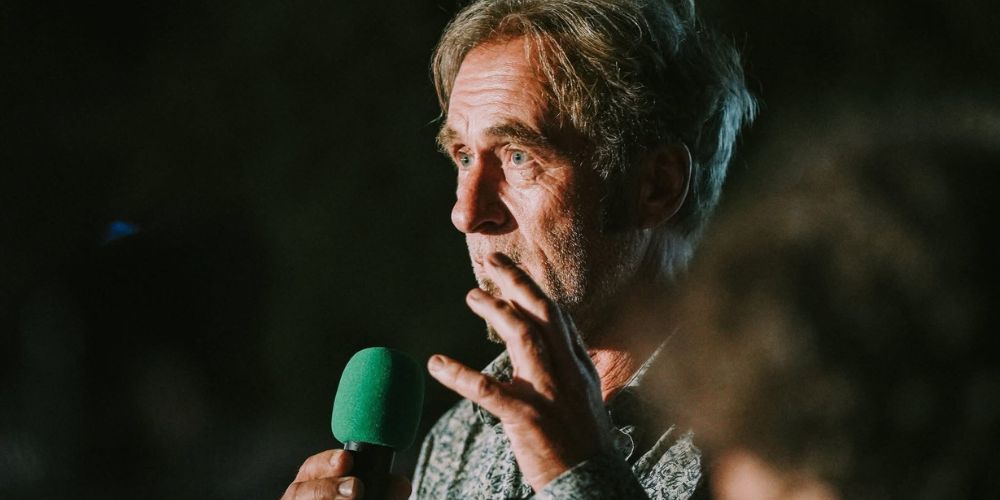
For the last three decades, the director, cinematographer, and writer #Hubert Sauper# (1966–) has directed nonfiction cinema films, which have been acclaimed worldwide and have been awarded multiple times at the Venice, Berlinale, and Sundance festivals.
The Austrian film director studied both fiction and nonfiction filmmaking from the late 80s onwards. He shot his first films on 16-millimetre celluloid. His life and career changed, as he tells us, when he made his first film in #Africa. It was the mid-90s when they had tiny handheld cameras. To make ‘real’ cinema like the #Dogma films in Denmark. He started to rethink how to make cinema in a minimalistic way and technically with minimal equipment: «It took a lot of time for every film – as the themes of my films are usually too big for my shoes. Topics about #globalism and #geopolitics – big themes that are nearly impossible to describe unless you reduce the scope of it to a small group of people in a certain place, like a case study.»
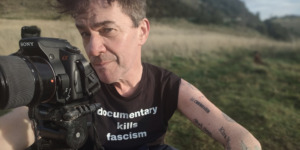
Since the late 1990s, Sauper has thrown overboard just about everything a ‘cinema film production’ usually seems to need – no more tripods, no artificial lights, no sound team, even. Nothing but the sheer minimum: a tiny but high-end camera and a very good microphone. And the ultimate necessity: long periods of time to write, think, research … also to meet, encounter, and, most importantly – the characters.
So, what will he call this kind of filmmaking?
«I like a line from a great friend of mine, #Peter Wintonic#, who said, documentary filmmaking is the art of information. Because information is abundant today, we’re overwhelmed by it – so it is about how to make sense of this, how to create order, and how to make this tsunami of information accessible. How to turn it into a possible experience for people who watch films to experience the world collectively, concentrated in a dark room. You know, it makes your senses much more awake when you sit together, than alone – although it is somewhat anachronistic form today.

Tanzania
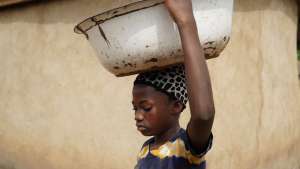
In this century, Sauper has made three feature films, which says a lot about what he is searching for, what he is after. We begin with Darwin’s Nightmare (2004), which has won 50 prizes. It is dealing with the environmental and social effects of the fishing industry on the impact of fishing the Nile perch in Tanzania’s #Lake Victoria#. The predatory fish, which has wiped out the native species, is sold in European supermarkets, while starving Tanzanian families have to make do with the leftovers. His films typically deal with the consequences of globalization in the developing world, particularly in Africa.
After the film, he was attacked for years by the government and the president of Tanzania´– as his country’s image got a ‘crack’ by this film. But the accusations were stupid too, like it postulated that all women are prostitutes in in Tanzania. In one scene of the film, you also see poor people working with fish waste and fish skeletons – yes, were they eating these? In another, we see weapon merchandisers in the back of an airplane – the film was more suggestive there than presenting evidence.
We wonder why he really had to defend himself at that time; didn’t the film speak for itself?
«Well, when you work with nonfiction cinema, you don’t claim to own the truth, but you claim to be authentic. The people of your film are not actors who are reading a text. They’re not saying something you, as a director, wants them to say. They are themselves.»
«If the argument of the film is a belief system that is very powerful, then the powerful opposition goes after you. This wasn’t about just me, Hubert, but that my whole future as a filmmaker and as an intellectual was at stake. But also, the life of my people. I had a death threat. And most importantly, the lives of the people who are in my film was at stake. So that was worth three years of fighting, where I fought for my future, integrity, and the survival of some people in the film. I had to evacuate them from the country – and give them a start for new lives. I’m supporting them with money – now for 20 years.»
«But I don’t really talk about this. It is because you are asking, and yesterday you were part of my masterclass, where I essentially shared this for the first time, as friends of mine were there, and my niece was there. And I am not anymore consumed by it; it is more like having survived cancer or something.
Yes, was it worth it?
«I’m in a way honoured because I really hit a nerve with the film by going after powerful structures. They are almost a religious belief system of globalism, of trade, of progress. And when you hit, that system goes after you.»
«I also appreciated this, because a lot of people in our field of filmmaking suffer from the opposite. They have been making films all their entire lives, and that word ‘impact’ you brought up in the masterclass – they don’t get it. But I don’t want to claim my film was good or bad, because that’s a whole other debate. But the impact on my life and everyone involved was very powerful. It shaped my whole being from then on.»
What happened with these years of trouble, I ask: «Well, this is 20 years ago. Today, there’s the word ‘cancel culture’; a few centuries ago, it was called ‘witch hunt’. So, the mob goes after you. In a physical sense, my journeys in Africa were the most dangerous moments I have ever experienced in my life. There are always groups of people, potentially, eating you alive, going after you. That is something that happens relatively often in Africa, and maybe #Asia. I saw it with my own eyes: a situation in the market where someone said, ‘This is a thief!’ And then like 100 people jumped on that person and potentially killed this person … This phenomenon today works, as we all know, online.»
«Today, there’s the word ‘cancel culture’; a few centuries ago, it was called ‘witch hunt’.»
»But 20 years ago, it was a very new thing. I was the direct target of a very highly financed campaign on the internet – in 2006, when the internet wasn’t very developed yet. The Tanzanian government was creating websites, sabotaging my Gmail, creating Gmail addresses in my name and threatening other people in my name – like the fake Hubert Sauper. It was very advanced. Also making Photoshopped pictures of me and bin Laden being best friends, etc. For anyone who can think and read, these things are laughable. But when that triggers the persecution of somebody you want to protect and potentially the end of somebody’s life – because people in general just don’t understand the background of it – then it’s very impressive.»
«I wasn’t just fighting for some sense of revenge. I couldn’t care less about what the Tanzanian government was thinking about me –but it’s like when the Mafia is going after the children of a lawyer who fights the Mafia. And it was my children, so to say, that were at stake here.»
One of the characters in Darwin’s Nightmare was a guard, who was later instructed to say really bad things about Sauper, that he wanted to kill him in an electric chair: «Well, he wasn’t instructed, he was forced. This character in my film was just being himself, talking about his own condition, about being an ex-soldier, being poor and not having an education. Nothing new. But he was reading from a newspaper that wrote about gun merchandise, so he was accused of blaming the government for this.
«This touched the power, as in every invincible power, there’s always a crack where the light comes in, an edge where you can kick the dinosaur. But if the dinosaur does wake up … »
Couldn’t it be said, after seeing this film today, that the reaction from the president of Tanzania was highly exaggerated, an overreaction?
«It was 20 years ago that most governments in the world understood that a country is also a brand. Like Kenya and France are. And Tanzania created its narrative from this neocolonial safari folklore. The Kilimanjaro, the giraffes – and happy white people with big cameras paying a lot of money to take a photograph of black people dancing around the fire. Or the beaches of Zanzibar. All became present and important for the government. It was worth billions of dollars. And then comes along a guy with a tiny camera called Hubert – who do not show the Masai dancing around the fire, not the Kilimanjaro, but prostitutes and Russian pilots flying Kalashnikovs over there. It was an insult to their brand. They also thought that a film nominated at the Oscars, the brand Tanzania, was at stake.»
«If I had been physically there, I would not have been alive anymore. That is clear. I know, for example, activists for the rights of the Maasai are victims of very brutal ethnic cleansing – some call it a #genocide of the Maasai. The tourists and a young man from New Zealand, who was researching that, who had a big dossier about how the Maasais are in East Africa, were persecuted – he suddenly had a car crash in Nairobi and was found dead. He still had the money on him, but the computer was gone with the files. I could easily have been that guy.»
«But when the Oscar happened and the film had already been in the world for two years, I was of course not anymore in Tanzania. I went to Paris – and then I started hiding on my farm.»
I wonder if Sauper got police protection: «I reported to the police and I reported to my lawyers. But how can you react? I’ve had a lot of death threats, mostly veiled or directly on the Tanzanian website. That was blatant, gross, and so funny …»

To share
Again, back to the question of motivation and about poverty. Like around Victoria Lake, people were suffering due to the reduced fishing opportunities because of a manipulation from outside. Is there an impact he wants, something personal?
«Look, if you’re a dad, you act as a human being. And since you were born, what we all do is to try to find out what the fuck this all is about? We will never fully understand the world, but we always try to find out more about it. Every day we experience something new. And every day we have new questions and think we find out something. But what we all also want, all of us, is to share our thoughts, share our questions, and share our passion and our fascination. Right? So, as a filmmaker or as a writer like yourself, you do the exact same thing – just with a different medium. So, I ask myself questions that a million people can share through my films. I have my traumas, I have fears, I have hopes. And I can formulate that in the form of cinema – a great privilege.»
«But back to your question of poverty. I’m interested in poor people very much, but not because they are poor. I’m interested in the context and condition somebody is in—the background, and how the ever and never-ending domino stones fall. Also, why am I sitting here with you now, at this moment, in this old Ottoman building somewhere in the Balkans? There are a million facts that led to that. But to you or to me, in the next 20 minutes, we can look back, how did I meet this guy, what do I know – and then that would be a whole new story. Right? Maybe not important, but it would be something worth maybe sharing. But that’s what we do. I’m not interested in poor people, but I’m interested in people – if they’re poor or not – and what is their context.»
But again, we wonder if he feels concerned when meeting real poverty: «Well, you can react. But then the most terrifying is when you get there and you think, ‘this is terrifying’. And then somebody says, ‘I have a better life now than I used to have. ’. As they say ‘I was a poor farmer, now I have a job.’»
But then you met this rich guy, the owner of the factory: «Well, the same thing. He was seeing himself as a benefactor, as somebody who was great, giving employment to everybody. And he was right.»
«You may have realized that I don’t necessarily film people in bad conditions. I film people in certain situations with others, indifferent , where their lives and situations intersect in one place and at one moment. For example, the ex-Soviet pilots with a young woman of 18 in a bar in Tanzania. Like how did she get there? And how did this obese guy from Kyiv get there? What do they have in common? This stupid fish situation: Some stupid guy introduced it with one bucket one night. One afternoon. Like the scientist says. And it became this tsunami of fish.»
«And that brought these two people together. So, for a woman, she can sell her body. On the other side – how poor are these children? And someone acting like Mother Teresa (she was actually from here, from Skopje) saying we need to send money – that’s terrifying bullshit for me, you know? But for me, I mean, it’s very nice that people do that, but I don’t. I’m not sermonizing poor people.»
As of 2025 Sudan is currently experiencing the largest humanitarian crisis on the planet. More people die from starvation than in Gaza.
Sudan
Sauper also went to #Sudan for the next film, We Come as Friends (2014). As war-ravaged #South Sudan# claims independence from #North Sudan# and its brutal President, Omar al-Bashir, a tiny, homemade prop plane wings in from France. It is piloted by eagle-eyed documentarian Hubert Sauper, who is mining for stories in a land trapped in the past but careening toward an apocalyptic future. A modern odyssey into the heart of Africa at this historic moment in the continent’s largest country. Sauper examines how #colonialism, war and business contribute to the exploitation of South Sudan. A portrait of Sudan as a country beset by self-interested neocolonialist outsiders.
This film was ten years later. Sauper went to a war-torn country. Why is he going south again from his French farm down to this riskier land?
«Well. A very Machiavellian attitude shapes the last two centuries of European and African history, and it’s not only #imperialism, as you ask. It’s a method to divide and rule. Africa was split into 50 different pieces called New Nations, only by European powers. When I was planning a film about neocolonialism for many years, I asked myself, where is its peak? Although it’s operational everywhere. And I knew, like anyone who reads history, that there is going to be a mess in Sudan with the new border that’s going to be drawn in the middle of the desert where the oil fields are. You don’t have to be a prophet to see this. Mass media or people were more positive, talking about a Christian nation and that the ‘evil’ Muslims would be going to stay in the north of Sudan. This was the narrative. I knew I had to go to that place – where, once again, there’s a huge collision happening between the two superpowers, China and the US, as they were dividing Sudan.»
«I was very sure that was going to be a shit game – and I was proven right. Sudan today, in 2025 faces the largest humanitarian crisis on the planet. More people die from starvation than in Gaza. More people are displaced, but it’s not in the mainstream as most people don’t have cell phones to film their end of life …»
«I also want to make clear that even though I made this film in Sudan, it’s not a film about Sudan. It was a case study.»
Case study … I’m wondering how political he is, with all the knowledge about these countries:
«I think when you saw these three of my films, you understand that I’m not an apolitical person. I’m a very politically thinking person. I wouldn’t call myself an activist because an activist is using different means. I’m a filmmaker, using film art as a means. However, my motivation is, of course, political, and my drive is driven by politics. I’m fired up by this unbelievable injustice that happens everywhere. But I’m not claiming to solve it or make the film stop it. You know what I mean?»
«Of course, there was no Chinese army or American soldiers in Sudan. But billions of dollars and Chinese money. But today, that conflict is in the Pacific, it’s everywhere, and in mainstream media. It’s located around Taiwan, the East China Sea, and the Philippines. I was there a few months ago.»
The next film?
«No, it’s not in Taiwan, but I’m sensing it has to do with this. I’m not going to film F-16s over the Pacific Ocean, but I’m going to end up filming in a Filipino fishing village.»

Cuba and propaganda
Epicentro has been described as a travelogue focused on #Cuba. It is an immersive and metaphorical portrait of post-colonial, ‘utopian’ Cuba, where the 1898 explosion of the USS Maine still resonates. This big bang ended Spanish colonial dominance in the Americas and ushered in the era of the #American Empire#. At the same time and place, a powerful tool of conquest was born – cinema as propaganda. Sauper explores a century of interventionism and mythmaking alongside the extraordinary people of Havana – particularly its children, who he calls «young prophets» – to interrogate time, imperialism, and cinema itself. But how can he say that cinema is propaganda?
«I don’t need to say that, as Mr. Goebbels did it. Germany and the United States were, in large part, created thanks to the invention of cinema. There was a time when the war hawks in Washington wanted war with the Spanish Empire to get them out. But the public opinion was not in their favour. Most thinking politicians, writers and journalists have almost had the discourse of #Noam Chomsky# today as anti-imperialist, anti-war, democratic, to stand up against power, etc … The United States were tired from fighting the #Civil War#, and some people said they needed a war outside to unite the States. ‘So, let’s attack the Spanish Empire. Let’s get Cuba.’ But the public opinion was not buying it.»
«Then they turned public opinion with two technologies: First, the yellow press. It was a new kind of journalism that was exaggerating or faking facts – also depicting others in a caricature away: the tabloids, The sun. The second was cinema. With the anti-Spanish #propaganda, they were showing Spanish sailors harassing poor blond American women in Havana. Or Spanish soldiers executing freedom fighters of Cuba, and the Spanish army blowing up American battleships. And it was all fake, all made up.
Well, this continues, as the cinema industry showcases films like Top Gun (1986) starring Tom Cruise, which I mention in relation to militarisation…
«Yes. The worst of all is Top Gun. And Tom Cruise was invited to the Cannes Film Festival, where real jet fighters were flying over the Promenade of Palms. I cannot fucking believe this. You know, this is so sickening.»
In Epicentro, you show kids, children, young girlfriends, as they were seeing things, expressing experience: «As you saw the film, you saw how deeply intelligent, politically and humanistically intelligent those children are. I was on my knees in front of them – I was praying to them like they were my prophets. I just gave them my eyes and my ears and my camera – to make them shine.»

Being together
Sauper is very good at making contact with people. We saw that in Makedox’s masterclass in Skopje. He has a very nice, warm smile. How is he professionally, or what is it that makes people open to him?
«I mean, look, what am I doing now with you? There are two versions of our being together. One is that you’re taking my thoughts. You’re exploiting my brain. And you’re having your interview for your magazine. That’s one version. The more appropriate one is that you give me an hour of your life. You look at me, you are reading about and watching my films. You are giving me this hour and listening to me. You give me an hour to exist. And that is what we do as filmmakers. You give me that existence. And I don’t feel exploited. If you do that as a researcher, as a filmmaker, people don’t feel that you’re saying ‘give me your story’ – you open up. You’re just like, ‘I’m here. I listen to you.’ And before that, of course, I also need to give them a part of myself. Otherwise, why would they open up?»
Regarding his filming method, he is very close to the face, also with a small camera, which allows faces to come forward in the night’s darkness.
«One thing I always wonder about is when you see somebody talking on a television, he talks over there to somebody who doesn’t see. But when you have a tiny camera and you look into the eyes of somebody with them in the line of your eyes, the camera catches the exact energy that you and you and I exchange.»
But isn’t a close-up camera disturbing?
«No, it’s the opposite, it’s connecting because I am the one holding the camera. This is the moment of truth – something that is going to be potentially broadcast on a massive screen, with a million people watching it. If I’m very comfortable and if I’m really there, that’s going to be a good scene.»
I repeat the question about getting access to people: «Yes, but you know, you have access to me also just by being who you are – this is the same. In the end, we are only humans.»