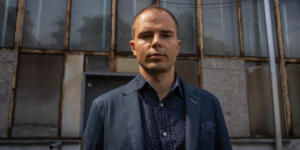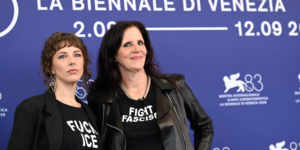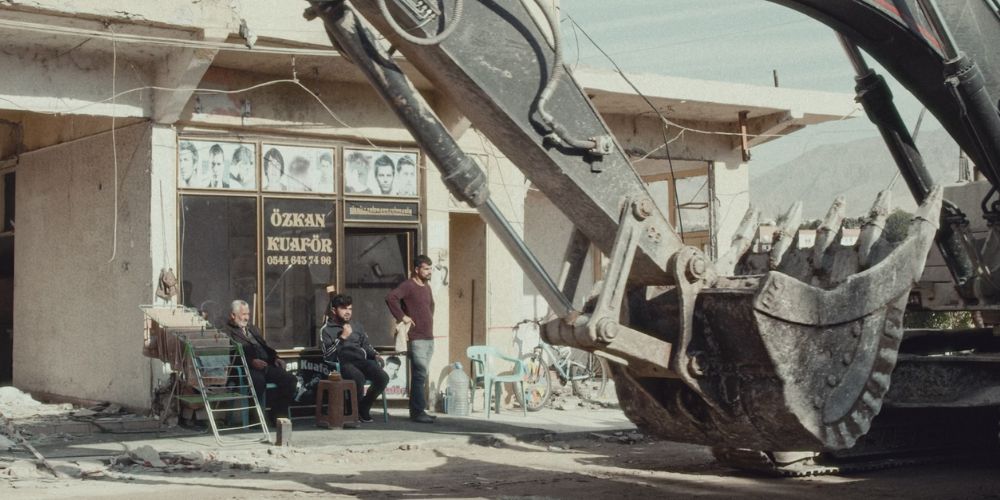
The Town That Drove Away premiered at Visions du Réel‘s International Medium Length & Short Film Competition and won the Special Youth Jury Award for a Medium Length Film. It is Grzegorz Piekarski and Natalia Pietsch’s first feature film, selected by #dok.incubator in 2024 under the project name Hasan’s Joy. Both are graduates of the Krzysztof Kieślowski Film School and spent six years researching and filming in #Hasankeyf, a historic village in southeast #Turkey that was demolished under the Southeast Anatolia Project (Güneydoğu Anadolu Projesi, GAP).
Through intimate relationships with local residents, they document the transformation of everyday life in the Kurdish and Arabic communities brought about by forced relocation. Wide shots of the raw beauty of the original landscapes contrast with the eerie artificiality of the modern replacement in New Hasankeyf. Absurd announcements from loudspeakers echo through the town, stripping inhabitants of their land rights and livestock, presenting a dystopian reality under urbanisation.
While questions of representation and authorship are always present, it is becoming increasingly common for filmmakers to engage with stories beyond their national contexts. To better understand Grzegorz and Natalia’s approach to storytelling and their positionality as outsiders in Hasankeyf (and Turkey, more broadly speaking), I interviewed them both over a video call. The interview has been edited to structure thematically.
State Control, Forced Relocation and the Vanishing Landscape
How did the film begin?
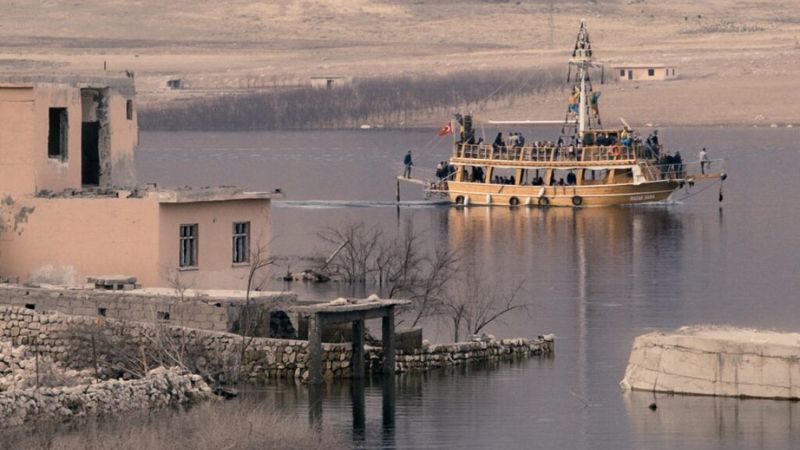
Natalia: It was our first time visiting Southeast Turkey, which is completely different from #Istanbul and Western Turkey in general. Grzegorz was fascinated by this region because the community bonding is like a Crescent of Humanity, where people still share bread with each other. At first, it was just a personal way of travelling for us. It was quite shocking—and absurd—that such a beautiful place with 12,000 years of history would be destroyed and turned into an underwater #tourism attraction.
Grzegorz: The main reason we made this film is to observe this kind of absurdity and understand how it’s used as a political tool or tool of control.
Natalia: The public discourse was absurd as well. The state was telling people not to worry, saying they could return to their houses—but just underwater.
What struck you about the changes that came with the forced relocation?
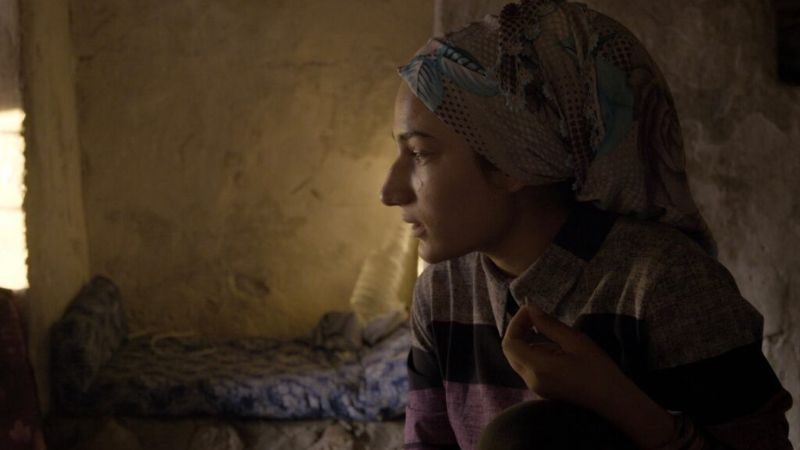
Natalia: We followed two families, one Kurdish and one Arabic because only Kurdish and Arabic people live in this region. Before, they were shepherds, and now the state has forbidden livestock keeping. The Kurdish and Arabic communities are now more mixed, which could be positive, but they don’t share a common language. People have become very lonely.
Over six years of filming, we gradually gained a broader perspective. We started to see that the relocation was used to change their way of life. It was a method to destroy cultural and communal bonds. The dam was presented as part of a national #modernisation project, but in reality, it was an excuse to erase Kurdish and Arabic cultures from the region.
I see it as a #cultural genocide#. It’s a strong word, but considering the whole GAP project only happened in the Kurdish region, it feels like cultural homogenisation.
It was quite shocking—and absurd—that such a beautiful place with 12,000 years of history would be destroyed and turned into an underwater tourism attraction.
The people, the emotions, the balance between heaviness and lightness
You chose to focus more on the residents’ everyday lives, and the film feels lighter in tone than how you describe your experience. Why did you choose that approach?
Natalia: When the crew is smaller, building intimacy and friendship is much easier. Also, in the beginning, people were crucial to us. When we met them, we realised we wanted to tell their story.
It was very risky for people to protest. Cleverly, the government made them dependent by building new houses. However, the government retained ownership of the properties—the residents only gained the right to buy them after five years.
Grzegorz: I think it’s similar to the feeling of a hostage.
Natalia: Being openly critical of the government was very dangerous for local residents. They could lose their right to live in the new town. We knew the only way they could talk about what happened was through the media—through our movie.
Grzegorz: A gift can be a reason for suffering when it’s false. We witnessed how #urbanisation became a façade. Many people from Hasankeyf said they couldn’t complain about their living conditions, but at the same time, there was an epidemic of depression. It was difficult to show in the film because people didn’t always talk about it—it was intimate. But there were signs: almost everyone put on weight because people just stayed home and had nothing to do.
Natalia: We learned a lot from our protagonists and their families regarding how they act in life and naturally balance all the heaviness. By searching for lightness in everyday life, humour, and small pleasures, they try to keep their dignity. For example, the barber still cleaned his salon even though he found out that his salon would be demolished in a few hours.
Authorship and Positionality
What role did your identity as a Polish filmmaker play in how you engaged with the story?
Grzegorz: We are different, but also, in many situations, we felt connected, or we understood it. Historically, #Kurdish people are very similar to Polish because of the divided nations, diasporas, and struggles to preserve language and culture. Also, Poland was a multi-ethnic country before WWII and there were complicated friendships yet tensions between Polish and Jewish society, which we found very similar to the dynamics between Kurdish and Arabic communities in Turkey.
Natalia: For us, the biggest risk was that we might not be able to return to Turkey, but we were relatively safe. That gave us more freedom to make the film.
Grzegorz: I wouldn’t say we were objective spectators. We were more like a third opinion.
Natalia: In terms of storytelling, we tried not to put too much of our own voice and leave space for the audience to discuss. That’s why we don’t use any voiceover. We did extra sound shooting to create an authentic experience for the viewers of what was happening and to transfer the feelings and emotions we encountered there.
Also, personally, it’s very important for me to understand how #dictatorships are growing all over the world. We came from a very international perspective, and that influenced our decision to collaborate with a more international sales company.
Was language a barrier?
Grzegorz: Of course, but not always. Sometimes, it was beneficial because emotions and body language become more important when you don’t understand exact words. And sometimes you understand even more. Surprisingly, much of the talking on camera happened in the barbershop.
What was the main difficulty you faced during filming or post-production?
Natalia: We didn’t have permission to shoot for most of the time. We couldn’t film the actual demolitions—it was forbidden. The fact that we could even be there and film was thanks to the residents’ help. For example, some local police officers helped us instead of reporting us because they were residents too.
It’s not always easy for a woman to film, and I faced situations where I felt at risk. But the families of our protagonists and friends in Hasankeyf helped me a lot.
Regarding post-production, at dok.incubator, one of the most important things we learned was simplicity. Sometimes you need to simplify the story to make space for emotion and stay close to your protagonists. It’s not about intellectual effort but emotional understanding.
‘The Town That Drove Away’ next screens as part of the Polish Competition at the 65th Krakow Film Festival