Sunny Side of the Doc 2025, taking place from 23 to 26 June in La Rochelle, marks a decisive turn for the international documentary market. Under the theme «New Routes to Storytelling,» the 36th edition addresses the instability facing the global documentary ecosystem: declining public funding, the fragmentation of traditional distribution, and the urgency to elevate underrepresented voices.
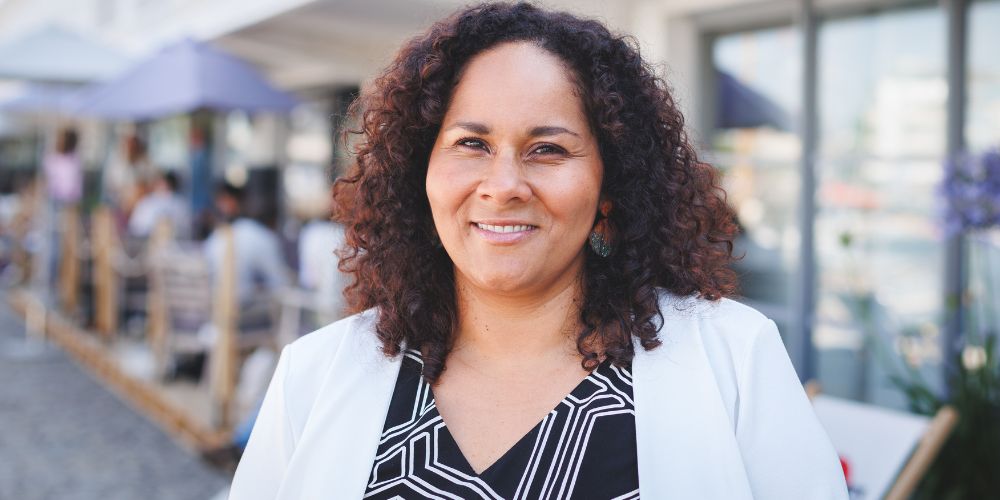
This year features 42 selected projects from 22 countries, with a notable increase in first- and second-time filmmakers, as well as more than half of the teams led by women. Notably, Sunny Side has launched its first advisory board, expanded its Innovation Lab to spotlight XR, AI, and podcast formats, and deepened its engagement with producers and creators from the #Global South#. With a renewed focus on ethics in co-production, increased visibility for independent distributors, and a pragmatic approach to funding futures, the event positions itself as a key site for forward-looking industry dialogue. We spoke with Managing Director #Aurélie Reman# about ethical co-productions, the decentralisation of storytelling, and the need for tougher conversations in a changing industry landscape.

I’m always interested in gaining the timeline of creating the overarching theme for an event. When are those seeds planted? Is it as soon as the previous edition is over, or are these ideas that have been discussed over the years and perhaps not had the right or appropriate time for maximum benefit?
What fuelled the conversation were two key points. One is me preparing, as Managing Director, for the first edition, where I can really put my hands on it and put my vision for both the industry and the type of event or platform I want it to be and become. Early on, I received feedback that it had to be a year of change, both internally and externally. The conversation then began in September and October. And after #Mipcom, I gained my first insight into the direction we needed to take. Then, there were very interesting conversations with members of our advisory committee, which we announced early this year. However, the seeds were also ongoing.
We had already discussed a strategy to anticipate rather than react, especially in markets where we could already see the business models and systemic changes unfolding at a rapid pace. In all our conversations with documentary professionals, there was a sense of uncertainty. We don’t know where we’re going to go. We are unsure how to overcome these challenges, including the loss of financing, the weakening of our public broadcasters, and the impact of the political context. And so, the priority was to put the dialogue back at Sunny Side and have the conversations that we need to have, not just showcase what we do and what we’re good at. We had to have those tough conversations about the key challenges, knowing that we would have to work together to solve them. I wanted us as a team to follow a grid in terms of what’s new for international co-productions. What kind of new alliances are needed? How can we help? What visibility can we restore to distributors within that ecosystem? The third aspect of how we support the emergence of new long-term forms of storytelling is also about new voices. They are an essential element of authenticity and inclusivity within the market, as well as within the stories told.
We had already discussed a strategy to anticipate rather than react, especially in markets where we could already see the business models and systemic changes unfolding at a rapid pace.
Sunny Side has always been a champion of new voices. Over the years, there has been a significant privileging of early-career filmmakers, offering an especially international roadmap. Navigating this map can be complicated if you’re unfamiliar with it. However, the idea of storytelling is more abstract than a linear path that can be presented to someone. This idea of addressing the actual storytelling aspect of the documentary suggests a distinctly creative element that isn’t just industry-based and practical. How does that present itself in the event schedule this year?
The starting point would be who tells the story. I wanted to avoid bringing those creative minds to the market—the ones that push the boundaries or break the models—and make them feel that they don’t have a space within an event like Sunny Side. Thanks to key international events I’ve attended, from Taipei to Morocco, reconnecting with Africa, and being to Durban in March, I changed my perspective on their local approach to be able to spread those key messages globally. From a creative standpoint, what we see is non-fiction content being created by creative minds and directly reaching audiences, mainly in response to the multi-platform era in which we live. That’s daunting for both traditional broadcasters and distributors. They do try, but they also need to keep a level of revenue. Indeed, what you said about new voices is also reflected in the pitching sessions we held for our first and second-time filmmakers, where we saw an increasing number of new projects every year. It’s almost reaching 25% of the submissions now for an event like Sunny Side, so that’s a strong signal.
Where do they fit otherwise within the markets? We strive to ensure that all panel discussions we host are well-represented, and this is particularly evident in the Innovation Summit, which features a strong session on the new destinations of #XR content and what #AI can do for you. It’s not just that everything is wrong. It can also be a valuable partner in terms of creativity, even if we need to ask the key question about production value and distribution of rights.
Lastly, in terms of digital-first documentaries, a big part of those new talents and voices are also considering doing everything by themselves. They also need to have strong conversations with distributors, which, to our knowledge, they do not initiate early enough; however, we want to encourage them to do so. So it’s true that they come with unheard stories, but they sometimes have to overcome decolonisation challenges, especially in underrepresented territories or First Nation communities. And this is the first edition of Sunny Side, where you see the bridge that we have been trying to build for so many years.

What about from a presentation perspective?
Even for those big TV lineups, all our partners need to be pragmatic. Just tell the truth. Get to the concrete reality of your difficulties and also what you can put on the table. I’m glad that they followed us on that. That’s why we ended up with a Global Doc Session, actually gathering many interesting and influential public broadcasters from around the world and allowing them to discuss how they work with AI internally. That’s the kind of speech that the community, especially independent producers, needs to hear right now, not just for the next season but for the two or three seasons to come. It’s really about anticipating rather than reacting, and to do so, we also need decision-makers to have a different voice on the market. To be more realistic about what they can and cannot do because it’s an entire ecosystem that depends on whether they need to diversify. That’s what made the innovation side of things interesting. Nowadays, an independent producer needs to know this to make a living. We are seeing an increasing number of traditional producers transitioning to non-linear formats. However, we also see a significant increase in the number of IPs being developed through various formats. And that’s the new reality of how you create and adapt non-fiction content today.
all our partners need to be pragmatic.
What about from a distribution perspective? How do you merge the institutional players with the trajectory I see distribution moving in, which is much more independent and grassroots in nature?
The key is to explain, re-explain, and provide more visibility into the actual role that independent distributors play in our markets. We had a pre-session, which was designed to help newcomers navigate the event. The entire morning was just a conversation with two key distributors, #Albatross and #Arte Distribution#. I’ve been happily surprised by the number of questions, which highlight the fact that a distributor nowadays is a key partner and needs to be considered an ally, even if the destination you think is the most relevant for your content is online. That’s not the end of the road. That doesn’t work just for traditional podcasts, for example. Broadcasters are no longer the same, and they are also evolving in their approach to the market. It’s a geographical challenge because they still sell in a certain way. They don’t get that amount of support from institutional financing structures. Even within Europe, that’s not the case. They are increasingly challenged by both the direct-to-consumer strategy and the impact of the campaign environment. Everyone knows that new jobs and new ways to deliver them will emerge in the very near future.

What about from this co-production perspective? Co-production has been a prominent topic over the years across the film and festival landscape. But a lot of it is so based on personal relationships and things built over the long term. That’s something that the new voices might be lacking in an extended network where they can even reach out or have the know-how. Beyond the general thematic connection between countries, what would a new route in co-production look like that can impact storytelling?
What I’ve observed is that the idea that needs to be discussed is the ethics of international co-production, which was not the centre of our preoccupation when we first discussed that business model. However, it is, first and foremost, a cultural collaboration. And yes, it can transcend the geopolitical divisions, but at the end of the day, you still need that trust relationship. That’s why Sunny Side of the Doc, with its physical encounters, remains very much needed.
That said, you’re right about when you’re a new entrant. How do you build this network, and how do you enter into international co-productions, especially now that it’s not just with one other partner? From that perspective, the main thread for us this year would be what brings more ethics into that model. The new roads we are trying to put on the table are the ones, for example, from the Global South. A road that would not necessarily involve the usual players or conventional institutional public funding models. One that could challenge more is the equity of working with local technical teams that are skilled and can bring more to the story. If we proceed further, we should also discuss ethical funding and the type of financial support that should target new entrants into our global markets. That said, it’s a long-term effort, and it’s not a four-day event that will bring the solutions. That’s the philosophy behind the Sunny Academy, which is something we also want to put on the map. It’s about sharing our expertise in the international market today and tomorrow.
it’s a long-term effort, and it’s not a four-day event that will bring the solutions.
I feel that private funding is a lurking reality in Europe. As an insider who is facilitating these dialogues, have you noticed an evolution or an increase, let’s say, in openness or options for private funding?
Yes, from independent producers, we’ve heard it and have encouraged them to be more vocal about it this year, particularly to help us attract new financing possibilities, whether from brands or equity funds. The primary question is whether these solutions are sustainable. There are successful examples, but they may not be replicable in other contexts. That might not be a long-term solution.
It’s about competitiveness and #democracy. If you keep shrinking our means to bring cultural content back to fight ignorance, there’s no chance for us to even be competitive within the entire ecosystem. It’s been a struggle because documentary is a distinct category. For us to gather numbers that explain our value, both commercially and from a democratic perspective, it’s becoming increasingly difficult to bring those two conversations together. So, I don’t have a firm answer to that, but it’s a route that independent producers explore, and even we, the organisers, do, too.