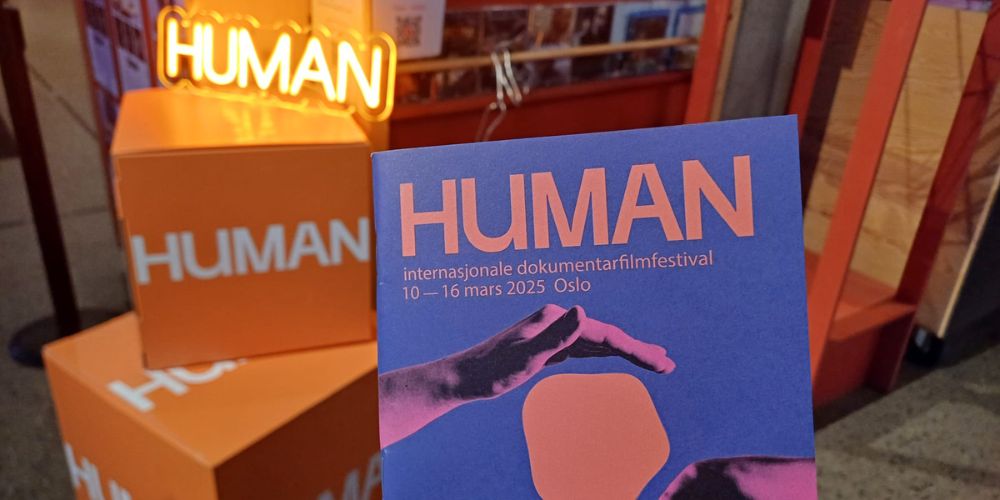
When I first read about the HUMAN International Documentary Film Festival in Oslo, it was around the time Donald Trump was elected, and a dramatic shift in the world’s political landscape was complete. I questioned whether making films about human rights still mattered in such turbulent times. Yet something inside me pushed forward—a need to connect with stories resonating with my experiences of war, displacement, and survival.

When I shared my desire to participate with Ingrid Dokka, the CEO of Sørnorsk Film Center in Kristiansand, Norway, she warmly encouraged me: «Of course, you can.» Thanks to her support, my travel and accommodation were covered. Through my colleague’s advice, I met Ingrid by writing an email a year ago without knowing her. After a few days, she welcomed me to meet, which was unexpected. Supporting a foreign female documentary filmmaker isn’t easy in Norway, but I appreciate her believing in my passion and projects.
My lovely friend, journalist and producer, Anne Gerd, also reassured me. «Don’t worry,» she wrote, «I’ll arrange everything before your travel.» True to her word, she sent me the tickets, and I felt both excited and nervous about attending my first English-subtitled film festival in Norway. I am pursuing a second master’s degree in global journalism in Norway and working on a documentary project with producer Anne, which Sørnorsk Film Center supported.
The morning I left Kristiansand, it was cold and foggy. Despite being sleep-deprived when I reached Oslo, I checked my phone repeatedly, trying to decide which films to watch. Several screenings I was eager to attend were scheduled simultaneously in different venues, which frustrated me. But I kept reminding myself, «You’ll find a way.»
Supporting a foreign female documentary filmmaker isn’t easy in Norway
Arriving in Oslo, I felt chilled to the bone and couldn’t stop thinking how grateful I was to live in Kristiansand. I live in Kristiansand because I am pursuing my education. It is sunny and reminds me of Baku. Oslo didn’t feel like my city because of the cold climate; I realised it would take something special to change my feelings about it. Yet, when I attended my first masterclass and screening, I understood the importance of such international festivals, especially in Norway, where cultural diversity is still growing. These events provide invaluable opportunities for journalists and even newly arrived female filmmakers like me to connect with powerful narratives worldwide.
My journey began in earnest when I arrived at Vega Scene, Oslo. Despite being awake for over 24 hours and skipping meals, I hurried from the bus station to the small room Anne had booked for me, dropped my suitcase, and rushed straight to my first screening. I didn’t expect the film to affect me so profoundly. Only six or seven people were in the cinema, but everyone was silent and visibly moved by the end.
Watching Syrian filmmaker and journalist Waad Al-Kateab’s powerful documentary, Death Without Mercy, left me stunned for days. The film is made from reportage and news. The director’s name isn’t foreign to me. I was impressed by the director’s Oscar-nominated and BAFTA-winning For Sama. The scenes of war’s devastation and Al-Kateab’s courage haunted me. I vividly remember feeling overwhelmed during a meal afterwards, still unable to process what I had seen. The film captured how war aged and strengthened a young woman, and it deeply resonated with me as a journalist and documentary filmmaker. Later, in her masterclass on storytelling, I had the privilege of meeting Waad in person. We discussed the unique role of women journalists-turned-filmmakers in telling stories of war and displacement. We both reflected on how war disproportionately affects women, making their voices crucial in documentary storytelling.
One of the festival’s highlights was Einat Weizman’s masterclass on the power of art in activism. As an Israeli director, actor, and playwright, Weizman demonstrated how archival materials can become compelling narratives and how powerful storytelling can emerge from forgotten letters, court transcripts, and photographs. Inspired by her approach, I considered new ways to tell stories of resilience and survival in my work.
I also attended a panel moderated by Anne Gerd featuring filmmaker David Estrada. His film To Die for a Soul explored the devastating impact of hurricanes in Honduras. Estrada’s deeply personal motivation impressed me. Like his main protagonist, he wants «to die» for a soul telling this story to be heard.
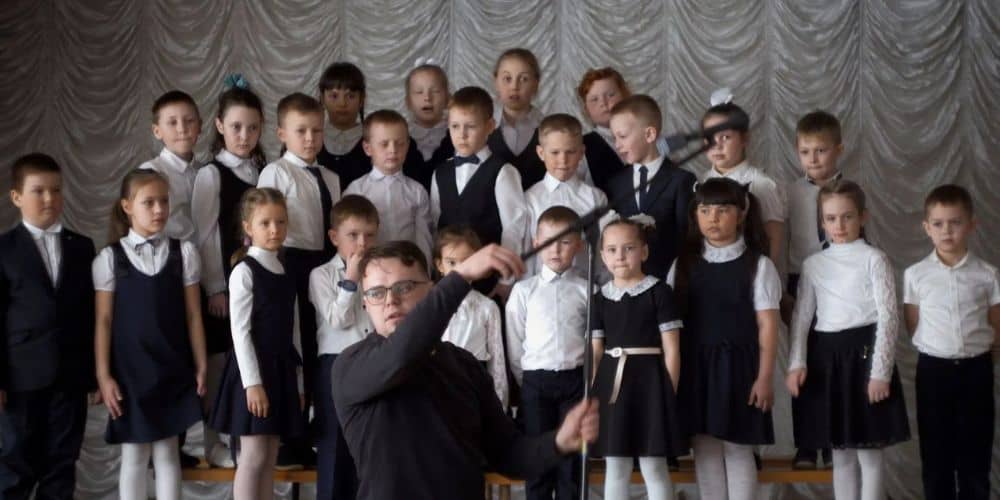
I dashed through the snowy streets between screenings to reach the Cinemateket for Mr. Nobody Against Putin. This gripping documentary followed Pavel Ilyich Talankin, a teacher in Russia’s Ural Mountains, who secretly filmed his school’s transformation into a propaganda tool for the Russian state. The film offered a rare glimpse into the oppressive reality of life under Putin’s rule. There is not a single empty seat in the cinema. #Ketil Magnussen#, Director of the HUMAN, asked the audience who couldn’t understand Norwegian before introducing the producer of Mr. Nobody Against Putin. I raised my hand, together with a few others. So, he continued in English. I breathed deeply, smiling.
Another day, I had a chance to watch Khartoum, which stood out for its visual language. The film chronicles the lives of five individuals fleeing Sudan’s civil war. It captured the brutality of war and the resilience of those displaced, blending theatre, music, and memories to tell their stories. As someone who has experienced displacement, their journey felt painfully familiar. The emotional weight of the film left me reflecting on how war shapes identity and fractures families.
Devi, the story of Devi Khadka, a survivor of sexual violence during Nepal’s civil war, also struck a chord with my own interest in documenting war-affected women. Despite societal pressure to remain silent, her courageous fight for justice was heartbreaking and inspiring. The post-screening panel on mental health and recovery highlighted the ongoing struggles survivors face.
One of the most memorable films was Porcelain War. What a masterfully crafted narrative it was. The hall was packed with people. Curious about the filmmakers, I discovered that one of the directors, Brendan Bellomo, had experience directing feature films. Brendan taught Slava and Andrey, who had no filmmaking experience, how to operate the camera. Imagine the distance they had to overcome: thousands of kilometres. Yet, despite their lack of experience, Slava and Andrey learnt to handle the camera and film their story.
This documentary explored how Ukrainian artists used their creative work to resist Russia’s invasion. Slava Leontyev, Anya Stasenko, and Andrey Stefanov chose to stay in Ukraine. Armed with their art, cameras, and, for the first time in their lives, guns, they fought for their lives and their country. As the war intensified, Andrey began to film their story. At the same time, Anya and Slava captured their idyllic past, uncertain present, and hope for the future on tiny porcelain figurines.
Porcelain War is a beautiful tribute to human resistance, hope, and passion under horrific circumstances. Even though war is devastating and terrifying, Andrey, Anya, and Slava show that breaking the will to live is difficult. The film won the Sundance Grand Jury Prize for US Documentary and was nominated for the Academy Award in feature documentary.
I have always been curious about Scandinavian culture and its environment since childhood through Astrid Lindgren’s books, which I found in an old wagon in a village in Azerbaijan. Because of my curiosity, I chose to watch a Norwegian film next. If you’re seeking answers to questions like how a person’s life can change after an unexpected accident and how to cope with such events to move forward, this film is for you. Geir Kåre Nyland’s story of adapting to life in a wheelchair after a tragic accident in Fighter by Sunniva Sundby, Mari Bakke Riise is a testament to the resilience and redefinition of one’s identity. Geir and his father’s relationship reminded me how personal stories can transcend physical limitations and inspire hope. This story also brought to mind the life of Azerbaijani capoeira master, writer, and activist Orkhan Adigozal’s remarkable journey.
I was greatly impressed when I watched An Army of Women, a documentary directed by Norwegian Julie Lunde Lillesæter. After the screening, I had the opportunity to meet the director personally. Since the post-screening discussion was held in Norwegian, I approached her directly to ask questions about her filmmaking process and the challenging legal battle the women in Texas faced. Our conversation provided more profound insight into her motivations and the powerful message behind the film.
Another powerful film that resonated with me was Palestinian-American filmmaker Areeb Zuaiter’s Yalla Parkour. It was particularly meaningful to discover that its editor, Phil Jandaly, had been part of one of my mentorship program projects through the B2B Doc platform. Seeing the director’s and editor’s skilful storytelling on screen reminded me how shared experiences in mentorship programs can lead to impactful creative work. Unfortunately, I had to catch my bus and leave the screen 15 minutes before it finished. I am still thinking about what happened to Ahmed, the protagonist.

Attending HUMAN broadened my understanding of human rights narratives and reaffirmed my belief in the power of documentary filmmaking. Each story reminded me why I chose this path—to give a voice to the voiceless, document resilience, and inspire change through powerful storytelling.