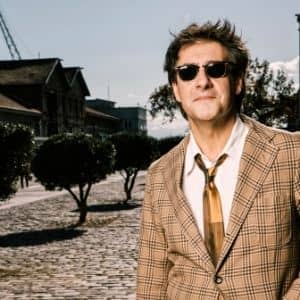
For its 23rd edition, the 2021 Thessaloniki Documentary Festival meets from 4 to 14 March 2021. Though not 100% decided on a format, screenings will occur in cinemas and/or online given the current state of health and safety regulations in Greece. In 2020, the 22nd Thessaloniki Documentary Festival was one of the first festivals to be postponed moving its Agora Market activities online, while holding a physical festival later in the year.
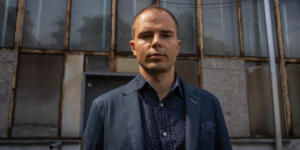
Now, as we wrap up 2020, Modern Times Review spoke with the Artist Director of Thessaloniki Documentary Festival, Orestis Andreadakis, on how 2021 will differ from 2020 and to see if we can get some extra information on next year’s edition.
I have seen a data-driven infographic that states documentary and horror films are the fastest rising genres in terms of popularity? Why do you think this is the case for these two particular genres?
What you say is interesting, because, if this data is accurate, they make evident that horror gives us the opportunity to feel fear from a safe space, with something that is not real, while documentary gives us the ability to think and to become engaged with reality. In the last few years, there are huge issues in the world: #migration, environmental issues, the rise of intolerance, uncertainty, economic crisis. It is necessary that these issues be recorded, analyzed, commented on, criticized. Also, documentary filmmaking has made tremendous leaps in recent years, as new technologies allowed filmmakers to operate with a small crew and light equipment, or even on their own, in order to cover these issues. These advancements liberated documentary filmmakers, and them to discover new cinematic languages, not to have barriers, to incorporate different genres in their work. Thus, documentary becomes an incredibly rich genre, an enthralling laboratory of ideas. I think that in the next few years we will see documentaries that will be more exciting, avant-garde, out of the box.
The 2020 Thessaloniki Documentary festival was one of the first affected by the #COVID-19 lockdowns. What sort of opportunities arose after the festival’s initial postponement? Are you concerned that COVID-19 has permanently affected the idea of a «physical event»? Not simply in terms of public health but also from a standpoint of economic viability.
In March, the 22nd Thessaloniki Documentary Festival was one of the first film festivals to be postponed. The Agora Doc Market was the first to go online. It was a unique experience, which we shared with other festivals that went online afterward. However, I don’t like to look for opportunities in a crisis. It’s true that by moving the festival online, people from #Greece who’ve never been to Thessaloniki had the chance to watch the documentaries of the 22nd TDF, but I think that cinema is a collaborative form of art and should, also, be experienced collectively. We hope that we will soon meet again, watch films on the big screen and discuss them with others. I do not feel that COVID-19 permanently affected the idea of a physical event. Cinema creates collective memories and ideas and that is something we should support. In the next few months, we should not depend on online events; we should try to rediscover the essence and the importance of the physical event.
I don’t like to look for opportunities in a crisis.
How did you spend your COVID-19 lockdown? Did you take on any new hobbies?
Most of the time I stayed and worked from home. It was hard, but I had the chance to engage more with my second vocation, art curation, and I had more time to plan exhibitions and events for the 61st Thessaloniki International Film Festival, that takes place every autumn. We organized exhibitions in public spaces and, together with artists from Greece and abroad, we are preparing projects that aim to bring contemporary art back into the public sphere.
In three words, how would you describe the city of Thessaloniki? Aside from the festival, what are some places visitors to Thessaloniki absolutely must visit? Anything «under the radar», perhaps?
Thessaloniki is a cosmopolitan city, key to Southeast Europe and the Mediterranean, which offers many surprises. What impresses our guests are the fact that in every corner they can find a piece of history; Ancient Greek, Roman, Byzantine, Ottoman, Jewish. That makes all those who visit Thessaloniki, to fall in love with it. It is a city of great culinary variety, that is considered by many to be the food capital of Greece.
Finally, what can you tell us this early about the 2021 Thessaloniki Documentary Festival? Any early titles you can announce?
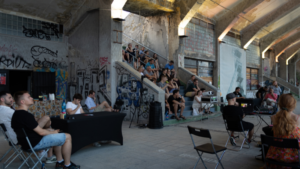
Although we cannot announce any titles yet, we have begun to prepare the 23rd Thessaloniki Documentary Festival from scratch. For now, we will keep as the opening date March 4, 2021. During the festival, until March 14, there will be a limited number of screenings according to the situation, physically or/and online. A large part of the program – competition sections and tributes included – will take place during the summer, taking advantage of the good weather and the open-air theaters of Thessaloniki and maybe other Greek cities. We will try to make the most of the Greek summer by using open public spaces and we want to find new ways to define the meaning of a hybrid festival, the meaning of a screening.