Kids play war, chasing each other with toy rifles among crumbling concrete houses, while in the shadows, a fighter waits to ambush an Israeli. #IDF jeeps, raids, grenades, and door-to-door roundups; detainees crammed into the back of armoured vehicles, blindfolded, bound, dead, or wounded; in the sky, the jets bombing; and on the ground, the bulldozers levelling everything, soldiers unrolling barbed wire and besieging a refugee camp. They ordered everybody to leave immediately. Images we’ve seen so many times since 7 October—except for one detail: no Palestinian woman wears a hijab. On the contrary, many are in miniskirts. And the cars have round headlights—typical features of the 1950s.
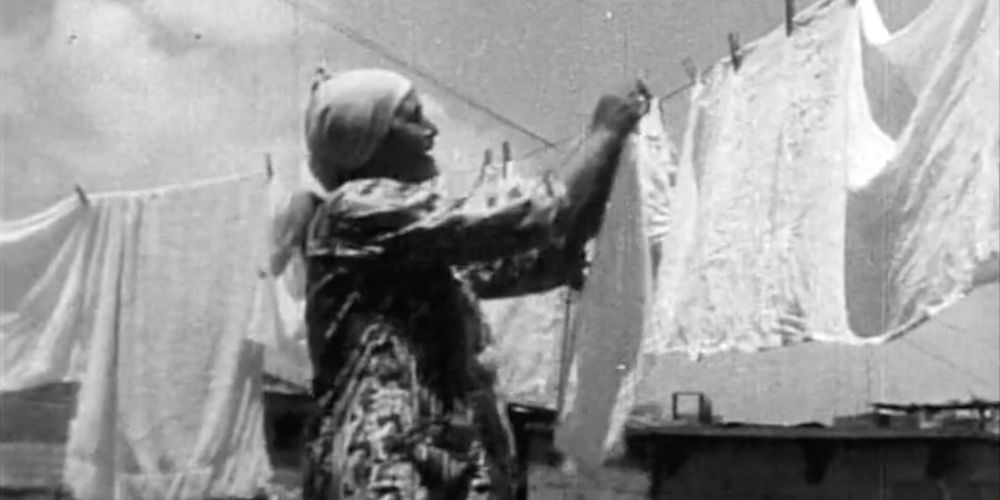
These are not Al Jazeera videos but films by Mustafa Abu Ali, founder of the PLO’s Film Unit, which later became the Palestine Film Institute. And they explain everything more clearly than anything you’ve read so far. One is from 1974. It was retrieved from the debris in Beirut. 1974 was the year of the massacre of Ma’alot. In this town, a Palestinian commando took over the primary school and kidnapped everyone—teachers and pupils—asking in exchange for the release of the prisoners in Israeli jails. Titled They Do Not Exist, a title taken from the infamous quote by Golda Meir, who claimed that before 1948, «there was no such thing as Palestinians.» Or was it #Bezalel Smotrich#—the current minister overseeing the Civil Administration of the West Bank—who echoed similar claims? And claims that the Palestinians are an Arab fabrication? An anti-Semitic conspiracy? In all these years, nothing has changed—absolutely nothing. Our attention has been on and off, but here, violence has been ceaseless.
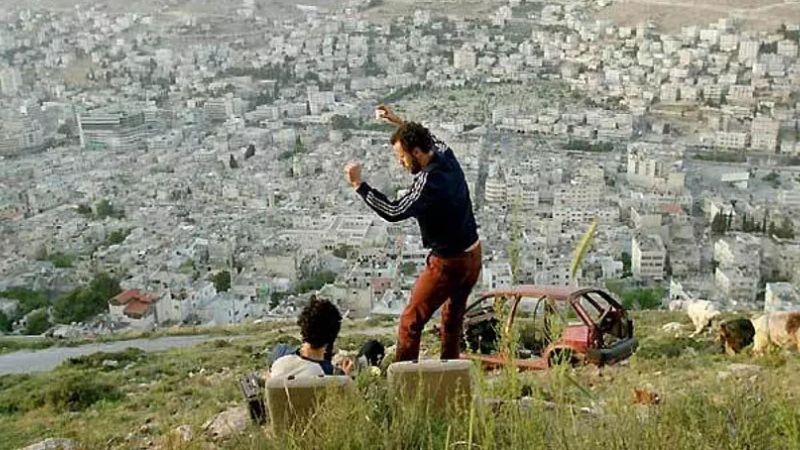
Now that the war is raging again in #Gaza, and it seems to have no goal or sense, no end, no rules, relegated further and further to the bottom of the news pages, the directors of the main films about Palestine have made their works available online for free. The list of links ranges from shorts and docs d’essai to Paradise Now, which recounts the last 48 hours of a twenty-year-old from Nablus who plans to blow himself up in 3Tel Aviv#. In 2005, it was the first movie to hit the box office, winning a Golden Globe. And it answers anyone who still believes the story begins on #7 October#. And that this is the war of 7 October. Because it is always the same war. Since 1948.
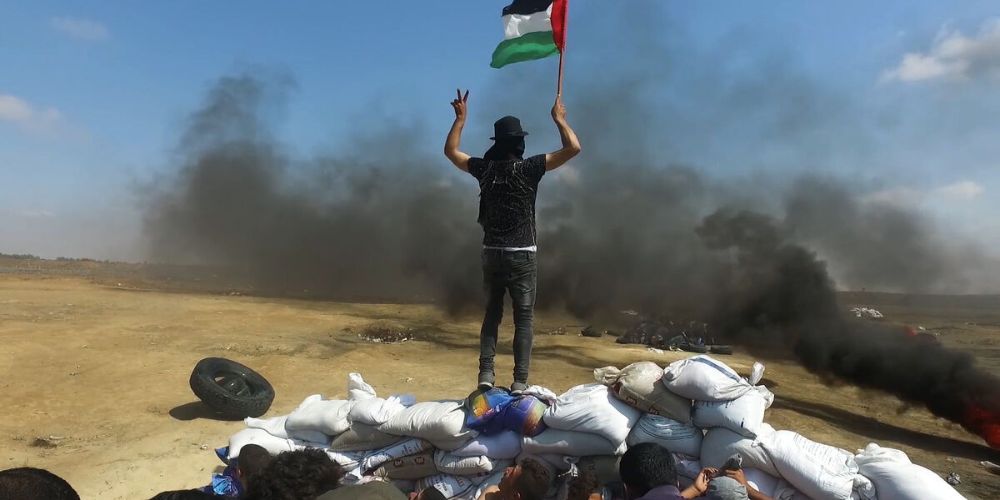
Watch Gaza Fights for Freedom, filmed by Abby Martin during the months of the March of Return – the 2018 demonstrations against the siege and #Hamas. «We look like we are alive, but we are not. Gaza is just a name. There is only suffering. Everywhere. Suffering and anger. We just go from bad to worse,» says a fisherman in the opening scene, and these are all things that now, over 50,000 dead and 15,000 missing later, we all know: poverty, absolute poverty, tap water that is salt water, seawater, 70% unemployment, empty fridges. Many survived by rummaging through the rubble, reselling iron and glass—the remains of airstrikes. Gaza was starving. And that’s why Palestinians tried to break the border fence with months and months of peaceful demonstrations. Everyone got shot. Including journalists and doctors. What if we had watched it back then rather than now? What if we had watched it when Yahya Sinwar, exhausted and cornered with all of Gaza against Hamas, proposed a long-term truce to Netanyahu? When he said, ‘I don’t want war anymore’?
The Oslo season, the period of peace initiated by the 1993 Accords, was a delusion. And it was right before our eyes. In In Search of Palestine, a BBC crew follows #Edward Said#, who returns to Jerusalem for the first time. He fled in 1947. Now it’s 1998, and he walks through an all-Israeli city. And yet, in his words, there is no enmity, no resentment. There is no hatred. He talks to historian Ilan Pappé and conductor Daniel Barenboim, and in the frames together, with the music of his piano in the background, another future is still possible. I’ve resigned myself, he says. I’ve accepted the loss. But I want the Israelis to realise what happened, he says. What really happened? He is outspoken against armed resistance and the PLO’s attacks, which have never triggered a truly popular movement. There’s another way, he says. But the Israelis won’t grant Palestinians anything: not only justice, but not even the truth. Not even memory. And the analysis of Azmi Bishara, the first Arab-Israeli to be elected to the Knesset, is sharp and blunt: it foresees everything. Oslo has simply stabilised the occupation, he says, subcontracting security to the new #Palestinian Authority#. Nothing more.
We won’t get two states, he says; we’ll get apartheid. For Edward Said, the #Oslo Accords# are not an answer to the Palestinian crisis but to the crisis of Arafat, who, after the First Intifada, had been sidelined from his exile in Tunis and sold his soul. And so, he goes to Hebron. He goes among the Palestinians who are disappearing. Replaced by the settlers. It had all already been said.
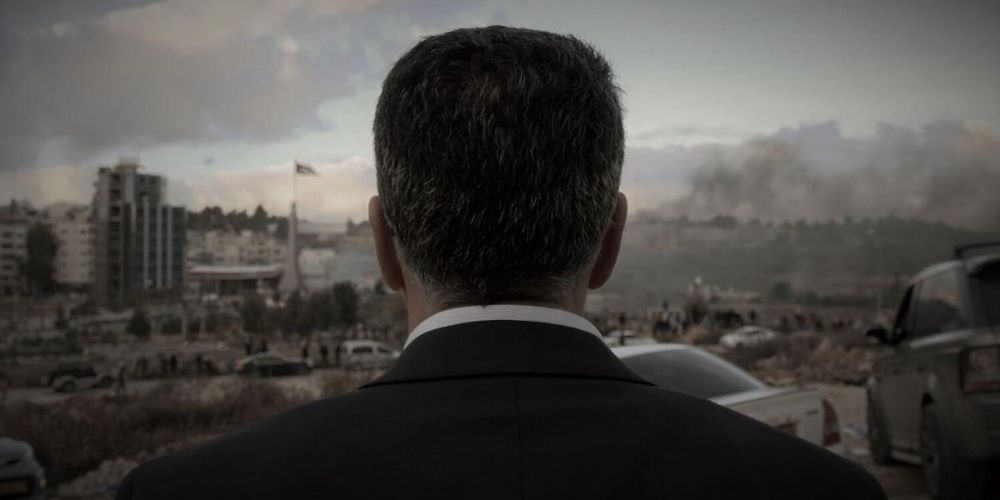
The Mayor, from 2020, is an unsparing portrait of Oslo. And a masterpiece. David Osit of Vice News follows the mayor of Ramallah, #Musa Hadid#, day by day, who governs a city without a country. He deals with the administration, with services, not politics – with roads to be paved, walls to be repainted, and locks to be fixed, while everything around him falls apart. When Trump moved the US embassy to Jerusalem, declaring it the capital of Israel, he was informed by the priest that the TV in his office, a high-tech flat-screen TV, a metaphor for the Palestinian Authority, had never been connected to the antenna. The only means of protest is the Christmas tree, whose lights are turned off after a long debate in the City Council. During an IDF raid in the municipality, the priority of his staff is live streaming on social media. His advisers stare dispiritedly at the clashes and the stones thrown at the army, which hit the newly inaugurated fountain at the entrance and now needs repair. It is a scaled-down version of the fountain at the Dubai Mall, featuring water and light shows set to the Titanic soundtrack.
Those were the golden years of NGOs and expats, cheerful and carefree associates of Oslo, who came here to hand out millions of dollars on projects with uncertain impact and no transparency. Years when death at the Friday demonstrations—those against the Wall—was rare. And shocking. And upsetting. As in the award-winning 5 Broken Cameras by Emad Burnat, who, to defend Bil’in, to defend his town, arms himself with a camera to spark off an international mobilisation, and instead, the cameras continue to break, from Friday to Friday, crashed by the tear gas canisters of the IDF – and by a bullet, which, if it hadn’t struck his camera, would have hit him straight in the head. But it’s nothing compared to what we have today. His son’s first word, yes, is «jesh,» which means army. However, at the time, Palestinians were still trying not to be overwhelmed by the Occupation, to go beyond – to explain their pain to Israelis instead of inflicting it identically. Looking back now, Bil’in is a different world. Of the many docs of these years, the only one that is not outdated is Arna’s Children, the legacy of Juliano Mer-Khamis. During the First Intifada, his mother, Arna, a Jew, opens a theatre in Jenin. The theatre that her son reopens, or rather, rebuilds, after the Second Intifada: when all the friends he grew up with were killed because of the Second Intifada, they were the protagonists, and they were on the front line, leading it.
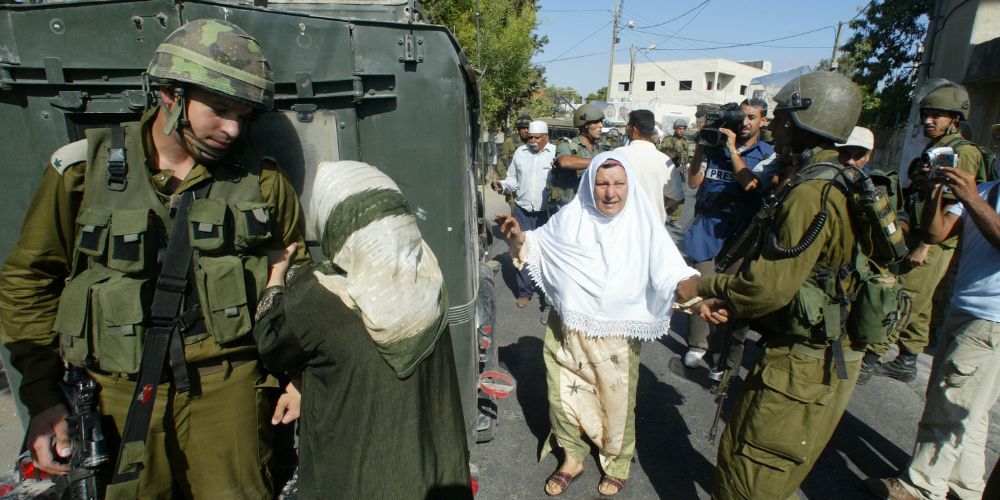
And now, in Jenin, the protagonists are the children of those protagonists. They were all killed—including Juliano Mer-Khamis. Because Juliano Mer-Khamis wasn’t only against Israel, his mother opened a theatre, he said, because a theatre is a mirror. You look at yourself on the stage, and by looking at yourself from the outside, you understand your role, who you are, and if you are what you really want to be. Because freedom, he said, is not just the end of the Occupation. If what you get is #Mahmoud Abbas#, or Sharia law, or Hamas—what kind of freedom is that?
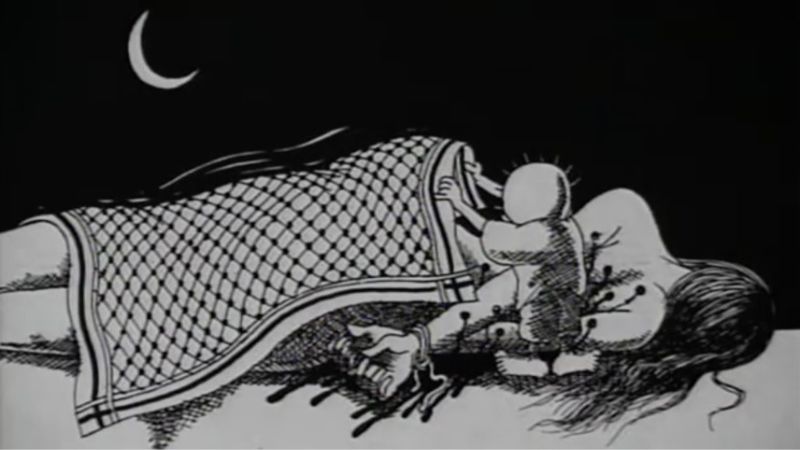
Like the murderers of #Naji al-Ali#, the cartoonist of Handalah, the child with his back always turned to the viewer, a child who is, in fact, the boy he once was, the barefoot, gloomy child of the refugee camp of Ein el-Hilweh in 3Lebanon, who observes everything, observes everything with innocence and disillusionment, because, absolutely, it’s not only about Israel. And despite all the rhetoric, despite all the propaganda, no one cares about the Palestinians. Not even Arabs. Naji al-Ali was relentless against the PLO and against Arafat, whom he had renamed Yes-Sir Arafat—the butler. Naji al-Ali: An Artist with a Vision chronicles a life under threat, from arrest to arrest and escape to escape. In the morning, his wife secretly started his car. Fearing it would explode. He was gunned down in 1987 in London, where he never felt settled, caught between pro-Israel and pro-Palestinian factions—often more extreme than the people actually living the conflict because they do not really experience this war, like the musician of Keffyeh, who in 1967 moved to Sweden and founded one of the best Palestinian bands. «But here, only the architecture changes,» he says. «Only the houses and streets.»