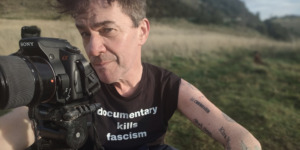
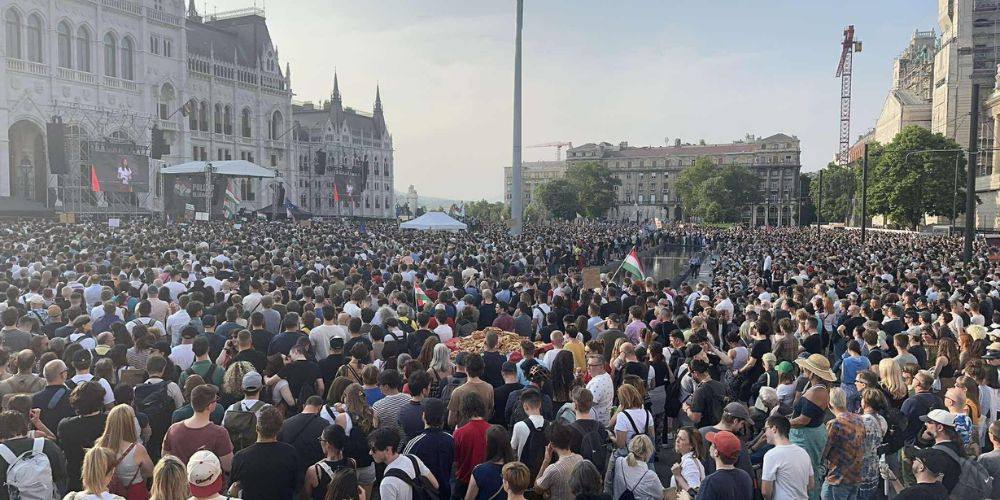
In Hungary, the space for independent voices is rapidly shrinking. A proposed bill titled «On the Transparency of Public Life» threatens to suffocate not only civil society and independent media but also the country’s embattled documentary film community. With Prime Minister Viktor Orbán’s ruling party holding a two-thirds majority in Parliament, the bill is expected to pass later this autumn. Its implications are sweeping: organisations that receive foreign funding—including open EU tenders or even personal donations from dual nationals—can be blacklisted and subjected to surveillance, fines, and operational restrictions under accusations of threatening Hungary’s «sovereignty.»
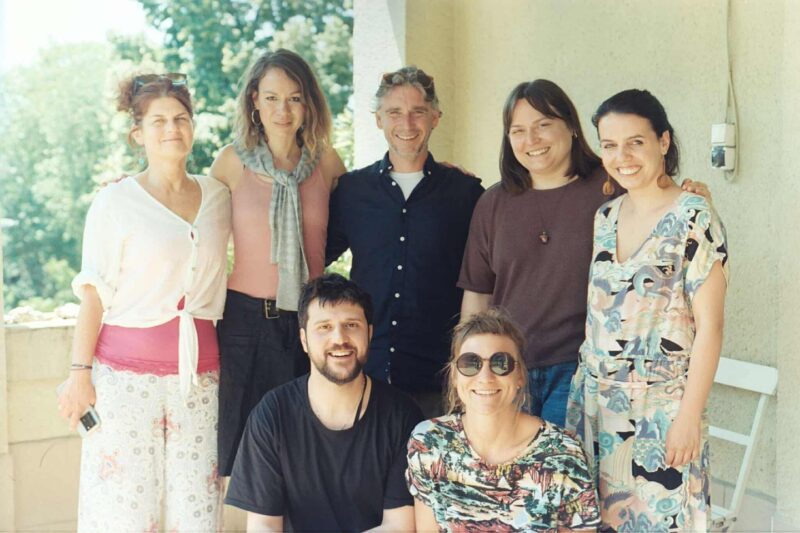
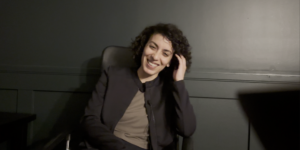
In a recent conversation with Modern Times Review, three board members of #MADOKE (the Hungarian Documentary Association) discussed the severity of the legislation and its chilling effect on artistic and political expression. Asia Dér, a documentary director and MADOKE board member, summarised the core dilemma: «We don’t apply for these foreign funds because it’s easier. It’s not easy. It’s much harder. It’s just that there’s no alternative for us in Hungary.»
The new bill formalises this exclusion and turns it into a legal weapon. Borrowing heavily from Russia’s «foreign agent» law and Georgia’s recent iteration, it would empower the Sovereignty Protection Office—a government-aligned watchdog created without independent oversight—to investigate and penalise organisations allegedly endangering the state. «What we saw is that the bill’s language includes all the typical topics,» Dér noted. «Anything about LGBTQ+, migration, questioning values of traditional family or the Hungarian nation —these are framed as harmful to society.»
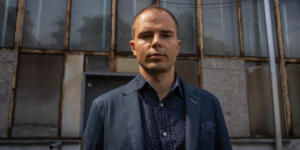
Péter Becz, a director and fellow MADOKE board member, warned that the law goes even further ideologically. «The narrative frames liberal democracy, LGBTQ+ rights, freedom of speech, and The Open Society as harmful foreign ideas from the West. But in reality, journalists, media workers, filmmakers and artists who show the reality of our country, the reality of unseen levels of corruption and the mechanisms of anti-democratic leadership need to be silenced. There is a growing public dissatisfaction with the government and the economic situation, partially due to blocked EU funds and corruption, which has resulted in frustration fueled by 15 years of Orbán’s damaging policies. This is why they want to have total control now.»
«Anything about LGBTQ+, migration, questioning values of traditional family or the Hungarian nation —these are framed as harmful to society.»
The government’s intent is not to block all foreign funding but to control and punish dissent selectively. «If EU money flows to the government, it’s fine. If it flows to a human rights NGOs, that’s foreign interference,» Becz explained. Dér added, «The vagueness of the text creates a grey zone where they can choose who they want to punish. That’s the point—so it creates fear and self-censorship.»
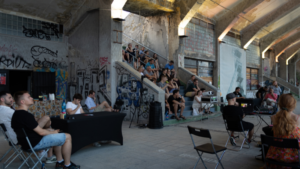
For documentary filmmakers in Hungary, that fear is no longer abstract. «In the past five years, there was basically no meaningful support from the state for these kinds of films,» said László Józsa, producer and former MADOKE president. «The first threat came when films started being screened in the public space.»
One case is particularly telling: #KineDok, a community-based distribution platform for Eastern European documentaries was targeted despite screening films that had already received EU or state support. The issue? Including themes of LGBTQ identity and migration. «If a topic is uncomfortable, it’s dangerous,» Józsa explained.
This regime of exclusion has forced filmmakers into a precarious paradox. «There’s one fund, the NFI (National Film Fund), where you can apply, and they mostly fund films that are about famous Hungarians, sport, folk culture, or conservative history,» said Dér. «The only time I received money from the Hungarian Film Fund was given by an independent committee in 2017, supporting first-time filmmakers. A critical-minded filmmaker has no choice but get a camera, sound equipment, do everything themselves, and ask tons of favours. We don’t have money to pay anyone.»
Beyond personal hardship lies a wider cultural silencing. «It’s not about banning foreign funds,» Becz said. «It’s about having the option to punish. If they want to punish you, they will say that you are dangerous to sovereignty. That’s the mechanism.» The resulting climate of fear leads to anticipatory censorship. «Nobody will make a film on certain topics, only state propaganda will be available,» said Dér. «They already took over the Filmfund (NFI), the film school (SZFE), the national film festival and the main film association (Film Academy). This is the next step in suffocating the independent film community. Which is the purpose of this bill.»
«It’s about having the option to punish»
Becz emphasised that Hungary’s slide should concern Europe as a whole. «This is not only a Hungarian story,» he said. «It’s a European one. Once a system like this is established in one place, it’s just a matter of time before it’s copied elsewhere.» With the European Union’s muted response so far, there is growing concern that legal repression will metastasise. «It’s a cautionary tale,» Becz added, «but we don’t want to be a cautionary tale anymore. We want solidarity.»
That solidarity is beginning to emerge. Since MADOKE released its public statement on 16 May, support has come from filmmakers, festivals, and advocacy organisations across Europe. Delegations have been hosted at festivals like #CPH:DOX and international networks are discussing how to ensure visibility and safety for Hungarian filmmakers. #IDFA, #DOK Leipzig#, Vision du Reél, the International Documentary Association and many, many more have offered support and collaboration in various ways. But even though these partnerships are a great help, they are no substitute for resources. «Most of us can’t even get a project off the ground,» said Dér. «Most of the emergency funds we’re not eligible for as we are part of the EU, thus we can apply for MEDIA, however, even small grants would make a real difference.»
Becz pointed to other frontline battles: «I also want to mention our solidarity with our Georgian film community friends,» he said. «We are in contact with DOCA, and the news is extremely troubling. Their foreign agent law has entered new levels, threatening people with prison, etc. It’s also important to highlight this situation to see where bills and sanctions like these lead. Again, the Hungarian bill is happening in the EU.»
The bill, currently moving toward a vote in Hungary’s Parliament, is expected to pass by the autumn. Once enacted, it will not only constrain artistic freedom—it will criminalise inquiry itself.
«We are past the point of dialogue with the government,» said Józsa. «What we can do now is organise, mobilise, and speak out. We owe that much to our community and the idea of a free and open Hungary.»
This is not merely a cultural concern—it’s part of a systemic erosion of democratic institutions. Hungary now ranks 68th in the World Press Freedom Index, down from 23rd in 2010, highlighting how Prime Minister Orbán’s government has methodically undercut the independence of journalists, NGOs, and artists alike. The country now has the third-worst press freedom rating in the EU, according to Reporters Without Borders.
MADOKE’s public statement captures the gravity of the moment: «When a country sanctions in law that someone can be punished for their opinion, it is openly declaring itself an autocracy.»
The question now is whether Europe will respond—not just to protect Hungary’s artists but to defend the democratic values it claims to uphold.