In Gaza, Israel resorted to all sorts of weapons. Jets, drones, tanks, M16s, bulldozers, roundups. Starvation. The blockade of borders and aid. But the most powerful one, the one that made it all possible, was another, and it was ours: language.
 Assal Rad; pc: Delnaz Rad
You might have come across one of the screenshots taken by Assal Rad, a Middle East specialist at the Arab Center Washington DC. Since October 7th, she has been editing and tweeting, one by one, the headlines on Palestine of all major international newspapers. Like those about six-year-old Hind Rajab: «found dead,» according to the BBC, after with her uncles and cousins she attempted to flee to the south, to Rafah, along a supposedly safe road for IDPs, and the car was targeted and pierced by over 300 bullets. Hind Rajab, do you remember? Spent hours on the phone with the Red Crescent waiting for an ambulance that never arrived. Actually, it arrived, at last. But it was attacked. Its crew too was killed. And yet, according to the daily I write for, it had been «swallowed by the war». In the newsroom, any newsroom, headlines like that would be corrected straightaway by copy editors. They follow the rule of the five Ws, the five facts that are the basis of every news story – who, what, where, when, and why. But when it comes to Gaza, the crucial «who» is always missing. The IDF.
When it comes to Gaza, verbs are always in the passive voice.
There is never a subject. An accountable party.
A coincidence? An oversight?
Or perhaps, simply, the unintended effect of the conciseness typical of headlines?
And is all this attention nothing more than an obsession with everything related to Israel?
A form of anti-Semitism?

In fact, this is not the first time that the press has played a role. And a decisive one. There is a precedent: Iraq. The 2003 invasion, justified by George W. Bush with evidence of Saddam Hussein’s chemical arsenal that proved false. Evidence that, however, was parroted by many newspapers, and above all, by the New York Times, which won a Pulitzer Prize for Iraq. It was never returned. Years later, it apologised to its readers. But not to the Iraqis. And the dead. And besides a precedent, there is also a benchmark, now: Ukraine. Just print the headlines on Gaza, or rather, on Israel, side by side with the headlines on Russia. In Ukraine, you have airstrikes. In Gaza, explosions. Ukrainians get killed, Palestinians are left lifeless. In Ukraine, hunger is a strategy. A Russian strategy. In Gaza, food runs out. In Gaza, the UN, suddenly, warns that its warehouses are empty.
And words, of course, influence actions.
For Putin, the International Criminal Court has been immediately activated.
For Netanyahu, it has been stopped and sanctioned.

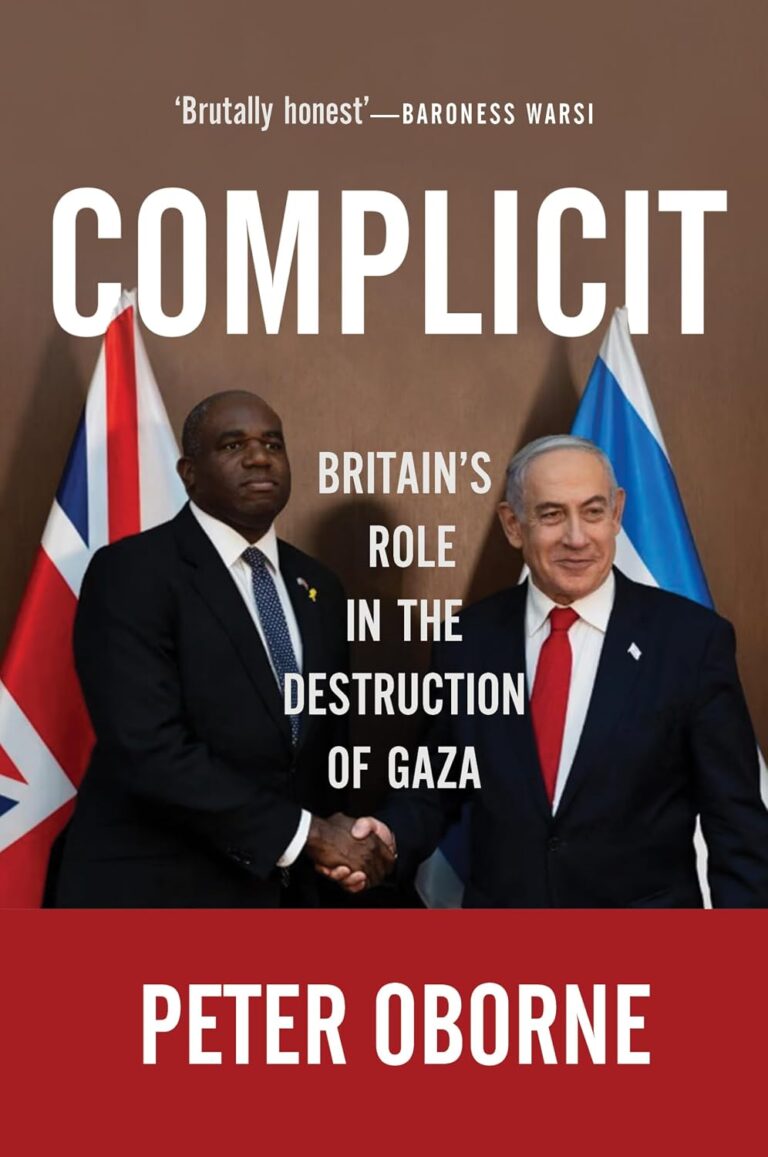
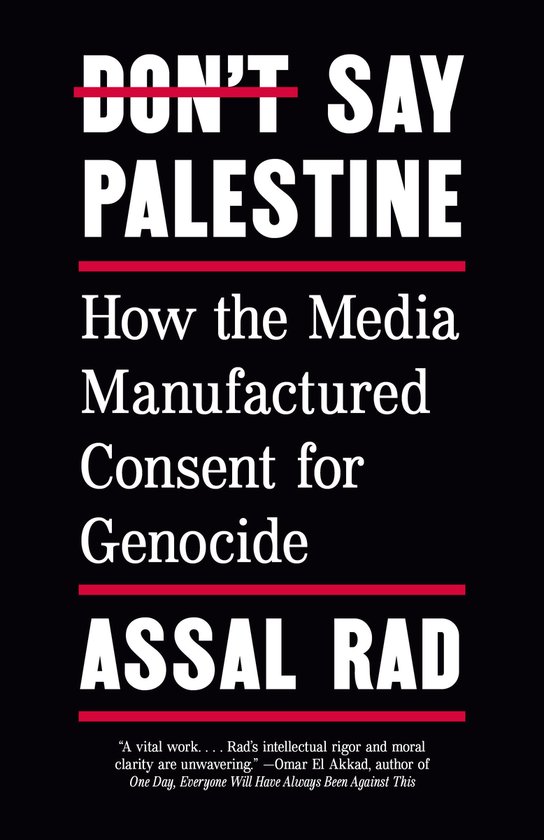
In Europe, there is this idea that freedom of the press is only in danger elsewhere. Only under authoritarian regimes. Which arrests, tortures, poisons. Shoot. They murder Anna Politkovskayas. Daphne Caruana Galizias. Jamal Khashoggis. But there is a more subtle, and equally effective, censorship, and it is the self-censorship described by Nick Davies, the Guardian’s star: certain stories, he says, certain topics, are as if they were surrounded by electrified wire. You do not need to be told what to write, and how, or what not to write. You know that if you get too close, you will get hurt. The journalists of the newspaper I write for, like those of any other, would deny it. But have they ever reported on the crisis of the car industry, of Fiat, which is bringing down all of Italy? No. Because until yesterday, we were owned by the owners of Fiat. And so was the case with Gaza. At some point, an internal memo from the New York Times was leaked, and that’s where the book’s title comes from: guidelines on language. Words to avoid. Genocide. Refugee camp. Ethnic cleansing. Occupation. And Palestine. Should readers start to imagine Palestine as a state?
As a people. As a country.
Rather than a matter of terrorism and security.
Denials never have the same impact as what they deny.
Since October 7th, there has been no shortage of investigations. For example, the Washington Post’s on the basement of the al-Shifa, which, according to the IDF, was Hamas’s headquarters, complete with a 3D drawing of Yahya Sinwar’s shelter. Or the New York Times’s on the five journalists hit by a missile at al-Nasser Hospital. Inadvertently, according to the IDF. To hit a camera that had been mistaken for a Hamas camera. Or the Guardian’s on the food distribution hubs. On the many gunned down while queuing for flour. But investigations, says Assal Rad, arrive later. Arrive late.
By now, many people believe that those journalists were actually Hamas.
Even if one of the five, Anas al-Sharif, got a Pulitzer Prize for Reuters.
Denials never have the same impact as what they deny.

And the proof, says Assal Rad, is that even today, many have only a vague idea of what’s going on. No one expects readers to be Middle East experts. But in March 2024, six months into the war, according to a Pew Center survey more than half of Americans thought more Israelis had died than Palestinians.
Language is a weapon because it depersonalises and decontextualises. And so, a long-time practice is minimised to an accident, and crimes turn into tragedies. «What malnutrition has done to Gaza’s children,» said a New York Times headline over a photo of a bony child. Malnutrition? What is it, a famine or a war?
Is this information, or its opposite? Disinformation?
But journalists keep getting awards.
And newspapers keep losing readers.