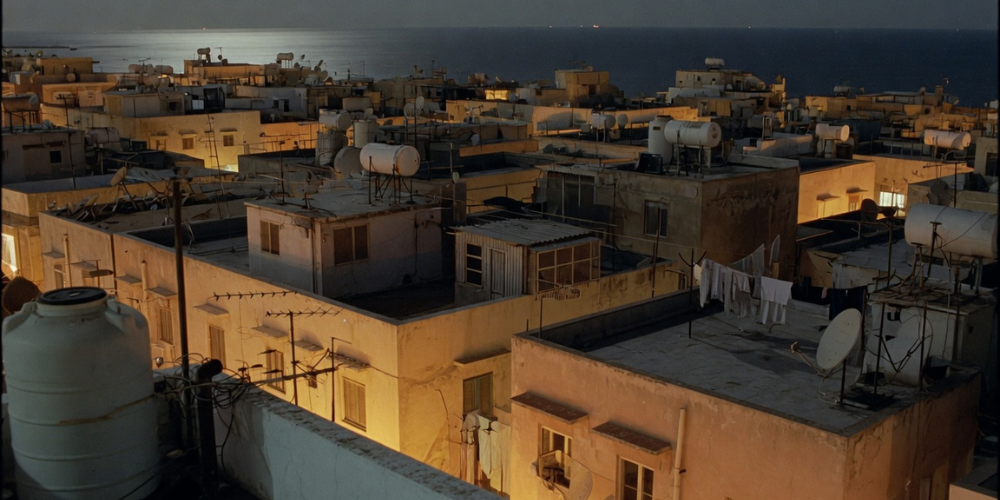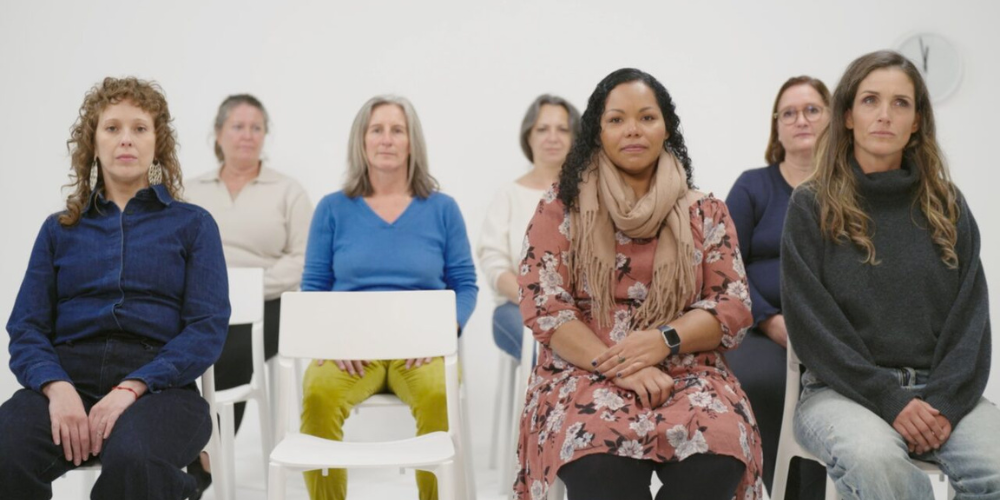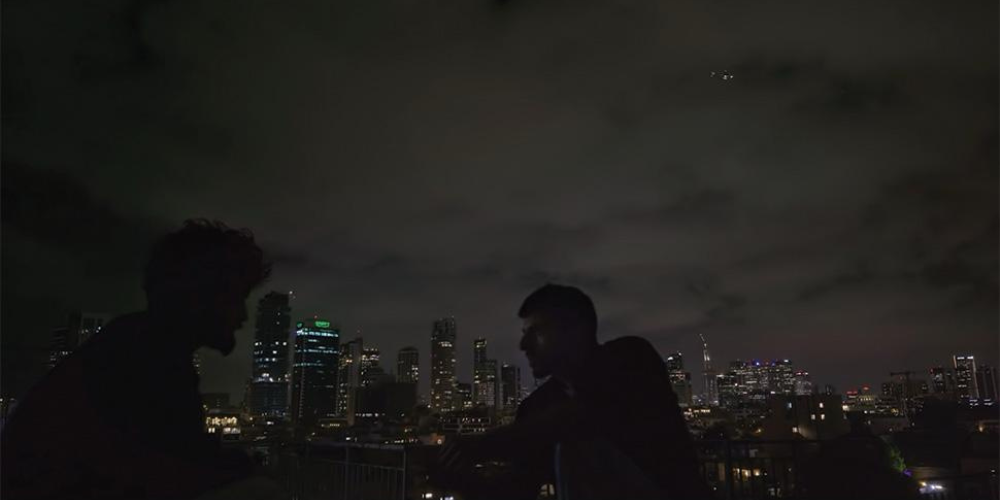
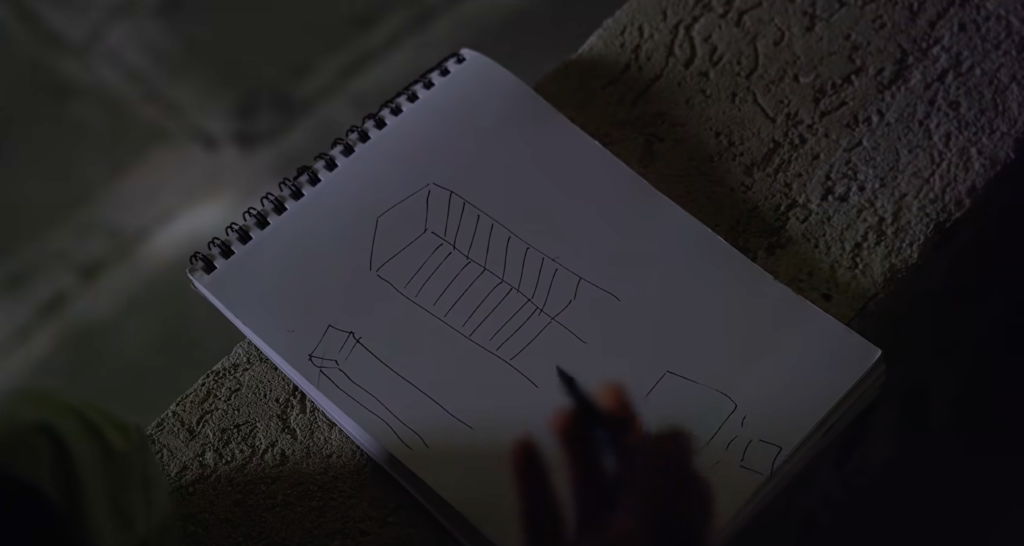
In Israeli intelligence, NAZA, short for «nezek agavi», is the expected civilian collateral damage of an air strike. In their eponymous film, Israeli directors Yuval Abraham and Rachel Szor expose the system the IDF built for mass killing in Gaza, the machinery sitting behind the term. Filmed at night on Tel Aviv rooftops, their faces and voices altered, twenty-four military and intelligence insiders describe and sketch how surveillance feeds an AI built to select targets and calculate the civilian deaths each strike will cause, up to 500. More chilling still is when they offer insights into their own feelings and motives.
Building on investigations by The Guardian, +972 Magazine and Local Call, some of them Abraham’s own, two of the four filmmakers behind No Other Land shape an aesthetically incisive documentary. Haunting panoramas of the city widen the exposé of collective consciousness and responsibility, in which the banality of evil comes fully into view.
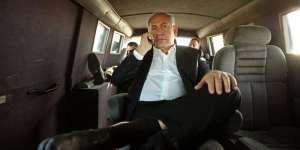
Only days after its premiere, the political backlash was already fierce. Israel’s culture minister called for the directors’ citizenship to be revoked, and Netanyahu condemned the film, while the army’s chief of staff raised the prospect of legal action.
Modern Times Review editor-in-chief Truls Lie and critic, scholar, and MTR contributor Sonya Vseliubska spoke the day before NAZA won the Special Jury Prize at the 83rd Venice Film Festival. They talk about surveillance and the algorithm, then turn to the essay film as testimony before closing on the gap between governments and the people.
«After seeing it, you cannot say this is not happening.»
Truls Lie: I think it’s a good thing to have a reflection between two minds, and we have both been reading the reception and what people are saying. My main concern is the technological paradigm we are in, the mentality we have now in the West. How can people allow mass killings based on this «security issue», or whatever they call it, with the military-industrial complex profiting behind it, and the media running fear-driven campaigns and propaganda that allow the whole thing to happen? For me, it is so disappointing that our civilisation has moved to this point.
Sonya Vseliubska: It’s horrifying. AI obviously takes centre stage here, because it accelerates things and pushes them into an uncontrollable condition we are not catching up with. It is an encompassing topic of many documentaries this year, take Musk, but in NAZA we see it in full action, how AI can count and assist pre-existing technology, like how they break into the phones of the kids and understand who is at home. What was that surveillance algorithm or program called?
TL: «Is daddy’s home?»
SV: Yes, and a soldier describes it early in the film, reading the intimate correspondence of a seven-year-old girl waiting for her father before they bomb the entire house. As we learn from the film, those technologies existed for years before being fused with AI, so they have no limits, much like AI itself has no technological ones.
TL: You can say this film shows the world, and not only Israel, as this mass surveillance is also American. So you have this Orwellian society, the control society the philosopher Gilles Deleuze was talking about, where you are controlled all the way from your school years, in the factory, at work, everywhere, and now you have GPS tracking that can kill you with a drone.
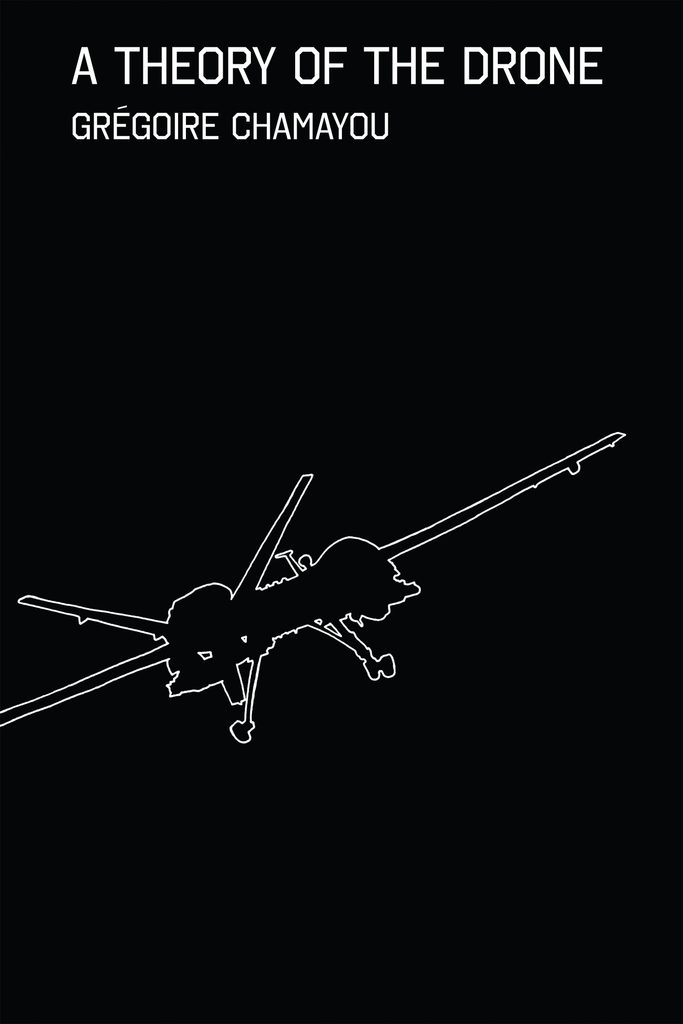
SV: It makes me think of Grégoire Chamayou’s A Theory of the Drone, which theorises the drone philosophically, taking it back to the Gorgon Medusa. The drone was created so the soldier can distance themselves from the gaze of those they kill, minimising the traumatic response. The war in Ukraine has already shown a drastic shift, as AI-guided drones further minimise, if not erase, that response, deciding every manoeuvre and shot for the soldier. This is something completely new in the landscape of warfare and genocide.
TL: This brings us to governments. Netanyahu and the top officials don’t just allow this to happen, they instruct it, these are orders. When the high command says it’s okay to kill 500 people because of one Hamas man in a certain quarter, as is said in the film, then you talk about collateral damage when 499 people are dead because of one person.
SV: I feel it’s also about the erosion of borders. Much as AI dissolves the line between technology and the human, the line between Hamas and civilians is dissolving. Israeli pro-state media often present all of those people as Hamas, hence not human beings, and as we see in the film, this erosion is deliberate, because it opens the way for more action.
TL: You can talk about Hamas as medieval in its view on women, but still, in 2006 they were elected democratically, also because of Fatah’s corruption. So how is it possible to establish this myth? Giorgio Agamben talks about homo sacer, where you degrade a person so much that it becomes permissible to kill them with impunity, and this impunity is spreading all over Israel now. There have been seven or eight wars on Gaza this century. It is like when you press a person into the mud so he cannot breathe, and this person kicks your leg to survive, you suddenly scream «he’s a terrorist».
SV: And this is what the film’s critics avoid when they bring up October 7 as the counterweight, as if nothing happened before. Apartheid is a greenhouse for human precarity and violence. What if we take a step back and think about why this happened?
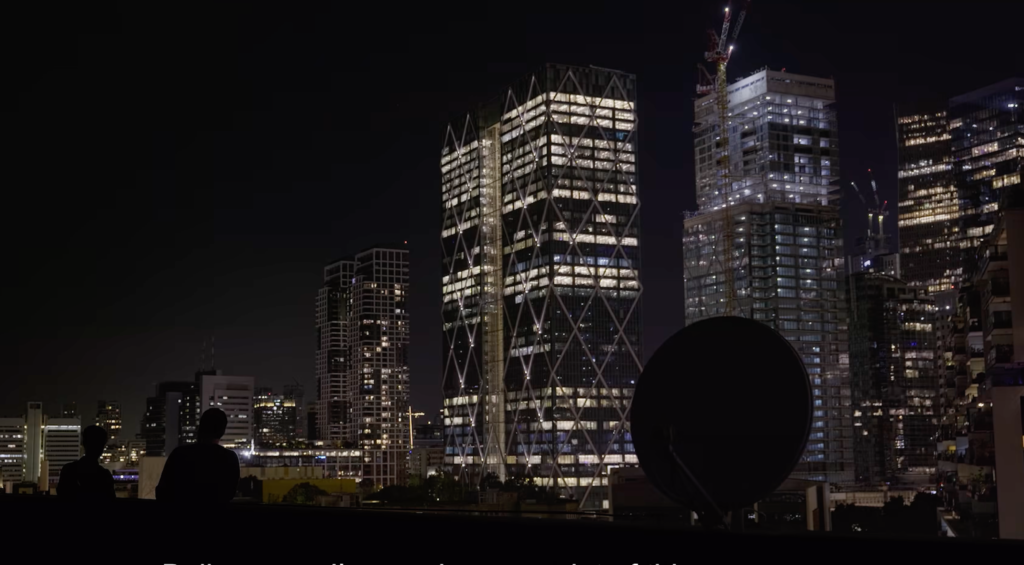
TL: And there is no future for a two-state solution, only small bantustans would be left. The film I have been working on called TOGETHER is about a binational one-state solution, because in the future they will have to live together. Because how can just one state of two just do whatever it wants? Where is the international community, the United Nations Security Council? There are so many interests, which reveals how cynical they are. The Israeli military industry gets a lot of help from Germany, and here we are, sitting in Italy, whose government is also helping Israel with weapons to kill people in a genocide. But let’s talk about the film and its form. It is about surveillance. You can interestingly also see how the film NAZA uses a cinematography surveilling the Tel Aviv rooftops looking into the homes of the middle class. You see a lot of people living alone, so different from the Palestinian families with five to eight people in an apartment.
SV: For that precise feeling, the documentary is masterfully made, delivering that unease through the senses. Even if we don’t see the real faces, we see the energy of the city, and even if the voices are altered, their intonation and military slang expose so much. They needed to protect the soldiers they were interviewing, which is also why it took three years. But if they showed a face, all the criticism would be directed at a particular person, while this film argues for collective responsibility. So with that haunting guerrilla camera they draw a psychological and social portrait of Israel, and it matters that it happens at night, a very intimate, in a sense sincere, time of day.
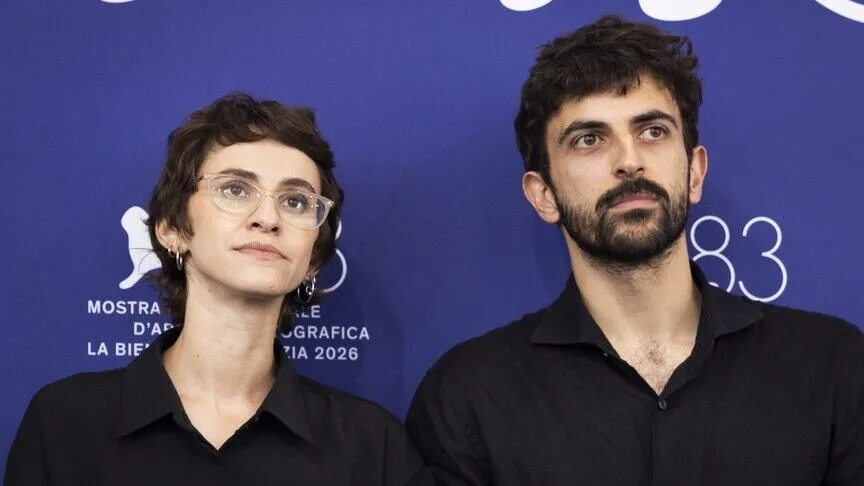
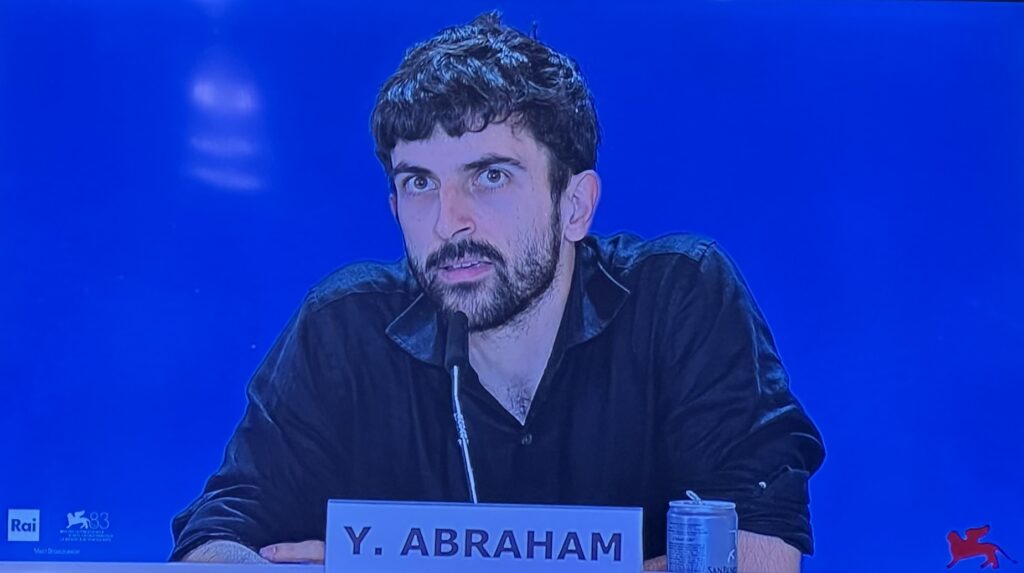
TL: Twenty-four Israeli soldiers and intelligence officers agreed to talk. Some speak so cynically, saying that killing was joyful, «I’m just a cog in the system». But some must have remorse, otherwise why testify? But as Abraham said at the press conference, some just feel pride in killing. Where is your humanity when you follow orders and feel no responsibility?
SV: Throughout the film, most soldiers converge on the idea that it’s just the system.
TL: But what do we mean by the system? In the film Netanyahu is shown in an old interview saying that terrorism is killing civilians for a political purpose, and now he is doing just that. Is it of economic interest? Is it keeping himself in government, as he is also accused of corruption? This has happened many times, presidents invoke a war because they have troubles at home, and so death becomes normalised. How is this mentality possible, a utilitarianism where the end justifies the means? It’s hard to say whether these enemy images are the main gasoline keeping every politician in position. Big governments are getting bigger and bigger, and more and more money is going into the military industry, also in Norway, where I’m from, where they are increasing military budgets, taking it away from civil society. Hundreds of thousands of people are getting killed while these politicians are just talking or ignoring it.
SV: This decision to ignore is why we need to credit Jonathan Glazer, who executive produced the film, as The Zone of Interest is very much about it, and they would make a perfect double bill.
TL: And its aesthetics were also an inspiration for Abraham and Szor.
«Apartheid is a greenhouse for human precarity and violence.»
SV: Very much, but the documentary form brings something more essayistic, and I do think NAZA is an essay film. It also made me think of Anat Even’s Collapse, which played at the Berlinale, in which an Israeli director critical of the state goes to the Israeli side of the border to film Gaza, reflecting in voice-over and in conversations with people she knows, including an officer, pro-state and anti-state, to expose the rhetoric.
TL: When you say «essay film», I think of Theodor Adorno on the Literary Essay. It needs direct dialogue, which you see in the interviews, it is experimental in its aesthetics, and then you have the heresy, the political statement, and arguments.
SV: Perhaps it helps to balance the emotional side, leaving room for reflection and observation, because with the immediacy of the evidentiary image you can lose the audience. What do you think about the closing scene, the footage of the brutal shelling in Gaza?
TL: I am ambivalent, because for me it is so obvious what is happening there, and I also made a film with a lot of bombs shown in it. I think it’s an emotional salute at the end, and for a big audience it’s important. But let us talk about the consequences of the film.
SV: It seems Yuval and Rachel need to stay out of the country for a while, as it is dangerous, but I trust The Guardian has enough lawyers and frameworks to protect them through this madness of reception. There is also outrage from pro-Palestinian people that Israeli directors are applauded for a genocide their country is committing. I understand the sentiment, but this documentary had to come from the perpetrators’ side, it just would not work otherwise.
TL: There were twenty-five minutes of applause, a record in Venice, after twenty-two for The Voice of Hind Rajab, so hearts and minds are being influenced, and this change of mind reaches the top political positions too. In Britain, Ed Miliband, the new Foreign Secretary, is going against Israel, and Israel has closed the British consulate in Jerusalem. It’s about time, but why do the people in power need two years to see the obvious? There are so many interests they are trying to administer. You have the Israel lobby in America. That is why the discourse around this film matters, because after seeing it, you cannot say this is not happening.
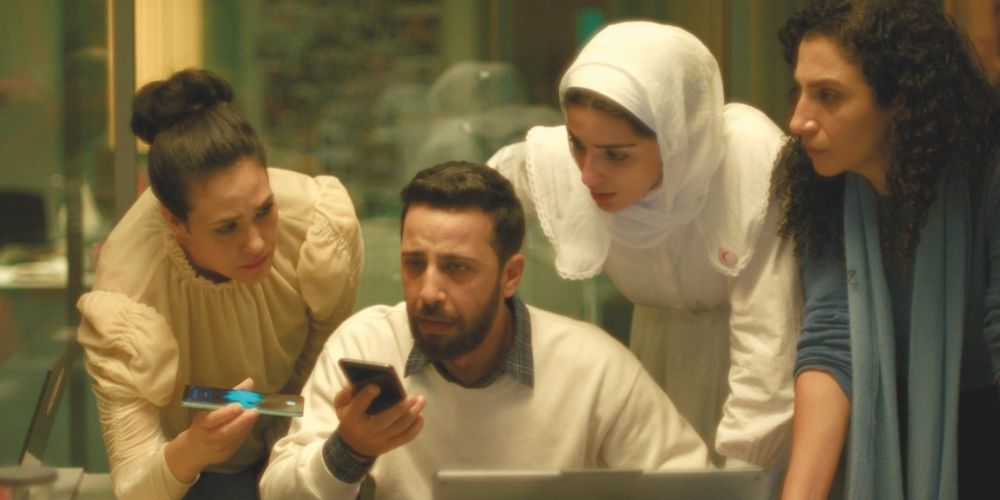
SV: But people do say it, and not only Israelis. Across Russian-speaking discourse, especially among those in exile who are vocally anti-Putin and share evidence of his crimes, I read horrifying things about NAZA. They say that «we don’t see the faces of who they were, so it didn’t happen». That it’s all fakes for leftist kids at a posh film festival supporting an antisemitic campaign. But the lexicon they use is radically like that of those aggressively supporting Russia’s war in Ukraine. And yet it is the same framework, the same human rights organisations like Amnesty International, with the same methods, confirming the strike on the Mariupol theatre and confirming genocide in Gaza. It opens a discussion about what evidence means today, bringing us back to AI, and sometimes I struggle to think of what kind of evidence can change such minds.
TL: Belief and understanding are two different things. At least the festival director in Venice is making a statement by choosing this film, and last year there were big demonstrations here for Palestine. But after thirty years as an editor of magazines, I am always surprised that people see so much evidence of oppression and don’t act. While those who act against Elbit Systems are put in prison as ‘terrorists’, and grandmothers sitting with a little poster saying «I support Palestine Action» are lifted off the street. So maybe we end with the open question of why there can be such a distance between the politicians in power and the people. At least we are here, among the people, seeing suppressions more clearly, without the cover-up because of the interests of power, economy, and corporations.