In today’s media landscape, where audiovisual works are often commodified as ‘content’ and algorithms inadvertently influence viewer choices, online streaming sites risk turning into echo chambers that merely replicate and reinforce our perspectives. The consequences of such information bubbles are considerable: They can fracture debates, exacerbate social and political divides, and ultimately shape how we perceive conflict and justice. In the face of such troubling dynamics, especially during politically charged times, documentary streaming platforms may play an important role in responding to today’s pressing realities and equipping citizens to move beyond their digital comfort zones to seek out a more nuanced understanding.
The consequences of such information bubbles are considerable
Burgeoning potential
Launched amid the COVID pandemic in 2020 when audiences were homebound and tethered to their screens, the UK-based True Story joined the humble ranks of dedicated documentary platforms in Europe, such as DAFilms and Tënk. It emerged out of a need to expand access to compelling documentaries to broader audiences that may not have the opportunity to attend film festivals in person, where they are typically shown. Responding to such a need, however, was not new. In fact, a similar effort had taken place two decades earlier when DAFilms (first known as Doc Air) was established out of the very understanding that many quality documentary films sorely lacked a platform to reach wider audiences and remained «virtually inaccessible» after their festival run. This initiative also recognised the burgeoning potential of online distribution of documentaries.
Launched in 2005, the same year as YouTube, DAFilms may now be considered a veteran, at least in digital terms. Powered by Doc Alliance, a partnership of seven European documentary festivals (CPH:DOX, Doclisboa, DOK Leipzig, FIDMarseille, Ji.hlava IDFF, Millennium Docs Against Gravity, and Visions du Réel), it now presents a vast library of over 4,000 films (accessible for €6 a month, while individual titles can also be rented without a subscription). Drawing on this essential collaboration, the VOD platform boasts a strong year-round roster of documentary films and curated programmes, while also carving out space for formats that typically struggle to reach wider audiences through standard distribution, such as short films. The platform’s industry standing emerged over the years through its partnership with the key documentary festivals, which have undeniably contributed to its visibility and access to diverse programmes and networks (on its website, DAFilms bills itself as «an online documentary cinema» that brings «fresh festival films every week»). The outcomes of such a partnership are also evident, for example, in its featured programmes, such as those compiled by Doc Alliance member festivals (among recent ones are CPH:DOX’s ‘Cinematic Guide to Democracy’ that ponders perils to democracy, and FIDMarseille’s retrospective to provocative voice in Romanian cinema Radu Jude), as well as sidebar sections, such as live-streamed conversations with filmmakers at festivals, which are made available on the platform (e.g. Tsai Ming-liang at 2024 Ji.hlava IDFF, Alice Diop at 2024 Visions du Réel).
A co-op alternative
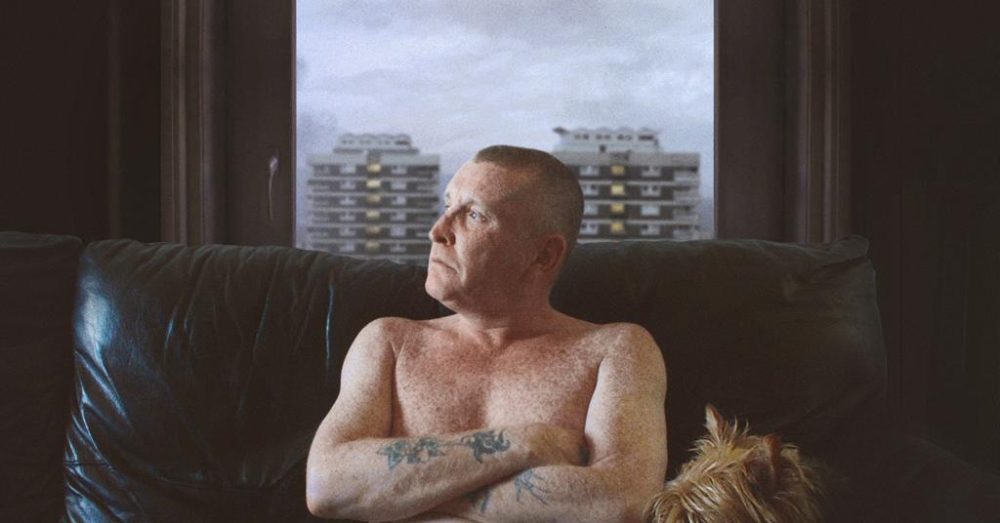
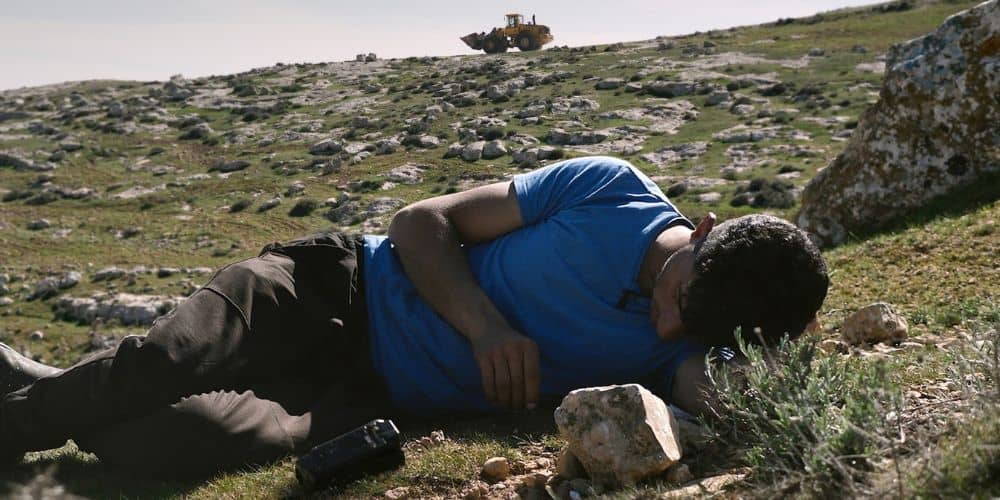
A fellow platform championing creative documentaries, France’s Tënk offers an intriguing alternative to conventional collaborative models within the independent film economy. Founded in 2016 in Ardèche’s Lussas, Tënk presents a cooperative of several collectives (including Tënk Canada, a solidarity cooperative in Tiohtià:ke, Montreal) and is democratically made up of more than 325 members. Upholding the collaborative ethos of a co-op, Tënk focuses on its shared mandate to support the «creative and political vitality» of documentary cinema and encourage the discovery of such documentaries through curation and cultural mediation. This mission is reflected in its editorial stance, which may be succinctly captured in a single line: «to offer everyone access to this cinema that invites us to resist and think, individually and together.» The SVOD platform features a «hand-picked» selection of documentaries, scoured across varied festivals and film libraries, with new films added to the website weekly, along with a catalogue of over 1,700 titles available for rent (films can be rented for as little as €2 for 48 hours, with €1 going to the rights holder, and €1 to Tënk; varied subscription plans are available, along with collective offers through subscribed establishments, such as universities, media libraries, work councils, or associations). Tënk’s collective programming results in rich, eclectic choices that traverse different latitudes, themes, and forms: from archival and found-footage films to portraits, investigations, and ‘militant cinema’, to name a few. Though wide-ranging, its curatorial focus and approach reveal a consistent engagement with socio-political themes and incisive/timeless questions that underpin our society. For example, the platform features such compilations as ‘Habemus Papam’ (‘We Have a Pope’) and ‘Masculinities in Question’, and the works of such auteur filmmakers as Alice Diop, Johan Grimonprez, and Raoul Peck. Among recent additions are searingly urgent No Other Land by a Palestinian-Israeli collective (Hamdan Ballal, Yuval Abraham, Basel Adra, and Rachel Szor), and Alessandra Celesia’s The Flats about the Troubles in Northern Ireland. The platform also includes titles recently released in theatres and films brought to fruition with the support from Tënk.
Independent undertaking
Meanwhile, True Story is what one may dub a truly independent undertaking, sustained without any institutional backing or a sizeable team, which, as any such independence, comes with both freedoms and limitations. The platform’s selection (more than 300 titles are available for subscribers for €5,99 a month) closely follows and in part relies on programmes of international film festivals, from IDFA to Visions du Réel and Sheffield DocFest. Titles are typically added to the platform around two years after their debut at a festival. To ease navigation and help audiences find films, documentaries are grouped in collections themed around specific ideas and notions (e.g. Work, Home, Migrations, Colonial Gaze), with many straddling three to five of those collections. The collection titles thus serve as descriptive labels, which means that these compilations are not self-contained and may be expanding. There are also retrospective collections comprising filmmakers’ bodies of work. These include Jeanie Finlay, Helena Třeštíková, Ruth Beckermann, and Neary Adeline Hay, whose Angkar and Eskape both probe the intimate impacts of the Khmer Rouge regime in Cambodia.

Palestinian collections
Though politics is not a primary lens for True Story’s programming, some of its curatorial choices reflect an awareness of the need to amplify documentary voices that lens today’s realities and the human condition. For example, among True Story’s latest additions is a trio of films by Palestinian filmmaker Mohamed Jabaly, added to the platform in July. This collection includes Ambulance, with which he announced himself on the world stage in 2016, My Gaza Online (short film, 2020), and Life is Beautiful (2023 IDFA Award for Best Directing). However, genuine support often means more than just showcasing a filmmaker’s work on a VOD portal. A documentary streaming platform must create spaces not only for audiences to discover and watch films but also to engage in meaningful conversations, such as through live post-screening discussions, involving filmmakers, protagonists, activists, human rights advocates, scholars, and experts in the field. This would require building and sustaining audiences, as well as carrying out outreach around films’ online releases, including to grassroots and community groups, advocacy networks, educators, and NGOs. Furthermore, as is the case with True Story, treating a film’s release on a streaming platform as its online premiere could also prove effective in securing press coverage beyond the festival or documentary circuit and helping it reach a wider audience.
To understand the complex realities such socio-politically significant films reflect, it is also vital to bring them into dialogue rather than feature as standalone titles. For instance, DAFilms has recently presented a retrospective collection, titled ‘Palestinians, Before the Rupture’, which binds together diverse works of filmmakers, spanning two decades. The programme encompasses nine titles, also including those by non-Palestinian directors (it features Dalia Castel’s Still Life and Terrace of the Sea, Mahdi Fleifel’s 3 Logical Exits and 20 Handshakes for Peace, and Avi Mograbi’s The First 54 Years: An Abbreviated Manual for Military Occupation, among others). As the collection soberly reminds us, the cameras were rolling long before the 2023 escalation, and what these films reveal «[is not] a single rupture point” but a record of persistent displacement and dispossession of the Palestinian people, which «did not begin in the aftermath of October 2023, and […] may not end with a ceasefire.»
In conversation
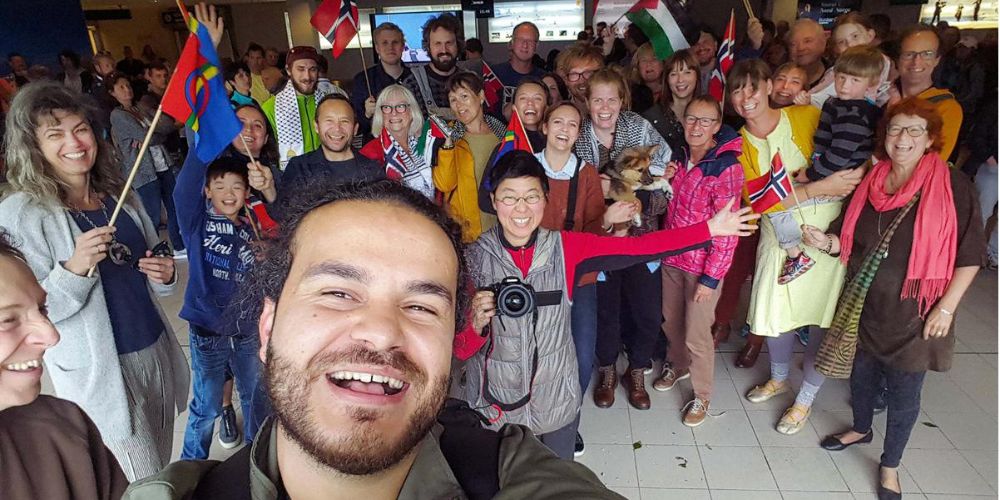
Curated as a collection on True Story, Jabaly’s three films are also in conversation with one another. Speaking with Modern Times Review via video call from Norway, where he is partially based, ahead of his attendance at South Africa’s Durban FilmMart as part of the Palestinian Film Institute (PFI), the Gazan filmmaker explained that although these documentaries were completed before the ongoing genocide, their urgency has only soared. «These films speak to each other, and to the past, the current moment, our lived reality, and our resilience,» Jabaly noted. Reflecting on his eyewitness documentary Ambulance, which he filmed from the front seat of an ambulance during the 2014 war in Gaza, he said, «At the time, even getting fuel for an ambulance was hard. Today, it’s impossible. Donkey carts are used to transport the injured. [In 2014], ambulance vehicles were targeted. Many people were killed on duty while trying to do their jobs. History repeats itself. It was bad then, but today, it’s much worse.» His other two films in the collection, Life Is Beautiful and My Gaza Online, deal with forced exile. «Today, many of my people are exiled. Those stranded outside Gaza now are asking the same question: When will we return to our homeland and reunite with our loved ones? In my case, it took seven years […].» His film My Gaza Online also portrays the agonies of «living afar, witnessing what is happening [in his homeland] from a distance, and communicating with his family and friends through earphones and social media.»
As with socio-politically significant films, it is often vital to bring them into dialogue rather than as standalone titles, in a bid to unpack and understand the complex contexts they reflect.
(Un)provoked narratives
Given the urgency of the moment, Jabaly noted that bringing such films to audiences beyond the festival circuit is imperative. «It’s important that these films are accessible online. They are essential for understanding our reality. What it means to be Palestinian, whether in Gaza or exile […].» The director also stressed that simply adding such films to a streaming platform does not suffice, as visibility takes concerted efforts to highlight and promote them. Of course, this leads to another critical question: Who gets to curate these collections? The Palestinian filmmaker noted that the PFI, for instance, curated programmes in 2024, such as Unprovoked Narratives and Provoked Narratives. The latter presented films made from 1967 to 1984, inviting to critically engage with the narratives «created around Palestine as part of a long colonial project» and reflect «on the shifting gazes» on the Palestinian struggle, «from the humanitarian lens, to cinemas in solidarity and to the works of Palestinian filmmakers who devised new visual grammars in grief and in defiance.» These programmes were made available upon request for student groups, solidarity encampments, collectives, cinemas, and festivals to encourage discussion and action and support mobilisation. The PFI also launched the Palestine Film Platform (PFP) Film Of the Week, available across its channels. «It’s also a way for the institutes to reach out to us for guidance and collaboration through our growing network,» Jabaly detailed. «We have a large archive and are working to organise our work in a way that can help platforms access and programme these films.»