Something has happened to the world, with #politics, and with the social debate—something that is difficult to understand and, therefore, also to describe and analyse. The categories we are used to using are no longer valid or have taken on new meanings, like a box with a different content now than before.
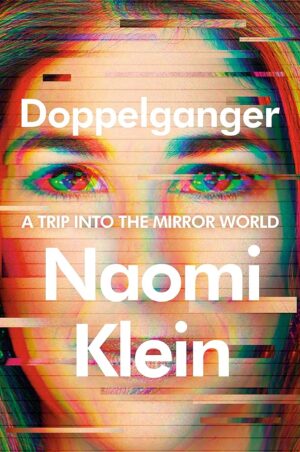
Naomi Klein, the Canadian author who became world famous with No Logo (1999) – a powerful critique of big brands’ production methods and sales strategies – is back on the market with a new book. Doppelganger is based on a personal experience, but the book’s purpose is to try to clear up the confusion and explain our new reality.
She only partially succeeds, but Klein’s book is nevertheless full of important insights for anyone looking for ways to interpret and analyse our new world – including those of us living outside North America.
The ‘I’ brand
As the title suggests, Doppelganger. A Trip into the Mirror World is about the author’s experience with a doppelganger. Naomi Klein, a liberal Jewish woman with strong opinions and a large following, is often confused with another Naomi – #Naomi Wolf#. Wolf began as a liberal and powerful advocate for women’s rights but became less consistent and more radical. She also became more vocal, especially on social media.
By the time #COVID-19 set in, the transformation was complete; Wolf had become a radical plotter, a fan of #Steve Bannon#, and a regular guest on Fox News.
For Naomi Klein, being mistaken for Naomi Wolf eventually took its toll, inflicting significant damage to what she herself had a hard time admitting was a reality: the Naomi Klein brand.
This is one of the book’s great insights: We are all brands. The profile we create and recreate daily through everything we post, everything we like, and everything we dislike helps shape the brand ‘I.’ The more consistent and solid that brand appears, the more impact ‘I’ will likely have.
For Naomi Klein, who famously attacked branding, it’s hard to admit that she has become a brand and that that brand is damaged by being confused with someone who always believes the exact opposite of Klein herself.
the No Vax movement managed to unite everything from reactionary Republicans, exercise junkies, conspiracists, and New Age enthusiasts in one and the same club
The eugenics of our time?
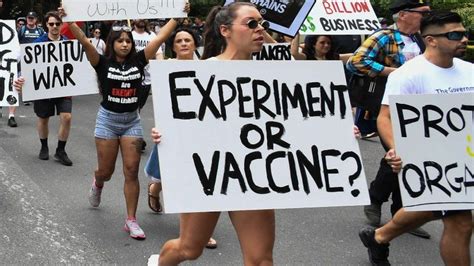
Another insight Klein offers is how the pandemic required new alliances in the social debate. «Did Covid push us over the brink?” she wonders before talking about how the #No Vax# movement managed to unite everything from reactionary Republicans, exercise junkies, conspiracists, and New Age enthusiasts in one and the same club – a club in which Naomi Wolf is an honorary member.
Not least, Klein draws a parallel between the extreme #vaccine resistance and the interwar #eugenics movement. Eugenics supporters saw everything from minority populations to the mentally ill and alcoholics (!) as cancerous tumours on the social organism. In order to protect the majority, these had to be eliminated through various forms of social engineering. The most extreme was the #Nazi extermination of Jews, but forced sterilisation was also widespread in democratic countries such as Norway.
Naomi Klein is wrong when she writes that the eugenics movement originated in the USA. It did not, but the parallel she draws with the view of the vaccinated as a biological threat is interesting. Not least because she identifies the factor that unites the otherwise very different interest groups: the desire to protect ourselves by insisting on purity in our own bodies and, as a consequence, purity in the society around us.
A civilisation project?
In a chapter that is frighteningly relevant now that war is raging in the #Gaza Strip#, Naomi Klein takes a special stand against her own people group: the Jews. She argues that #Israel, precisely because of what the Jews have been through, should be a liberal example, and she despairs that this is not the case:
«[I]n the spectacle of once-stateless #refugees exiling other people into the sea of statelessness, we see in hyper-concentrated form the dead end of this project that dared to call itself ‘civilisation’.»
This view of the Israeli-Palestinian conflict is something Klein used to agree with her double, Naomi Wolf. Wolf, who is also Jewish, said after Israel attacked Gaza in 2014 that she sided with the Palestinians precisely because, as a Jew, she knows that history could have unfolded differently if more people had sided with the Jews in 1939.
Since then, the two women have chosen different paths, and for Klein, Israel’s treatment of the Palestinians is a concentrated example of a global trend. According to the author, we all have a kind of doppelganger that expresses our most extreme thoughts and attitudes. They exist, she believes, to the right and left of the political centre, and they constitute a reality that she calls the ‘mirror world.’
For Klein, the mirror image world has become a reality we must reckon with, on a personal but also a collective level. Doppelganger is, therefore, more than anything else, a warning that we as a civilisation may now have met ourselves at the door.