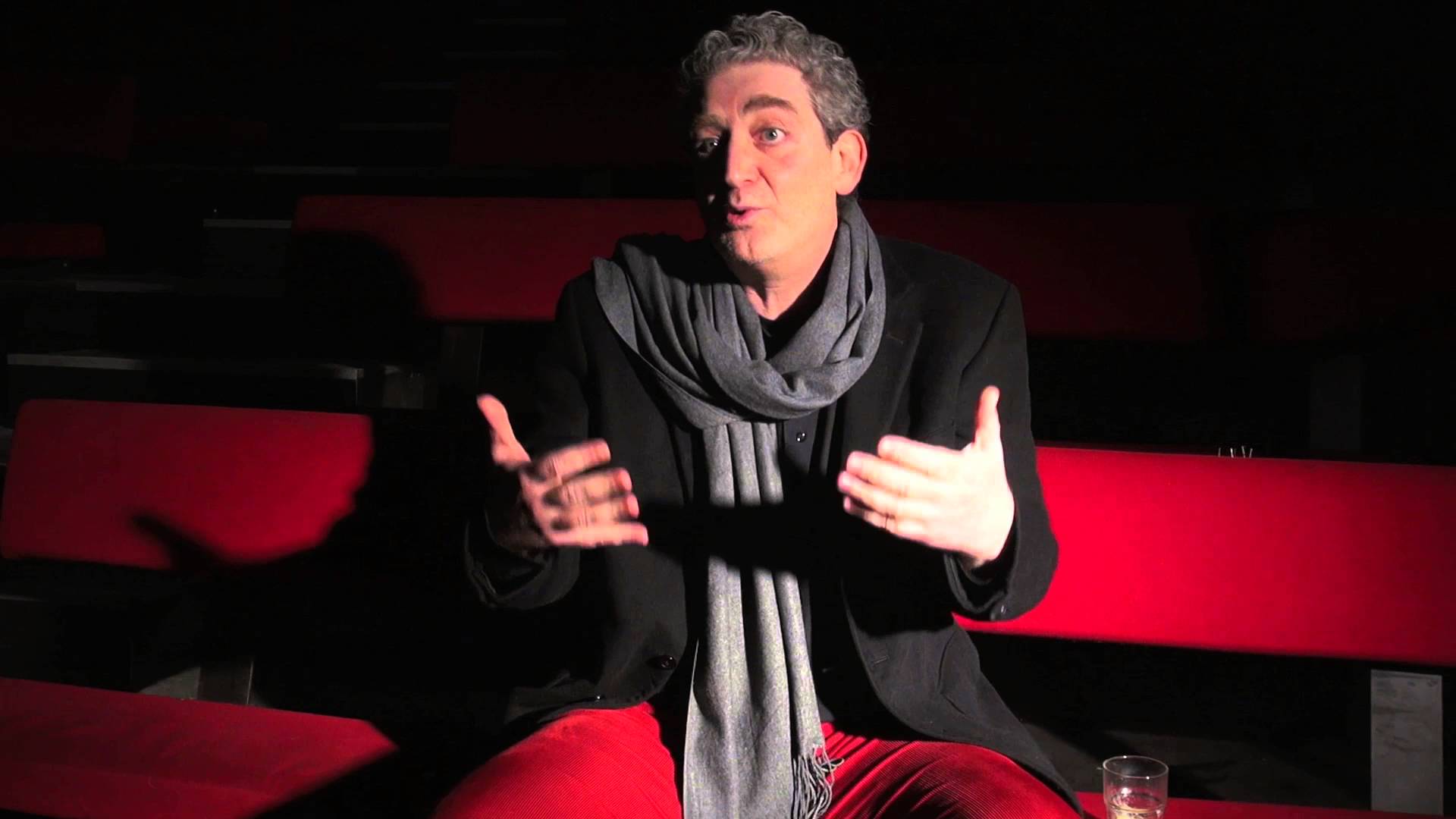
Eyal Sivan – Masterclass

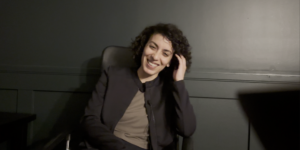
Interview made by Truls Lie. The Israeli filmmaker Eyal Sivan talks about his films on Israel, and other projects like what he did with Jean-Luc Godard.

Written by:

233 words

See eyalsivan.info/index.php?p=elements1&id=8#&panel1-4

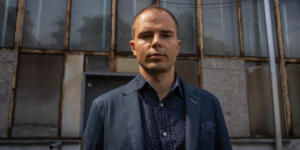
Another perspective of History: that is what characterises the work of Israeli filmmaker Eyal Sivan, whose work provides some of the most intense insights and deepest philosophical outlooks in contemporary documentary film. His films adopt a perspective in which confrontation with History is inevitable and permanent; a perspective in which documentary filmmaking is not projected within a hypothetical future but strongly rooted in the present. For him, making a documentary is to take a new or different look at History, to be able to express another point of view about what already exists, what has already been seen, and what is already known. This constant search for new references, for a different History – while constantly reflecting on the very definition of historical truth – has made of Eyal Sivan’s work a landmark reference in film during the last thirty years; it has also made him one of the most attentive observers of the conflict between Israel and Palestine.

Eyal Sivan (born 1964) is an Israeli filmmaker and critic noted for his criticisms of Israeli policies. Born in Haifa, Sivan attended school in Jerusalem, but dropped out to pursue photography. Though he found work as a fashion photographer in Tel-Aviv, Sivan left Israel in 1985 for Paris, where the political climate was more tolerant of his views.

A co-operation between the Norwegian organisations Films from South, Oslo Documentary Cinema and Le Monde diplomatique (Scandinavia).
Truls Lie avatar

october, 2026

The latest magazine

Other interviews:

  • Noor Abed: Small pockets of resistance
    PALESTINE: Palestine is one of the most documented lands and peoples. What can be different in filmmaking or art practices to have an impact? Using folktales, artist Noor Abed draws on stories of water wells, communal rituals, and women mourning, singing, and moving together across a landscape. Images that need to resist the history of colonial representation that was imposed on the Palestinians.
  • Inconvenient Films: «If you bring people who agree, you are talking to a mirror»
    INTERVIEW: Gediminas Andriukaitis on twenty years of Inconvenient Films, the Baltic region's only human-rights documentary festival, and building a programme around impact.
  • Laura Poitras and Rachel Lauren Mueller: «Hope? I call it resistance»
    INTERVIEW: Short in runtime, yet sprawling in its political scope. With They’re Here, Laura Poitras and Rachel Lauren Mueller assembled an uncanny hybrid of horror film and documentary from crowdsourced footage, OSINT data and material shot on the ground in and around Minneapolis during the ultra-violent ICE occupation.
  • KineDok: «Decentralisation is absolutely crucial»
    INTERVIEW: KineDok's Juliana Moska talks through a season built on decentralisation, and what changed since she and Walter Nagy took over the Czech programme this March.
  • Mark Cousins: «AI would never do that»
    INTERVIEW: Mark Cousins built a sixteen-hour documentary, refusing to separate images from the world that makes them. In conversation, he keeps reaching for objects scattered around him, as if the room itself were mapping cinema's connection to everything else.
Scroll to Top